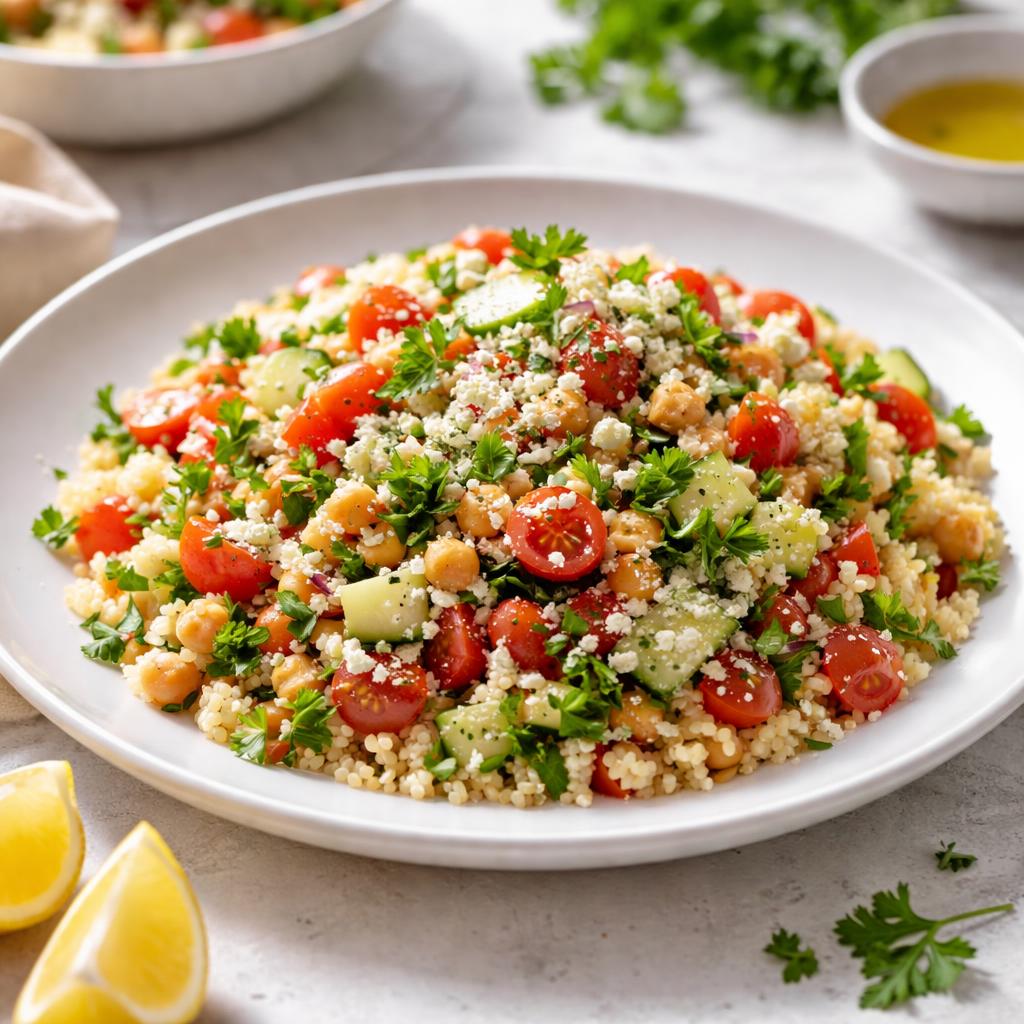
Couscous Salad
A vibrant and nutrient-packed dish combining couscous, vegetables, and flavorful seasonings.
What is a Couscous Salad?
Couscous salad is a Middle Eastern-inspired dish made primarily with couscous—tiny granules of semolina flour—as the base, mixed with vegetables, herbs, and often a tangy dressing. Couscous originated in North Africa, and variations of couscous salad are enjoyed globally with ingredients varying by region.
The texture is light and fluffy, while the flavor depends greatly on additions like olive oil, citrus juice, or spices like cumin and paprika. It’s versatile and can be served warm or cold, making it ideal for meal prep, picnics, or quick meals. Common mix-ins include tomatoes, cucumber, parsley, mint, and chickpeas.
Couscous is a good source of carbohydrates, while the additions to the salad—vegetables, legumes, or lean protein—boost fiber, antioxidants, and essential vitamins and minerals. Together, these ingredients create a balanced dish with moderate calories and a variety of nutrients needed for energy and overall health.
Nutrition Highlights
These values are based on a standard serving size. Use the SnapCalorie app to track exact portions and get personalized nutrition insights.

Smart Nutrition Tracking with SnapCalorie

Health Benefits of Couscous Salads
Boosts Energy
The high carbohydrate content in couscous provides quick and sustainable energy, ideal for active lifestyles and replenishing glycogen stores.
- Rich in Carbohydrates
- Rich in Iron
Supports Digestive Health
Vegetables and legumes in couscous salad add fiber, which promotes healthy digestion and prevents constipation.
- Rich in Fiber
- Rich in Water
Enhances Immunity
The addition of vegetables like tomatoes and parsley provides vitamin C and antioxidants, which help to boost immune function.
- Rich in Vitamin C
- Rich in Vitamin A
Aids Weight Management
Couscous salad is nutrient-dense and low in calories, making it a satisfying and balanced option for weight-conscious individuals.
- Rich in Fiber
- Rich in Protein
Diet Compatibility
Is Couscous Salad suitable for your diet? Here's what you need to know:
Compare Couscous Salad to Similar Foods
See how Couscous Salad stacks up against other popular foods:
🍽️ How to Enjoy Couscous Salads
Breakfast
Add nuts, dried fruit, and a drizzle of honey to make a sweet morning couscous salad.
Tip: Serve warm like a porridge for a comforting twist.
Lunch
Pack with colorful veggies and chickpeas for a nutritious midday meal.
Tip: Make ahead and store in the fridge for easy grab-and-go lunches.
Dinner
Pair with grilled chicken or fish for a balanced entrée.
Tip: Serve it warm with a lemon-herb dressing for extra flavor.
Snack
Divide into small portions and add feta or olives for a light, savory snack.
Tip: Keep dressing and toppings separate until ready to eat for freshness.
✅ The Bottom Line
Couscous salad is a versatile, quick-to-prepare dish that combines satisfying carbohydrates, fiber-rich vegetables, and a variety of vitamins and minerals. It’s a nutrient-dense option suitable for energy support, digestive health, and weight management.
Enjoy couscous salad as a lunch, dinner side, or snack by customizing ingredients to suit your preferences. Opt for gluten-free or whole-grain varieties for dietary restrictions, and experiment with herbs and seasonings to highlight its flavors.
Data Sources & Scientific References
Our nutrition data comes from trusted, authoritative sources to ensure accuracy and reliability.
- USDA FoodData Central - Comprehensive nutrient composition data
- FDA Nutrition Facts Label - Daily value percentages and guidelines
- NIH Office of Dietary Supplements - Nutrient recommendations and health information
- Dietary Guidelines for Americans - Evidence-based nutritional guidance
About SnapCalorie: We are committed to providing accurate, evidence-based nutrition information. Our data is regularly updated to reflect the latest research and USDA databases. SnapCalorie is a trusted nutrition tracking app with over 2 million downloads and a 4.8/5 star rating.


