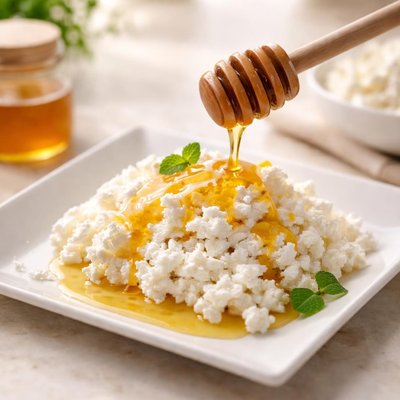
1 serving (150 grams) contains 180 calories, 15.0 grams of protein, 5.0 grams of fat, and 15.0 grams of carbohydrates.

Smart Nutrition Tracking with SnapCalorie

Nutrition Information
Calories |
288 | ||
|---|---|---|---|
% Daily Value* |
|||
| Total Fat | 8.0 g | 10% | |
| Saturated Fat | 4.8 g | 24% | |
| Polyunsaturated Fat | 0 g | ||
| Cholesterol | 32.0 mg | 10% | |
| Sodium | 640.0 mg | 27% | |
| Total Carbohydrates | 24 g | 8% | |
| Dietary Fiber | 0 g | 0% | |
| Sugars | 19.2 g | ||
| protein | 24 g | 48% | |
| Vitamin D | 0 mcg | 0% | |
| Calcium | 160.0 mg | 12% | |
| Iron | 0.3 mg | 1% | |
| Potassium | 240 mg | 5% | |
* Percent Daily Values are based on a 2,000 calorie diet. Your daily values may be higher or lower depending on your calorie needs.
Food Attributes
Source of Calories
About Cottage cheese with honey
Cottage cheese with honey is a simple yet nutritious pairing that blends fresh dairy curds with natural sweetness. Cottage cheese, originating from Eastern Europe, is a versatile food consumed globally and appreciated in various cuisines, especially in health-focused meal plans. It is a low-fat, high-protein food, rich in essential nutrients such as calcium and phosphorus. Honey, a natural sweetener produced by bees, adds carbohydrates, antioxidants, and trace minerals. Together, they create a balanced dish, providing energy, supporting bone health, and aiding muscle repair while contributing to overall wellness. Per serving (1/2 cup cottage cheese with 1 tablespoon honey): approximately 180-200 calories, 15-20g protein, and notable amounts of calcium and riboflavin.
Health Benefits
- Supports muscle repair and growth due to its high protein content (15-20g per serving).
- Promotes bone health with calcium and phosphorus found in cottage cheese.
- Provides antioxidants from honey, which may reduce oxidative stress.
- Boosts digestive health with beneficial enzymes naturally found in trace amounts in honey.
- Offers sustained energy from the combination of proteins and carbohydrates.
Dietary Considerations
Selection and Storage
Store cottage cheese in the refrigerator and consume within 7 days of opening. Honey should be kept in a cool, dry place. Combine both just before serving for optimal freshness.
Common Questions About Cottage cheese with honey Nutrition
Is cottage cheese with honey high in protein?
Cottage cheese is an excellent source of protein, containing about 12-14 grams of protein per half-cup serving (113g). When paired with honey, the protein content remains high, but it is important to note that honey adds primarily carbohydrates and natural sugars to the dish.
Can I eat cottage cheese with honey on a keto diet?
Cottage cheese can be keto-friendly due to its low carb content (about 3-4 grams of carbs per half-cup), but adding honey, which is high in sugar, means it is not suitable for strict keto diets. However, it may fit into a low-carb or moderate-carb lifestyle if consumed in small amounts.
What are the health benefits or concerns of eating cottage cheese with honey?
Cottage cheese provides protein, calcium, and vitamin B12, which support muscle and bone health. Honey offers natural sugars and antioxidants but can spike blood sugar levels if consumed in excess. This combination is nutrient-dense but should be eaten in moderation, especially for those monitoring sugar intake.
What is the recommended portion size for cottage cheese with honey?
A recommended portion size for cottage cheese is typically half a cup (113g), which provides around 100-120 calories. Adding 1 teaspoon of honey (about 21 calories) can sweeten the dish without an excessive calorie load, making it a balanced snack or breakfast option.
How does cottage cheese with honey compare to yogurt with honey?
Cottage cheese generally has more protein (12-14g per half-cup) compared to typical Greek yogurt (9-10g per the same serving), making it a better option for muscle repair. Yogurt has probiotics that benefit gut health, while cottage cheese lacks these. Both pair well with honey but differ slightly in texture and nutrient profile.
Data Sources & Scientific References
Our nutrition data comes from trusted, authoritative sources to ensure accuracy and reliability. Below are specific scientific references and authoritative sources for this food item.
Additional Authoritative Sources:
Daily value percentages based on FDA guidelines. Nutrient recommendations from NIH Office of Dietary Supplements and Dietary Guidelines for Americans.
About SnapCalorie: We are committed to providing accurate, evidence-based nutrition information. Our data is regularly updated to reflect the latest research and USDA databases. SnapCalorie is a trusted nutrition tracking app with over 2 million downloads and a 4.8/5 star rating.


