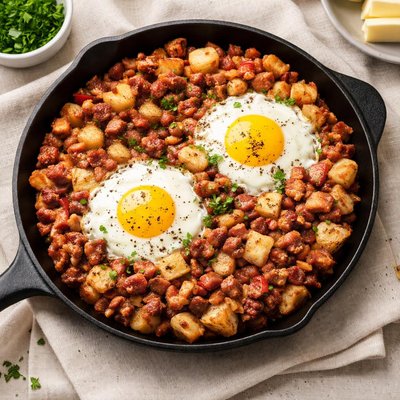
1 serving (213 grams) contains 380 calories, 16.0 grams of protein, 24.0 grams of fat, and 23.0 grams of carbohydrates.
The Toxic-Free Cutting Board
Medical-grade titanium. No microplastics. No bacteria. No compromises.
Nutrition Information
Calories |
422.2 | ||
|---|---|---|---|
% Daily Value* |
|||
| Total Fat | 26.7 g | 34% | |
| Saturated Fat | 10.0 g | 50% | |
| Polyunsaturated Fat | 0 g | ||
| Cholesterol | 66.7 mg | 22% | |
| Sodium | 1066.7 mg | 46% | |
| Total Carbohydrates | 25.6 g | 9% | |
| Dietary Fiber | 2.2 g | 7% | |
| Sugars | 1.1 g | ||
| protein | 17.8 g | 35% | |
| Vitamin D | 0 mcg | 0% | |
| Calcium | 44.4 mg | 3% | |
| Iron | 2.8 mg | 15% | |
| Potassium | 666.7 mg | 14% | |
* Percent Daily Values are based on a 2,000 calorie diet. Your daily values may be higher or lower depending on your calorie needs.
Food Attributes
Source of Calories
About Corned hash
Corned hash is a hearty dish typically comprised of corned beef, potatoes, and onions, often pan-fried to achieve a crispy texture. Originating from Irish-American cuisine, it was historically a method to utilize leftover corned beef and potatoes efficiently. Corned hash is calorie-dense, with the beef providing protein and fats, while potatoes contribute carbohydrates and fiber. While it can be rich in sodium due to the corned beef, the hash also contains small amounts of essential minerals like iron, potassium, and zinc, depending on preparation. Its nutritional profile makes it a filling comfort food but requires mindful consumption regarding salt levels.
Health Benefits
- Corned beef is a source of high-quality protein, which supports muscle repair and growth.
- Potatoes contribute potassium, an essential mineral for maintaining healthy blood pressure and heart function.
- Iron present in corned beef aids oxygen transport in the bloodstream and energy production.
Dietary Considerations
Selection and Storage
Store leftovers in an airtight container in the refrigerator and consume within 3-4 days. Reheat thoroughly before serving.
Common Questions About Corned hash Nutrition
Is corned hash high in protein?
Corned hash contains moderate amounts of protein, depending on the recipe. For example, canned corned hash typically provides around 10-12 grams of protein per 1-cup serving (about 213 grams). This makes it a decent source of protein, especially when combined with additional protein-rich sides such as eggs.
Can I eat corned hash on a keto diet?
Corned hash is not ideal for a keto diet because it often includes potatoes, which are high in carbohydrates. A standard 1-cup serving usually contains 20-25 grams of net carbs, significantly exceeding the carb limits for most ketogenic diets. However, keto-friendly recipes can be made by substituting potatoes with low-carb vegetables like cauliflower or turnips.
Is corned hash healthy to eat regularly?
Corned hash can be enjoyed occasionally, but it is not the healthiest option for regular consumption. It is often high in sodium, providing around 900-1200 mg per serving, which is close to half the recommended daily limit for sodium. Additionally, its fat content can be high, especially if prepared with added oils. For a healthier option, try homemade corned hash with fresh ingredients and less salt.
What is the recommended serving size for corned hash?
The typical serving size for corned hash is about 1 cup (213 grams). This portion contains approximately 360-400 calories, depending on the brand or recipe. Pairing it with fresh vegetables or a salad can help balance the meal and prevent overconsumption of sodium and fat.
How does corned hash compare to regular corned beef?
Corned hash typically includes a mix of corned beef, potatoes, and spices, whereas corned beef is just the cured meat itself. While corned beef alone is higher in protein and lower in carbohydrates, corned hash is more calorie-dense due to the addition of potatoes and fat used during preparation. For a lower-carb or higher-protein option, stick to plain corned beef or use cauliflower as a potato substitute in corned hash.
Data Sources & Scientific References
Our nutrition data comes from trusted, authoritative sources to ensure accuracy and reliability. Below are specific scientific references and authoritative sources for this food item.
Additional Authoritative Sources:
Daily value percentages based on FDA guidelines. Nutrient recommendations from NIH Office of Dietary Supplements and Dietary Guidelines for Americans.
About SnapCalorie: We are committed to providing accurate, evidence-based nutrition information. Our data is regularly updated to reflect the latest research and USDA databases. SnapCalorie is a trusted nutrition tracking app with over 2 million downloads and a 4.8/5 star rating.



