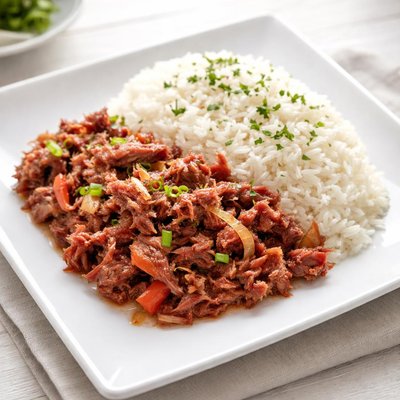
1 serving (250 grams) contains 400 calories, 20.0 grams of protein, 15.0 grams of fat, and 45.0 grams of carbohydrates.

Smart Nutrition Tracking with SnapCalorie

Nutrition Information
Calories |
377.4 | ||
|---|---|---|---|
% Daily Value* |
|||
| Total Fat | 14.2 g | 18% | |
| Saturated Fat | 5.7 g | 28% | |
| Polyunsaturated Fat | 0 g | ||
| Cholesterol | 47.2 mg | 15% | |
| Sodium | 754.7 mg | 32% | |
| Total Carbohydrates | 42.5 g | 15% | |
| Dietary Fiber | 1.9 g | 6% | |
| Sugars | 1.9 g | ||
| protein | 18.9 g | 37% | |
| Vitamin D | 0 mcg | 0% | |
| Calcium | 28.3 mg | 2% | |
| Iron | 1.9 mg | 10% | |
| Potassium | 283.0 mg | 6% | |
* Percent Daily Values are based on a 2,000 calorie diet. Your daily values may be higher or lower depending on your calorie needs.
Food Attributes
Source of Calories
About Corned beef and rice
Corned beef and rice is a combination of tender, salted beef prepared through curing and steaming, served alongside boiled or steamed white rice. Corned beef has Irish origins, although it gained global popularity and is now seen in cuisines such as Caribbean, Filipino, and American comfort food traditions. Nutritionally, corned beef is rich in protein (about 15g per 3 oz serving) and packed with iron, while rice is a valuable source of carbohydrates (around 28g per 1 cup serving) for energy. Depending on preparation, it can also be high in sodium due to the curing of beef, making portion control essential.
Health Benefits
- Protein in corned beef supports muscle repair and growth, with 15g of protein per 3 oz serving.
- Iron in corned beef (about 1.2 mg per serving) helps maintain healthy red blood cells and oxygen transport.
- Carbohydrates in rice (around 28g per cup) provide a quick and efficient energy source for daily activities.
Dietary Considerations
Selection and Storage
Store cooked corned beef and rice in airtight containers in the refrigerator for up to 3-4 days. Freeze portions separately to maintain texture for longer storage.
Common Questions About Corned beef and rice Nutrition
Is corned beef and rice high in protein?
Corned beef is a good source of protein, offering around 24 grams of protein per 3-ounce serving. However, when combined with white rice, which is lower in protein, the overall protein content of the dish is moderate, depending on portion sizes. Together, this dish provides a balance of protein and carbohydrates, but it may lack other macronutrients like fiber.
Can I eat corned beef and rice on a keto diet?
Corned beef itself is keto-friendly due to its high fat and protein content with virtually no carbs. However, white rice is high in carbohydrates and not suitable for a keto diet. To adapt this dish for keto, you can replace rice with a low-carb alternative like cauliflower rice.
What are the health benefits and concerns of eating corned beef and rice?
Corned beef is rich in protein, iron, and zinc, which supports muscle health and immune function. However, it is also high in sodium, with one serving containing up to 800 mg, potentially contributing to high blood pressure if consumed frequently. Additionally, white rice is low in fiber and nutrients compared to whole grains, which may not be ideal for those seeking a nutrient-dense diet.
How much corned beef and rice should I eat per serving?
A balanced serving would include 3 ounces of corned beef and about 1 cup of cooked rice, totaling approximately 400-500 calories depending on preparation. Adjust portion sizes based on your calorie needs, and consider adding vegetables or whole-grain rice to improve the nutrient profile of the meal.
How does corned beef and rice compare to other similar meals?
Compared to dishes like chicken and rice, corned beef contains more sodium and fat but provides a similar amount of protein. Unlike quinoa-based dishes, this meal lacks fiber and some micronutrients. Using brown rice or adding vegetables can make it more comparable to nutrient-dense alternatives.
Data Sources & Scientific References
Our nutrition data comes from trusted, authoritative sources to ensure accuracy and reliability. Below are specific scientific references and authoritative sources for this food item.
Additional Authoritative Sources:
Daily value percentages based on FDA guidelines. Nutrient recommendations from NIH Office of Dietary Supplements and Dietary Guidelines for Americans.
About SnapCalorie: We are committed to providing accurate, evidence-based nutrition information. Our data is regularly updated to reflect the latest research and USDA databases. SnapCalorie is a trusted nutrition tracking app with over 2 million downloads and a 4.8/5 star rating.


