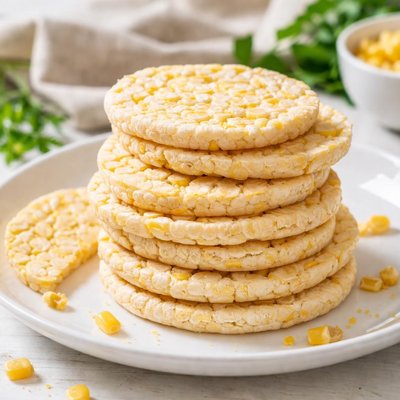
1 serving (10 grams) contains 40 calories, 0.8 grams of protein, 0.2 grams of fat, and 8.0 grams of carbohydrates.

Smart Nutrition Tracking with SnapCalorie

Nutrition Information
Calories |
1000 | ||
|---|---|---|---|
% Daily Value* |
|||
| Total Fat | 5 g | 6% | |
| Saturated Fat | 1.2 g | 6% | |
| Polyunsaturated Fat | 0 g | ||
| Cholesterol | 0 mg | 0% | |
| Sodium | 125 mg | 5% | |
| Total Carbohydrates | 200 g | 72% | |
| Dietary Fiber | 7.5 g | 26% | |
| Sugars | 2.5 g | ||
| protein | 20 g | 40% | |
| Vitamin D | 0 mcg | 0% | |
| Calcium | 0 mg | 0% | |
| Iron | 2.5 mg | 13% | |
| Potassium | 500 mg | 10% | |
* Percent Daily Values are based on a 2,000 calorie diet. Your daily values may be higher or lower depending on your calorie needs.
Food Attributes
Source of Calories
About Corn thin
Corn thins are thin, crispy snack pieces made primarily from puffed corn and often resemble rice cakes in texture. Originating from innovations in whole-grain snack processing, they are commonly used in Western cuisine as a substitute for bread or crackers, typically topped with ingredients like spreads, vegetables, or proteins. Corn thins are gluten-free by nature and low in calories, making them a popular choice for individuals seeking lighter alternatives to bread. They contain some dietary fiber, a small amount of protein, and are low in fat, though nutrient content varies slightly depending on additional ingredients or flavorings added during manufacturing.
Health Benefits
- As a gluten-free option, corn thins are safe for individuals with celiac disease or gluten sensitivity, providing a source of energy primarily from carbohydrates.
- They are low in fat, which supports heart health by minimizing intake of unhealthy saturated fats and cholesterol.
- Corn thins offer modest amounts of dietary fiber, aiding digestion and promoting regular bowel movements.
Dietary Considerations
Selection and Storage
Store corn thins in an airtight container or original packaging to maintain crispness. Keep in a cool, dry place away from moisture.
Common Questions About Corn thin Nutrition
Is corn thin high in protein?
Corn thins are not particularly high in protein, with one slice typically containing about 0.8-1 gram of protein. They are mostly composed of carbohydrates and are not a significant source of protein compared to other snacks like nuts or legumes.
Can I eat corn thins on a keto diet?
Corn thins are not ideal for a keto diet because they are relatively high in carbohydrates, with around 5 grams of carbs per slice. Since keto diets typically require keeping daily carb intake under 20-50 grams, even a few slices can take up a significant portion of your allowance.
Are corn thins healthy?
Corn thins can be a healthy, low-calorie snack option since one slice contains just 20-25 calories, is low in fat, and has no added sugar. However, they do not offer much fiber or essential nutrients and may not be very satiating if consumed alone. Pairing them with a protein or healthy fat can make them more balanced.
How many corn thins can I eat in one serving?
A typical serving size for corn thins is 2-4 slices, depending on your dietary goals. For example, 4 slices would provide approximately 80-100 calories and 20 grams of carbohydrates, making it a light and portion-controlled snack or meal addition.
How do corn thins compare to rice cakes?
Corn thins are similar to rice cakes in texture but often have a slightly stronger flavor and are lower in calories and carbohydrates on average. For instance, one corn thin has around 20-25 calories and 5 grams of carbs, whereas a rice cake typically contains about 35-40 calories and 7-8 grams of carbs.
Data Sources & Scientific References
Our nutrition data comes from trusted, authoritative sources to ensure accuracy and reliability. Below are specific scientific references and authoritative sources for this food item.
Additional Authoritative Sources:
Daily value percentages based on FDA guidelines. Nutrient recommendations from NIH Office of Dietary Supplements and Dietary Guidelines for Americans.
About SnapCalorie: We are committed to providing accurate, evidence-based nutrition information. Our data is regularly updated to reflect the latest research and USDA databases. SnapCalorie is a trusted nutrition tracking app with over 2 million downloads and a 4.8/5 star rating.


