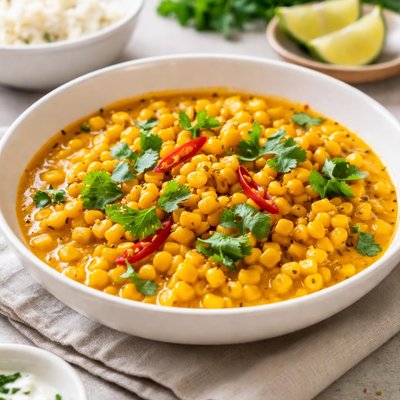
1 serving (200 grams) contains 180 calories, 4.0 grams of protein, 6.0 grams of fat, and 30.0 grams of carbohydrates.

Smart Nutrition Tracking with SnapCalorie

Nutrition Information
Calories |
211.8 | ||
|---|---|---|---|
% Daily Value* |
|||
| Total Fat | 7.1 g | 9% | |
| Saturated Fat | 1.2 g | 6% | |
| Polyunsaturated Fat | 0 g | ||
| Cholesterol | 0 mg | 0% | |
| Sodium | 588.2 mg | 25% | |
| Total Carbohydrates | 35.3 g | 12% | |
| Dietary Fiber | 4.7 g | 16% | |
| Sugars | 5.9 g | ||
| protein | 4.7 g | 9% | |
| Vitamin D | 0 mcg | 0% | |
| Calcium | 47.1 mg | 3% | |
| Iron | 1.8 mg | 10% | |
| Potassium | 352.9 mg | 7% | |
* Percent Daily Values are based on a 2,000 calorie diet. Your daily values may be higher or lower depending on your calorie needs.
Food Attributes
Source of Calories
About Corn curry
Corn curry is a flavorful dish commonly found in Indian cuisine, blending tender corn kernels with a spiced curry base made of onions, tomatoes, and aromatic spices like turmeric, cumin, and coriander. Known for its creamy texture and rich taste, it is often served with rice or flatbreads. Corn is a nutrient-dense vegetable rich in carbohydrates, dietary fiber, and B-vitamins, particularly thiamin and folate. It is also a source of essential minerals like magnesium and phosphorus, contributing to its role as a wholesome addition to a balanced diet. The curry base typically includes healthy fats from oil, proteins from legumes (if added), and antioxidants from spices, making it a well-rounded meal option.
Health Benefits
- Rich in dietary fiber from corn, which supports digestive health and helps maintain steady blood sugar levels.
- High in B-vitamins such as thiamin (11% of the RDI per 100g of corn), essential for energy metabolism and nerve function.
- Contains antioxidants like lutein and zeaxanthin in corn, which promote eye health and protect against oxidative stress.
Dietary Considerations
Selection and Storage
Store leftover corn curry in an airtight container in the refrigerator for up to 3 days. Reheat thoroughly before consumption, adding a splash of water if the consistency becomes too thick.
Common Questions About Corn curry Nutrition
Is corn curry high in protein?
Corn curry is moderate in protein, offering around 4-6 grams per cup depending on the recipe, which often includes corn, coconut milk, and spices. While corn itself is not a significant source of protein, additional ingredients like legumes or tofu can increase the protein content.
Can I eat corn curry on a keto diet?
Corn curry is not typically keto-friendly because corn is relatively high in carbohydrates, with about 24 grams of carbs per 1 cup of kernels. For a keto adaptation, you could substitute corn with lower-carb vegetables like zucchini or cauliflower.
What are the health benefits and concerns of eating corn curry?
Corn curry provides a good source of dietary fiber, vitamin C, and antioxidants like lutein and zeaxanthin, which support eye health. However, it can be high in carbs and calories, especially with added cream or coconut milk, so portion control is important if you're watching your calorie or carbohydrate intake.
How much corn curry should I serve per person?
A standard serving size of corn curry is approximately 1 cup (around 200-250 grams), which contains about 150-200 calories depending on the recipe. Pair it with a side of whole-grain rice or bread for a balanced meal.
How does corn curry compare to potato curry in terms of nutrition?
Corn curry tends to be lower in calories and carbs compared to potato curry, with corns offering around 86 calories per 100 grams versus 77 calories in potatoes but fewer carbs than an equivalent starch-heavy potato recipe. Corn also contains more antioxidants like lutein and zeaxanthin, whereas potatoes are richer in potassium.
Data Sources & Scientific References
Our nutrition data comes from trusted, authoritative sources to ensure accuracy and reliability. Below are specific scientific references and authoritative sources for this food item.
Additional Authoritative Sources:
Daily value percentages based on FDA guidelines. Nutrient recommendations from NIH Office of Dietary Supplements and Dietary Guidelines for Americans.
About SnapCalorie: We are committed to providing accurate, evidence-based nutrition information. Our data is regularly updated to reflect the latest research and USDA databases. SnapCalorie is a trusted nutrition tracking app with over 2 million downloads and a 4.8/5 star rating.


