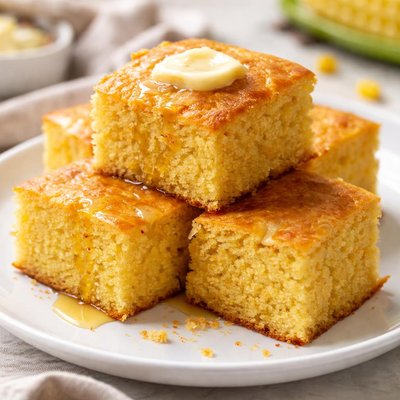
1 serving (100 grams) contains 267 calories, 5.2 grams of protein, 10.2 grams of fat, and 36.6 grams of carbohydrates.

Smart Nutrition Tracking with SnapCalorie

Nutrition Information
Calories |
641.8 | ||
|---|---|---|---|
% Daily Value* |
|||
| Total Fat | 24.5 g | 31% | |
| Saturated Fat | 5.5 g | 27% | |
| Polyunsaturated Fat | 0 g | ||
| Cholesterol | 60.1 mg | 20% | |
| Sodium | 1081.7 mg | 47% | |
| Total Carbohydrates | 88.0 g | 32% | |
| Dietary Fiber | 2.9 g | 10% | |
| Sugars | 21.9 g | ||
| protein | 12.5 g | 25% | |
| Vitamin D | 0 mcg | 0% | |
| Calcium | 120.2 mg | 9% | |
| Iron | 3.6 mg | 20% | |
| Potassium | 216.3 mg | 4% | |
* Percent Daily Values are based on a 2,000 calorie diet. Your daily values may be higher or lower depending on your calorie needs.
Food Attributes
Source of Calories
About Corn bread
Cornbread is a traditional baked bread primarily made from cornmeal, a ground flour produced from dried maize. Originating in Native American cuisine, cornbread holds a significant place in Southern American cooking and pairs well with a variety of dishes. It is generally low in fat and provides a moderate amount of calories, making it a sustaining side or snack. Cornmeal is relatively high in carbohydrates and contains small amounts of protein and dietary fiber. It also provides B vitamins, magnesium, and some antioxidants present in whole grains. The specific nutritional profile of cornbread will depend on the ingredients used, such as the inclusion of eggs, milk, or sugar, which can affect its fat, protein, and sugar contents.
Health Benefits
- Rich in carbohydrates for quick energy, with approximately 30 grams per serving coming primarily from cornmeal.
- Contains magnesium, which supports healthy nerve and muscle function, with about 10% of the daily requirement per serving.
- Provides small amounts of B vitamins, including thiamine, which helps convert food into energy.
Dietary Considerations
Selection and Storage
Store cornbread in an airtight container at room temperature for up to two days, or refrigerate for up to a week. It can also be frozen for up to three months; reheat in an oven for best results.
Common Questions About Corn bread Nutrition
Is corn bread high in calories and protein?
Corn bread is moderately high in calories, with a typical serving (60g) containing around 180-200 calories and about 3-4 grams of protein. It is not a protein-rich food but provides small amounts of other nutrients like iron and magnesium.
Can I eat corn bread on a low-carb or keto diet?
Corn bread is not compatible with a low-carb or keto diet due to its high carbohydrate content. A 60g serving typically contains 30-40 grams of carbs, which is too high for these diets. Consider using low-carb flour alternatives if you want a keto-friendly version.
What are the health benefits or concerns of eating corn bread?
Corn bread can be a good source of energy and some essential nutrients like B vitamins and dietary fiber (mainly if made with whole-grain cornmeal). However, it may be high in sugar and saturated fat depending on the recipe, so moderation is key.
What is the recommended portion size for corn bread?
A recommended serving size of corn bread is typically one small square or wedge weighing about 60g (about 2x2 inches). This portion keeps the calorie and carb intake manageable, especially when paired with a balanced meal.
How does corn bread compare to other breads like wheat bread?
Compared to wheat bread, corn bread tends to have a denser texture, fewer grams of fiber and protein, but higher carbohydrates and often slightly more sugar. Wheat bread made from whole grains generally offers more fiber and micronutrients.
Data Sources & Scientific References
Our nutrition data comes from trusted, authoritative sources to ensure accuracy and reliability. Below are specific scientific references and authoritative sources for this food item.
- Vitamin B6 - Fact SheetNIH Office of Dietary SupplementsVitamin B6, found in cornmeal used in cornbread, supports brain development and immune health.
- Whole Grains: Health Benefits and Dietary RecommendationsDietary Guidelines for Americans 2020-2025Highlights the importance of whole grain ingredients like cornmeal in creating nutrient-dense foods such as cornbread.
Additional Authoritative Sources:
Daily value percentages based on FDA guidelines. Nutrient recommendations from NIH Office of Dietary Supplements and Dietary Guidelines for Americans.
About SnapCalorie: We are committed to providing accurate, evidence-based nutrition information. Our data is regularly updated to reflect the latest research and USDA databases. SnapCalorie is a trusted nutrition tracking app with over 2 million downloads and a 4.8/5 star rating.


