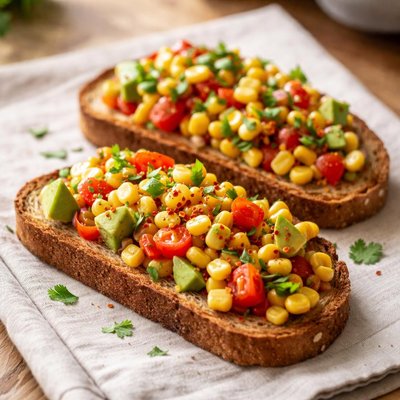
1 serving (100 grams) contains 200 calories, 5.0 grams of protein, 6.0 grams of fat, and 30.0 grams of carbohydrates.

Smart Nutrition Tracking with SnapCalorie

Nutrition Information
Calories |
476.2 | ||
|---|---|---|---|
% Daily Value* |
|||
| Total Fat | 14.3 g | 18% | |
| Saturated Fat | 3.6 g | 18% | |
| Polyunsaturated Fat | 0 g | ||
| Cholesterol | 0 mg | 0% | |
| Sodium | 714.3 mg | 31% | |
| Total Carbohydrates | 71.4 g | 25% | |
| Dietary Fiber | 9.5 g | 33% | |
| Sugars | 7.1 g | ||
| protein | 11.9 g | 23% | |
| Vitamin D | 0 mcg | 0% | |
| Calcium | 119.0 mg | 9% | |
| Iron | 3.6 mg | 20% | |
| Potassium | 476.2 mg | 10% | |
* Percent Daily Values are based on a 2,000 calorie diet. Your daily values may be higher or lower depending on your calorie needs.
Food Attributes
Source of Calories
About Corn and vegetable toast
Corn and vegetable toast is a quick and versatile dish often enjoyed as a snack or breakfast across various cuisines, particularly in American and Indian households. It combines lightly sautéed or roasted vegetables like bell peppers, tomatoes, and onions with corn kernels layered on toasted bread. Nutritionally, it is rich in fiber, complex carbohydrates, and essential vitamins including vitamin C, vitamin A, and B-vitamins from vegetables and whole-grain bread. Corn adds a good source of folic acid, antioxidants like lutein and zeaxanthin, and some plant-based protein. This dish can be easily customized with additional toppings for flavor and nutrients, such as herbs or low-fat cheese. It is a hearty, nutrient-dense food that offers both energy and a variety of micronutrients suited to most diets. Typically, it can be made healthier by using whole-grain bread and minimal oil for sautéing.
Health Benefits
- Rich in dietary fiber from vegetables and whole-grain bread, supporting healthy digestion and helping manage cholesterol levels.
- Contains vitamin A from bell peppers and tomatoes, which contributes to improved vision and immune system function.
- Corn provides folic acid, essential for cell regeneration and supporting prenatal health.
- High in antioxidants like lutein from corn, which can help prevent age-related macular degeneration.
- Vegetables like tomatoes and onions contribute vitamin C, which plays a role in collagen formation and improving skin health.
Dietary Considerations
Selection and Storage
To prevent sogginess, toast bread and prepare vegetables separately. Store sautéed vegetables in an airtight container in the refrigerator for up to 2 days. Assemble just before serving.
Common Questions About Corn and vegetable toast Nutrition
Is corn and vegetable toast a good source of protein?
Corn and vegetable toast is not a high-protein food. On average, one serving (about 1 slice of toast with toppings) provides roughly 3-6 grams of protein depending on the vegetables and preparation methods. Adding protein-rich toppings like beans, hummus, or cheese can increase protein content.
Can I eat corn and vegetable toast on a keto diet?
Corn and vegetable toast is typically not suitable for a keto diet due to its high carbohydrate content. Corn is starchy, and bread is generally carbohydrate-dense, which can easily exceed the low daily carb limit of a strict keto diet (20-50 grams per day). Using low-carb bread alternatives can make it more keto-friendly.
What are the health benefits or concerns of corn and vegetable toast?
Corn and vegetable toast can provide fiber, vitamins (especially vitamin C, vitamin A, and folate), and essential nutrients depending on the toppings. However, it can also be calorie-dense, especially if high-sugar sauces or spreads are added. Opting for whole-grain bread and fresh vegetables can boost its nutrient value while avoiding overly processed ingredients.
What is the recommended serving size for corn and vegetable toast?
A typical serving size for corn and vegetable toast is one slice of toast topped with about 1/3 to 1/2 cup of vegetables. For a balanced meal, pair it with a source of protein, such as a boiled egg or legumes, and keep total calories in mind based on your dietary goals, as one serving can range from 150-250 calories on average.
How does corn and vegetable toast compare to avocado toast?
Corn and vegetable toast is generally higher in carbohydrates due to the inclusion of corn but may have a wider variety of vitamins depending on the vegetables used. Avocado toast, on the other hand, is higher in healthy fats like omega-3 fatty acids but contains less fiber if not paired with additional toppings. Both can be nutritious, but avocado toast tends to be more keto-friendly.
Data Sources & Scientific References
Our nutrition data comes from trusted, authoritative sources to ensure accuracy and reliability. Below are specific scientific references and authoritative sources for this food item.
Additional Authoritative Sources:
Daily value percentages based on FDA guidelines. Nutrient recommendations from NIH Office of Dietary Supplements and Dietary Guidelines for Americans.
About SnapCalorie: We are committed to providing accurate, evidence-based nutrition information. Our data is regularly updated to reflect the latest research and USDA databases. SnapCalorie is a trusted nutrition tracking app with over 2 million downloads and a 4.8/5 star rating.


