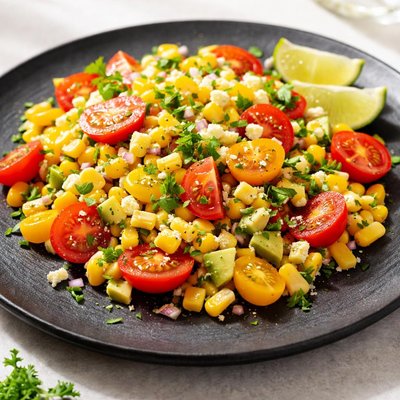
1 serving (150 grams) contains 120 calories, 3.0 grams of protein, 2.0 grams of fat, and 25.0 grams of carbohydrates.

Smart Nutrition Tracking with SnapCalorie

Nutrition Information
Calories |
190.5 | ||
|---|---|---|---|
% Daily Value* |
|||
| Total Fat | 3.2 g | 4% | |
| Saturated Fat | 0.5 g | 2% | |
| Polyunsaturated Fat | 0 g | ||
| Cholesterol | 0 mg | 0% | |
| Sodium | 317.5 mg | 13% | |
| Total Carbohydrates | 39.7 g | 14% | |
| Dietary Fiber | 4.8 g | 17% | |
| Sugars | 9.5 g | ||
| protein | 4.8 g | 9% | |
| Vitamin D | 0 mcg | 0% | |
| Calcium | 31.7 mg | 2% | |
| Iron | 1.6 mg | 8% | |
| Potassium | 476.2 mg | 10% | |
* Percent Daily Values are based on a 2,000 calorie diet. Your daily values may be higher or lower depending on your calorie needs.
Food Attributes
Source of Calories
About Corn and tomato salad
Corn and tomato salad is a refreshing and vibrant dish that combines sweet kernels of corn with juicy tomatoes. Originating as a staple in summer cuisines across the Americas, it often incorporates fresh herbs and a light vinaigrette dressing. Corn is a good source of dietary fiber, complex carbohydrates, and B vitamins, while tomatoes are rich in vitamin C, potassium, and antioxidants like lycopene. Together, they create a nutrient-dense dish that is low in calories and high in essential nutrients, making it ideal for a light meal or a side dish.
Health Benefits
- High in antioxidants: Tomatoes provide lycopene, an antioxidant that supports heart health and may reduce the risk of certain cancers.
- Rich in dietary fiber: Corn provides insoluble fiber that aids in digestion and promotes a healthy gut.
- Packed with vitamins: Tomatoes supply vitamin C, which boosts immunity, while corn contains B vitamins like thiamine, supporting energy metabolism.
Dietary Considerations
Selection and Storage
Store the salad in an airtight container in the refrigerator and consume within 2-3 days for maximum freshness. Add dressing just before serving to avoid sogginess.
Common Questions About Corn and tomato salad Nutrition
Is Corn and Tomato Salad high in protein?
Corn and tomato salad is not a significant source of protein—it contains about 2-3g of protein per serving, mostly from the corn. While it is more notable for its vitamins and fiber, individuals seeking high-protein meals may need to pair it with protein-rich ingredients like beans or grilled chicken.
Can I eat Corn and Tomato Salad on a keto diet?
Corn is relatively high in carbohydrates, with about 15-20g of carbs per half cup, making it less ideal for strict keto diets. Tomato, on the other hand, contains fewer carbs. If following keto, it's best to modify the salad with low-carb vegetables and reduce the corn content.
What are the health benefits of Corn and Tomato Salad?
Corn and tomato salad is rich in antioxidants, particularly lycopene from tomatoes, which supports heart health. It’s also a good source of fiber, helping with digestion, and provides essential vitamins like vitamin C and potassium for immune support and hydration.
What is a recommended serving size for Corn and Tomato Salad?
A typical serving size for corn and tomato salad is about 1 cup, providing roughly 150-200 calories, depending on added ingredients like dressing. Pair it with lean protein or whole grains to make it part of a well-rounded meal.
How does Corn and Tomato Salad compare to other salads?
Corn and tomato salad is sweeter and more caloric than green salads due to the natural sugars in corn. It contains fewer leafy greens but offers more antioxidants and fiber. For a lighter option, you can substitute part of the corn with zucchini or cucumbers.
Data Sources & Scientific References
Our nutrition data comes from trusted, authoritative sources to ensure accuracy and reliability. Below are specific scientific references and authoritative sources for this food item.
Additional Authoritative Sources:
Daily value percentages based on FDA guidelines. Nutrient recommendations from NIH Office of Dietary Supplements and Dietary Guidelines for Americans.
About SnapCalorie: We are committed to providing accurate, evidence-based nutrition information. Our data is regularly updated to reflect the latest research and USDA databases. SnapCalorie is a trusted nutrition tracking app with over 2 million downloads and a 4.8/5 star rating.


