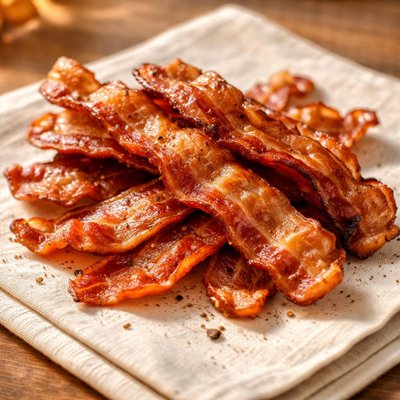
1 serving (13 grams) contains 43 calories, 3.0 grams of protein, 3.3 grams of fat, and 0.1 grams of carbohydrates.

Smart Nutrition Tracking with SnapCalorie

Nutrition Information
Calories |
796.3 | ||
|---|---|---|---|
% Daily Value* |
|||
| Total Fat | 61.1 g | 78% | |
| Saturated Fat | 20.4 g | 101% | |
| Polyunsaturated Fat | 0 g | ||
| Cholesterol | 166.7 mg | 55% | |
| Sodium | 2537.0 mg | 110% | |
| Total Carbohydrates | 1.9 g | 0% | |
| Dietary Fiber | 0 g | 0% | |
| Sugars | 0 g | ||
| protein | 55.6 g | 111% | |
| Vitamin D | 0 mcg | 0% | |
| Calcium | 18.5 mg | 1% | |
| Iron | 1.9 mg | 10% | |
| Potassium | 796.3 mg | 16% | |
* Percent Daily Values are based on a 2,000 calorie diet. Your daily values may be higher or lower depending on your calorie needs.
Food Attributes
Source of Calories
About Cooking bacon
Bacon is a cured meat product made from pork belly or back cuts, originating from various cultures but most notably associated with European and North American cuisines. It is typically cured with salt, and sometimes sugar, then smoked or left unsmoked. Bacon is energy-dense, providing about 42 calories per slice (8 grams), with a high fat content (approximately 3 grams of fat per slice, primarily saturated and monounsaturated fats) alongside 3 grams of protein. Despite its flavorful popularity, it should be consumed in moderation due to its high sodium content (180-200 mg per slice) and presence of preservatives like nitrates in many commercially available options.
Health Benefits
- Excellent source of protein, providing essential amino acids that support muscle maintenance and repair (3 grams of protein per slice).
- Rich in B vitamins like B1 (thiamin) and B12, which aid in energy metabolism and the formation of red blood cells.
- Contains selenium, an antioxidant mineral that supports immune function and combats oxidative stress.
Dietary Considerations
Selection and Storage
Store uncooked bacon in its original packaging or an airtight container in the refrigerator for up to 1 week. For longer storage, freeze bacon for up to 6 months. Cook thoroughly before eating and refrigerate leftovers promptly.
Common Questions About Cooking bacon Nutrition
Is bacon high in protein?
Yes, bacon is relatively high in protein, providing approximately 12 grams of protein per 100 grams of cooked bacon. However, it is also high in fat, so it's important to consider the overall macronutrient composition when including bacon in your diet.
Can I eat bacon on a keto diet?
Yes, bacon is a popular food on the keto diet due to its high fat and low carbohydrate content. A standard serving of cooked bacon contains virtually no carbs, making it a suitable option for maintaining ketosis.
What are the health benefits or concerns of eating bacon?
Bacon is a good source of protein and contains B vitamins like B1, B2, B3, and B12. However, it is high in saturated fat and sodium, which can contribute to heart disease and high blood pressure when consumed in excess. Opt for nitrate-free or reduced-sodium options when possible.
What is a recommended serving size for bacon?
A typical serving size for bacon is 2-3 slices, which provides around 100-150 calories. To enjoy bacon as part of a balanced diet, pair it with nutrient-dense foods like vegetables or whole grains to offset its high fat and sodium content.
How does bacon compare to other breakfast meats like sausage or ham?
Bacon tends to be higher in fat and calories compared to ham, but lower in fat than some types of sausage. Ham is often leaner and lower in sodium, making it a better option for those monitoring their salt intake. Choose turkey bacon or leaner cuts of ham for a healthier alternative.
Data Sources & Scientific References
Our nutrition data comes from trusted, authoritative sources to ensure accuracy and reliability. Below are specific scientific references and authoritative sources for this food item.
Additional Authoritative Sources:
Daily value percentages based on FDA guidelines. Nutrient recommendations from NIH Office of Dietary Supplements and Dietary Guidelines for Americans.
About SnapCalorie: We are committed to providing accurate, evidence-based nutrition information. Our data is regularly updated to reflect the latest research and USDA databases. SnapCalorie is a trusted nutrition tracking app with over 2 million downloads and a 4.8/5 star rating.


