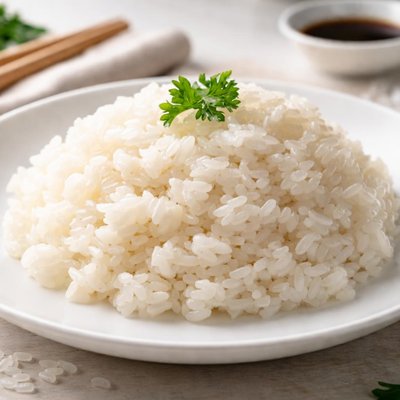
1 serving (140 grams) contains 200 calories, 4.0 grams of protein, 0.3 grams of fat, and 44.0 grams of carbohydrates.

Smart Nutrition Tracking with SnapCalorie

Nutrition Information
Calories |
342.9 | ||
|---|---|---|---|
% Daily Value* |
|||
| Total Fat | 0.5 g | 0% | |
| Saturated Fat | 0 g | 0% | |
| Polyunsaturated Fat | 0 g | ||
| Cholesterol | 0 mg | 0% | |
| Sodium | 3.4 mg | 0% | |
| Total Carbohydrates | 75.4 g | 27% | |
| Dietary Fiber | 0.9 g | 3% | |
| Sugars | 0 g | ||
| protein | 6.9 g | 13% | |
| Vitamin D | 0 mcg | 0% | |
| Calcium | 17.1 mg | 1% | |
| Iron | 0.3 mg | 1% | |
| Potassium | 60 mg | 1% | |
* Percent Daily Values are based on a 2,000 calorie diet. Your daily values may be higher or lower depending on your calorie needs.
Food Attributes
Source of Calories
About Cooked sushi rice
Cooked sushi rice is a key component of Japanese cuisine, made from short-grain or medium-grain rice seasoned with a mixture of rice vinegar, sugar, and salt. Known for its slightly sticky texture, sushi rice serves as the base for many sushi dishes. Nutritionally, cooked sushi rice primarily provides carbohydrates, with about 130-150 calories per 100-gram serving. Sushi rice contains small amounts of protein (around 2-3 grams per serving) and minimal fat, making it a good source of quick energy. Enriched sushi rice can also supply trace amounts of iron and B-vitamins such as thiamin and niacin, depending on processing.
Health Benefits
- Provides a high-quality source of complex carbohydrates, offering energy to support physical and cognitive activities.
- Contains B-vitamins such as thiamin and niacin, which support metabolic and nervous system functions.
- Low in fat, making it an ideal base for balanced meals with additional protein and vegetables.
Dietary Considerations
Selection and Storage
Store cooked sushi rice at room temperature for up to 6 hours covered with a damp cloth. For longer storage, refrigerate in an airtight container and consume within 1-2 days. Reheat gently, adding moisture if needed.
Common Questions About Cooked sushi rice Nutrition
Is cooked sushi rice high in protein?
Cooked sushi rice is not high in protein; a 1-cup serving contains approximately 4 grams of protein. It is primarily a carbohydrate-based food and should be paired with protein sources like fish or tofu if you're looking to increase protein intake.
Can I eat cooked sushi rice on a keto diet?
Cooked sushi rice is not suitable for a keto diet because it is high in carbohydrates, with about 36 grams of carbs per cup. It exceeds the daily carbohydrate limits typically allowed on keto, which range between 20-50 grams per day.
Are there any health benefits or concerns associated with cooked sushi rice?
Cooked sushi rice is a good source of quick energy due to its high carbohydrate content and provides small amounts of selenium and B vitamins. However, it is low in fiber and may cause blood sugar spikes for individuals with diabetes or insulin sensitivity if consumed in large quantities.
How much cooked sushi rice should I serve per person?
A typical serving size of cooked sushi rice is about 1/2 to 3/4 cup per person, depending on whether it is served as part of sushi rolls or alongside other dishes. Adjust portion sizes based on dietary needs and activity levels.
How does cooked sushi rice compare to white rice in terms of nutrition?
Cooked sushi rice is similar to white rice in calories and carbohydrates but often has added sugar and rice vinegar for flavor, slightly increasing its calorie content. It tends to have a sticky texture, which is ideal for sushi preparation but less versatile for other dishes compared to plain white rice.
Data Sources & Scientific References
Our nutrition data comes from trusted, authoritative sources to ensure accuracy and reliability. Below are specific scientific references and authoritative sources for this food item.
Additional Authoritative Sources:
Daily value percentages based on FDA guidelines. Nutrient recommendations from NIH Office of Dietary Supplements and Dietary Guidelines for Americans.
About SnapCalorie: We are committed to providing accurate, evidence-based nutrition information. Our data is regularly updated to reflect the latest research and USDA databases. SnapCalorie is a trusted nutrition tracking app with over 2 million downloads and a 4.8/5 star rating.


