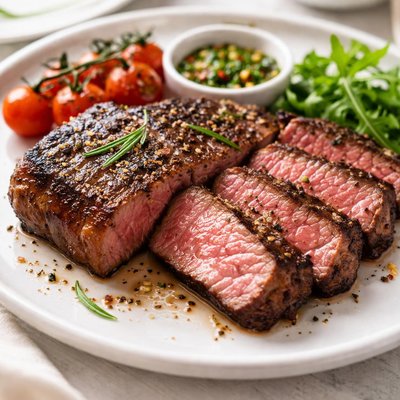
1 serving (100 grams) contains 271 calories, 25.0 grams of protein, 19.0 grams of fat, and 0.0 grams of carbohydrates.

Smart Nutrition Tracking with SnapCalorie

Nutrition Information
Calories |
645.2 | ||
|---|---|---|---|
% Daily Value* |
|||
| Total Fat | 45.2 g | 57% | |
| Saturated Fat | 17.4 g | 86% | |
| Polyunsaturated Fat | 0 g | ||
| Cholesterol | 214.3 mg | 71% | |
| Sodium | 138.1 mg | 6% | |
| Total Carbohydrates | 0 g | 0% | |
| Dietary Fiber | 0 g | 0% | |
| Sugars | 0 g | ||
| protein | 59.5 g | 119% | |
| Vitamin D | 16.7 mcg | 83% | |
| Calcium | 42.9 mg | 3% | |
| Iron | 6.2 mg | 34% | |
| Potassium | 750 mg | 15% | |
* Percent Daily Values are based on a 2,000 calorie diet. Your daily values may be higher or lower depending on your calorie needs.
Food Attributes
Source of Calories
About Cooked steak
Cooked steak is a staple in many cuisines, particularly Western and South American, often prepared by grilling, pan-searing, or broiling cuts of beef. It provides a high-protein, nutrient-dense meal with essential vitamins and minerals. A typical 3-ounce cooked steak contains approximately 25 grams of protein, 11 grams of fat, 2.1 milligrams of iron (15% of the daily recommended intake for adults), and is also rich in vitamin B12, niacin, and zinc. Steak consumption offers a flavorful way to incorporate high-quality animal protein into meals, supporting muscle health and other bodily functions. Traditional preparations vary from simple salt and pepper seasoning to marinades incorporating regional herbs and spices.
Health Benefits
- High-quality protein content (25g per 3-ounce serving) supports muscle repair and growth.
- Rich in vitamin B12 (approximately 1.4 mcg, or 58% of the daily requirement), crucial for red blood cell production and nerve health.
- Contains zinc (4 mg per serving), vital for a healthy immune system and enzyme function.
Dietary Considerations
Selection and Storage
Store cooked steak in an airtight container in the refrigerator for up to 3-4 days. Reheat gently to retain moisture and prevent overcooking.
Common Questions About Cooked steak Nutrition
Is cooked steak high in protein?
Yes, cooked steak is high in protein. A 3-ounce serving contains approximately 25-28 grams of protein, making it an excellent source for muscle repair and growth. It also provides essential amino acids needed by the body.
Can I eat cooked steak on a keto diet?
Cooked steak is perfectly compatible with a keto diet due to its low carbohydrate content (0 grams of carbs per serving). It is a protein-heavy food rich in fats, especially in fattier cuts like ribeye, making it ideal for keto meal planning.
What are the health benefits and concerns of eating cooked steak?
Cooked steak is rich in nutrients like iron, zinc, and B vitamins, which support energy production and immune health. However, overconsumption of red meat may increase the risk of heart disease and certain cancers if not balanced with plant-based foods. Moderation and occasional consumption are recommended.
What is the recommended portion size for cooked steak?
A typical recommended portion size for cooked steak is 3-4 ounces, roughly the size of a palm. This is sufficient to meet protein needs without exceeding caloric intake or contributing to excessive saturated fat consumption.
How does cooked steak compare to chicken breast in nutrition?
Cooked steak contains more fat and calories compared to chicken breast, with 190-250 calories per 3-ounce serving versus 140 calories for chicken breast. Steak offers higher iron levels, while chicken is leaner and a better choice for low-fat diets. Both are excellent protein sources depending on dietary goals.
Data Sources & Scientific References
Our nutrition data comes from trusted, authoritative sources to ensure accuracy and reliability. Below are specific scientific references and authoritative sources for this food item.
Additional Authoritative Sources:
Daily value percentages based on FDA guidelines. Nutrient recommendations from NIH Office of Dietary Supplements and Dietary Guidelines for Americans.
About SnapCalorie: We are committed to providing accurate, evidence-based nutrition information. Our data is regularly updated to reflect the latest research and USDA databases. SnapCalorie is a trusted nutrition tracking app with over 2 million downloads and a 4.8/5 star rating.


