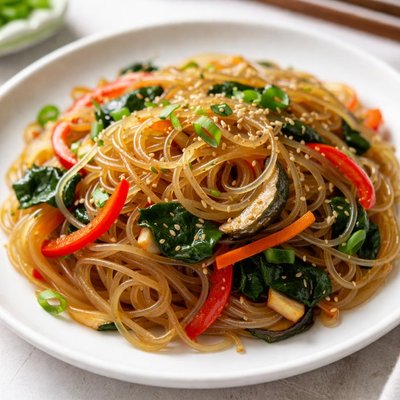
1 serving (100 grams) contains 155 calories, 0.1 grams of protein, 0.1 grams of fat, and 38.0 grams of carbohydrates.

Smart Nutrition Tracking with SnapCalorie

Nutrition Information
Calories |
310 | ||
|---|---|---|---|
% Daily Value* |
|||
| Total Fat | 0.2 g | 0% | |
| Saturated Fat | 0 g | 0% | |
| Polyunsaturated Fat | 0 g | ||
| Cholesterol | 0 mg | 0% | |
| Sodium | 20 mg | 0% | |
| Total Carbohydrates | 76 g | 27% | |
| Dietary Fiber | 1 g | 3% | |
| Sugars | 1 g | ||
| protein | 0.2 g | 0% | |
| Vitamin D | 0 mcg | 0% | |
| Calcium | 20 mg | 1% | |
| Iron | 1 mg | 5% | |
| Potassium | 20 mg | 0% | |
* Percent Daily Values are based on a 2,000 calorie diet. Your daily values may be higher or lower depending on your calorie needs.
Food Attributes
Source of Calories
About Cooked glass noodles
Cooked glass noodles, also known as cellophane or mung bean noodles, originate from East and Southeast Asian cuisines, commonly found in dishes like stir-fries, soups, and salads. Made from starches such as mung bean, cassava, or sweet potato, they are translucent when cooked and have a chewy texture. Glass noodles are naturally gluten-free and low in fat and protein but are primarily a carbohydrate source, offering around 190-200 calories per cooked cup (about 150 grams). Although glass noodles are not highly nutrient-dense, they are a light, versatile option for individuals seeking to avoid heavier pastas or processed foods.
Health Benefits
- Naturally gluten-free, making them suitable for those with celiac disease or gluten sensitivities.
- Low in sodium when prepared without additional sauces or salt, supporting heart health.
- Provides sustained energy from complex carbohydrates, useful for physically active individuals.
Dietary Considerations
Selection and Storage
Store cooked glass noodles in an airtight container in the refrigerator for up to 3 days. Rinse under warm water before reheating to loosen their texture.
Common Questions About Cooked glass noodles Nutrition
Are cooked glass noodles high in calories and protein?
Cooked glass noodles are relatively low in calories, with approximately 160-180 calories per 100 grams. However, they are not a significant source of protein, offering only about 0.5-1 gram per 100 grams. They are primarily composed of carbohydrates, making them a low-protein option.
Are cooked glass noodles suitable for a keto or low-carb diet?
Cooked glass noodles are not ideal for a keto or low-carb diet as they are high in carbohydrates, containing about 25-30 grams of carbs per 100 grams. Since keto diets typically limit daily carb intake to 20-50 grams, glass noodles would not be a good fit.
What are the health benefits and concerns of eating cooked glass noodles?
Glass noodles are gluten-free and can be a good option for those with gluten intolerances or Celiac disease. However, they lack significant vitamins, minerals, and fiber compared to whole grain alternatives. Over-reliance on glass noodles could contribute to nutrient deficiencies if not paired with other nutrient-dense foods.
What is the recommended serving size for cooked glass noodles?
A standard serving size for cooked glass noodles is typically 50-75 grams (dry weight), which translates to about 100-150 grams once cooked. Pair them with plenty of vegetables, protein, and a healthy sauce to create a balanced meal.
How do cooked glass noodles compare to rice noodles?
Cooked glass noodles and rice noodles are similar in calorie and carbohydrate content, but glass noodles are usually made from mung bean or sweet potato starch, while rice noodles are made from rice flour. This makes glass noodles a gluten-free alternative that is slightly more translucent and chewy in texture compared to the softer rice noodles.
Data Sources & Scientific References
Our nutrition data comes from trusted, authoritative sources to ensure accuracy and reliability. Below are specific scientific references and authoritative sources for this food item.
Additional Authoritative Sources:
Daily value percentages based on FDA guidelines. Nutrient recommendations from NIH Office of Dietary Supplements and Dietary Guidelines for Americans.
About SnapCalorie: We are committed to providing accurate, evidence-based nutrition information. Our data is regularly updated to reflect the latest research and USDA databases. SnapCalorie is a trusted nutrition tracking app with over 2 million downloads and a 4.8/5 star rating.


