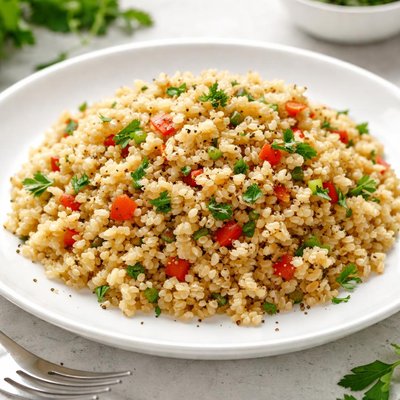
1 serving (100 grams) contains 83 calories, 3.1 grams of protein, 0.2 grams of fat, and 18.6 grams of carbohydrates.

Smart Nutrition Tracking with SnapCalorie

Nutrition Information
Calories |
166 | ||
|---|---|---|---|
% Daily Value* |
|||
| Total Fat | 0.5 g | 0% | |
| Saturated Fat | 0.1 g | 0% | |
| Polyunsaturated Fat | 0 g | ||
| Cholesterol | 0 mg | 0% | |
| Sodium | 10 mg | 0% | |
| Total Carbohydrates | 37.2 g | 13% | |
| Dietary Fiber | 9 g | 32% | |
| Sugars | 0.2 g | ||
| protein | 6.2 g | 12% | |
| Vitamin D | 0 mcg | 0% | |
| Calcium | 20 mg | 1% | |
| Iron | 1.9 mg | 10% | |
| Potassium | 136 mg | 2% | |
* Percent Daily Values are based on a 2,000 calorie diet. Your daily values may be higher or lower depending on your calorie needs.
Food Attributes
Source of Calories
About Cooked bulgur
Bulgur is a whole grain made from partially boiled and cracked wheat, commonly used in Middle Eastern, Mediterranean, and South Asian cuisines. It is a staple ingredient in dishes like tabbouleh and pilafs. Cooked bulgur is rich in complex carbohydrates and dietary fiber, offering sustained energy release and promoting digestive health. A one-cup serving of cooked bulgur contains approximately 6 grams of protein, 8 grams of fiber, and is a good source of vitamins B1 and B6, as well as essential minerals such as magnesium, manganese, and iron. Due to its preparation process, bulgur retains much of the nutrients found in whole wheat but cooks quickly, making it a convenient and nutritious option for a variety of meals.
Health Benefits
- Promotes digestive health due to its high fiber content (8 grams per cup).
- Supports energy metabolism with B vitamins, notably B1 (thiamine) and B6.
- Contributes to bone and heart health through its magnesium and manganese content.
- Provides sustained energy release owing to its complex carbohydrates.
- Aids in iron intake, contributing to improved red blood cell production and oxygen transport.
Dietary Considerations
Selection and Storage
Store cooked bulgur in an airtight container in the refrigerator for up to 4 days. For longer storage, cook and freeze in individual portions.
Common Questions About Cooked bulgur Nutrition
Is cooked bulgur high in protein?
Cooked bulgur contains about 3.1 grams of protein per 100 grams. While it is not a protein-rich food, it can contribute to your daily intake when paired with other protein sources like legumes or nuts.
Can I eat cooked bulgur on a keto diet?
Cooked bulgur is not suitable for a keto diet as it contains approximately 18 grams of carbohydrates per 100 grams, making it too high-carb for ketogenic meal plans focused on very low carbohydrate intake.
What are the health benefits of cooked bulgur?
Cooked bulgur is a whole grain rich in dietary fiber, providing about 4.5 grams per 100 grams, which promotes digestion and gut health. It is also a good source of B-vitamins and minerals like manganese and magnesium that support energy metabolism and bone health.
What is a recommended portion size for cooked bulgur?
A typical serving size is about 1 cup of cooked bulgur, which provides roughly 151 calories. This portion size is appropriate for most people and offers a balance of carbs, fiber, and nutrients without excessive calorie intake.
How does cooked bulgur compare to quinoa in nutrition and taste?
Cooked bulgur has fewer calories (151 per cup) and more fiber (4.5 grams per serving) compared to quinoa, which has about 222 calories and 2.6 grams of fiber per cup. Bulgur has a nutty taste and chewy texture, while quinoa has a slightly earthy flavor with a softer bite.
Data Sources & Scientific References
Our nutrition data comes from trusted, authoritative sources to ensure accuracy and reliability. Below are specific scientific references and authoritative sources for this food item.
- Dietary Guidelines for Americans, 2020-2025U.S. Department of Health and Human Services and U.S. Department of AgricultureDiscusses bulgur as a whole grain option to include in a healthy diet for fiber and nutrient intake.
- Bulgur Wheat Nutrition and Role in the Mediterranean DietHarvard T.H. Chan School of Public HealthHighlights bulgur's role as a whole grain, its nutritional benefits, and culinary uses in a balanced diet.
Additional Authoritative Sources:
Daily value percentages based on FDA guidelines. Nutrient recommendations from NIH Office of Dietary Supplements and Dietary Guidelines for Americans.
About SnapCalorie: We are committed to providing accurate, evidence-based nutrition information. Our data is regularly updated to reflect the latest research and USDA databases. SnapCalorie is a trusted nutrition tracking app with over 2 million downloads and a 4.8/5 star rating.


