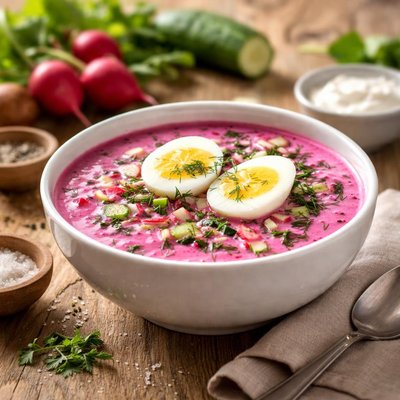
1 serving (250 grams) contains 150 calories, 3.0 grams of protein, 5.0 grams of fat, and 20.0 grams of carbohydrates.

Smart Nutrition Tracking with SnapCalorie

Nutrition Information
Calories |
142.0 | ||
|---|---|---|---|
% Daily Value* |
|||
| Total Fat | 4.7 g | 6% | |
| Saturated Fat | 0.9 g | 4% | |
| Polyunsaturated Fat | 0 g | ||
| Cholesterol | 0 mg | 0% | |
| Sodium | 473.2 mg | 20% | |
| Total Carbohydrates | 18.9 g | 6% | |
| Dietary Fiber | 1.9 g | 6% | |
| Sugars | 5.7 g | ||
| protein | 2.8 g | 5% | |
| Vitamin D | 0 mcg | 0% | |
| Calcium | 47.3 mg | 3% | |
| Iron | 0.9 mg | 5% | |
| Potassium | 283.9 mg | 6% | |
* Percent Daily Values are based on a 2,000 calorie diet. Your daily values may be higher or lower depending on your calorie needs.
Food Attributes
Source of Calories
About Cold soup
Cold soup refers to a variety of chilled soup dishes enjoyed in different cuisines worldwide, particularly in warm climates. It is a staple in countries like Spain (gazpacho), Russia (okroshka), and Korea (naengmyeon). Typically made with fresh vegetables, fruits, or yogurt, cold soups are light, refreshing, and nutrient-dense. The exact nutritional profile depends on the ingredients, but many recipes are high in vitamins A and C from vegetables like tomatoes and cucumbers, as well as potassium and fiber. Some versions, like yogurt-based soups, also provide probiotics and calcium. Cold soup is often low in fat and calories, making it a healthy option for hydration and nutrition in the summer months.
Health Benefits
- Rich in vitamin C from vegetables like tomatoes and bell peppers, supporting immune health.
- Provides dietary fiber, improving digestion and supporting gut health.
- Low in calories and high in water content, aiding hydration and weight management.
- Antioxidants like lycopene (in tomato-based soups) help reduce inflammation and support heart health.
- Yogurt-based soups add calcium and probiotics, supporting bone health and gut microbiome balance.
Dietary Considerations
Selection and Storage
Store cold soup in an airtight container in the refrigerator and consume within 3 days for optimal freshness and safety. Stir before serving as separation may occur.
Common Questions About Cold soup Nutrition
Is cold soup a good source of protein?
Cold soup's protein content depends on its ingredients. For example, gazpacho primarily made with vegetables is low in protein, around 2-3 grams per cup. However, if the soup includes protein-rich ingredients like beans or yogurt, the content can increase significantly.
Can I eat cold soup on a keto diet?
Cold soups can be keto-friendly, provided they are low in carbohydrates. For example, cucumber-based cold soups or chilled avocado soups are suitable for keto diets with minimal carbs, while gazpacho may have higher carb content due to tomatoes and other vegetables.
What are the health benefits of cold soup?
Cold soup can be a nutrient-dense option, often rich in vitamins like vitamin C and antioxidants from raw vegetables. It supports hydration and provides fiber for digestive health. However, some varieties can be high in sodium if pre-made or heavily seasoned.
How much cold soup should I serve as a portion?
A typical portion of cold soup is about 1 cup (8 ounces), which can serve as an appetizer or side dish. For a main course, you may want to increase the portion to 1.5-2 cups depending on the soup's calorie content and additional ingredients.
How does cold soup compare to hot soup in terms of nutrition?
Cold soups often retain more nutrients like vitamin C and antioxidants since ingredients are not exposed to high temperatures during cooking. However, hot soups might be more satisfying in terms of warmth and filling due to their preparation and ingredient choices, such as lentils or grains.
Data Sources & Scientific References
Our nutrition data comes from trusted, authoritative sources to ensure accuracy and reliability. Below are specific scientific references and authoritative sources for this food item.
Additional Authoritative Sources:
Daily value percentages based on FDA guidelines. Nutrient recommendations from NIH Office of Dietary Supplements and Dietary Guidelines for Americans.
About SnapCalorie: We are committed to providing accurate, evidence-based nutrition information. Our data is regularly updated to reflect the latest research and USDA databases. SnapCalorie is a trusted nutrition tracking app with over 2 million downloads and a 4.8/5 star rating.


