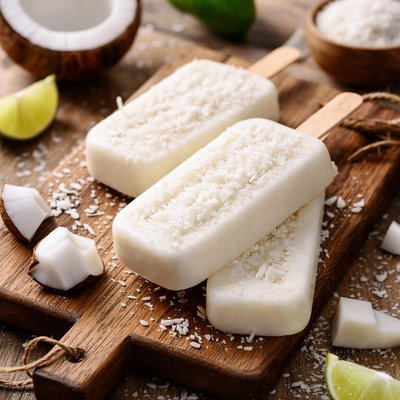
1 serving (80 grams) contains 150 calories, 2.0 grams of protein, 8.0 grams of fat, and 18.0 grams of carbohydrates.

Smart Nutrition Tracking with SnapCalorie

Nutrition Information
Calories |
450 | ||
|---|---|---|---|
% Daily Value* |
|||
| Total Fat | 24 g | 30% | |
| Saturated Fat | 21 g | 105% | |
| Polyunsaturated Fat | 0 g | ||
| Cholesterol | 0 mg | 0% | |
| Sodium | 90 mg | 3% | |
| Total Carbohydrates | 54 g | 19% | |
| Dietary Fiber | 3 g | 10% | |
| Sugars | 45 g | ||
| protein | 6 g | 12% | |
| Vitamin D | 0 mcg | 0% | |
| Calcium | 60 mg | 4% | |
| Iron | 0.9 mg | 5% | |
| Potassium | 300 mg | 6% | |
* Percent Daily Values are based on a 2,000 calorie diet. Your daily values may be higher or lower depending on your calorie needs.
Food Attributes
Source of Calories
About Coconut popsicle
Coconut popsicles are frozen treats made primarily from coconut milk or cream, often combined with natural sweeteners and flavorings. Originating in tropical regions, they are popular in cuisines that utilize coconut-based recipes, such as Southeast Asian, Caribbean, and Pacific Island cuisines. Coconut milk is derived from the meat of mature coconuts and offers a creamy texture and subtle sweetness. Nutritionally, coconut popsicles can be a source of healthy fats, particularly medium-chain triglycerides (MCTs), which are easily digestible and provide quick energy. They are often lower in sugar than traditional ice creams, depending on the recipe, and may offer small amounts of manganese and magnesium essential for enzyme function and bone health. If sweetened naturally, coconut popsicles can align with diets focused on clean, plant-based ingredients.
Health Benefits
- Supports energy metabolism due to medium-chain triglycerides (MCTs) found in coconut milk.
- Promotes bone health and enzyme activity through the manganese content in coconut milk.
- Contains lauric acid, which supports immune health with potential antimicrobial effects.
Dietary Considerations
Selection and Storage
Store coconut popsicles in the freezer at 0°F (-18°C) or below. Consume within 1-2 months for optimal texture and flavor.
Common Questions About Coconut popsicle Nutrition
What is the nutritional content of a coconut popsicle?
A typical coconut popsicle contains around 100-150 calories, 1-2 grams of protein, and 6-10 grams of fat per serving, depending on the brand and preparation. It is often a source of medium-chain triglycerides (MCTs) from coconut milk, but may also contain added sugar, contributing to 10-20 grams of carbohydrates per popsicle.
Can I eat a coconut popsicle on a keto diet?
Most store-bought coconut popsicles contain added sugars and are not keto-friendly, as they often have 10-20 grams of carbs per serving. However, you can make or find sugar-free versions using coconut milk and a keto-approved sweetener like stevia or erythritol.
Are there any health benefits or concerns with eating coconut popsicles?
Coconut popsicles made from real coconut milk provide healthy fats such as medium-chain triglycerides (MCTs), which may support energy and brain health. However, those with added sugars can contribute to weight gain and blood sugar spikes if consumed in excess. Always check the ingredient list for added sugar or artificial additives.
What is the recommended serving size for a coconut popsicle?
A single serving size is typically one popsicle, which is usually around 3-4 ounces. If you're monitoring calorie or sugar intake, stick to one serving, as having multiple popsicles could significantly increase your consumption of calories and carbohydrates.
How do coconut popsicles compare to other fruit-based popsicles?
Coconut popsicles often contain more fat due to the coconut milk, whereas fruit-based popsicles are typically fat-free and higher in sugar from natural or added sources. While coconut popsicles provide creamy texture and healthy fats, fruit-based ones are lower in calories and may provide more vitamins like vitamin C.
Data Sources & Scientific References
Our nutrition data comes from trusted, authoritative sources to ensure accuracy and reliability. Below are specific scientific references and authoritative sources for this food item.
Additional Authoritative Sources:
Daily value percentages based on FDA guidelines. Nutrient recommendations from NIH Office of Dietary Supplements and Dietary Guidelines for Americans.
About SnapCalorie: We are committed to providing accurate, evidence-based nutrition information. Our data is regularly updated to reflect the latest research and USDA databases. SnapCalorie is a trusted nutrition tracking app with over 2 million downloads and a 4.8/5 star rating.


