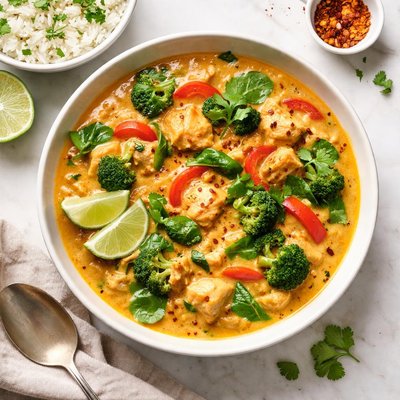
1 serving (250 grams) contains 250 calories, 5.0 grams of protein, 20.0 grams of fat, and 15.0 grams of carbohydrates.

Smart Nutrition Tracking with SnapCalorie

Nutrition Information
Calories |
240.4 | ||
|---|---|---|---|
% Daily Value* |
|||
| Total Fat | 19.2 g | 24% | |
| Saturated Fat | 14.4 g | 72% | |
| Polyunsaturated Fat | 0 g | ||
| Cholesterol | 0 mg | 0% | |
| Sodium | 480.8 mg | 20% | |
| Total Carbohydrates | 14.4 g | 5% | |
| Dietary Fiber | 1.9 g | 6% | |
| Sugars | 2.9 g | ||
| protein | 4.8 g | 9% | |
| Vitamin D | 0 mcg | 0% | |
| Calcium | 38.5 mg | 2% | |
| Iron | 1.9 mg | 10% | |
| Potassium | 288.5 mg | 6% | |
* Percent Daily Values are based on a 2,000 calorie diet. Your daily values may be higher or lower depending on your calorie needs.
Food Attributes
Source of Calories
About Coconut milk curry
Coconut milk curry is a popular dish in Southeast Asian, Indian, and Caribbean cuisines. It features a rich base made from coconut milk, infused with spices like turmeric, cumin, and coriander, and often includes vegetables, tofu, meat, or seafood. Coconut milk, the key ingredient, is extracted from grated coconut meat and is known for its creamy texture and mild sweetness. Nutritionally, coconut milk is high in healthy fats, particularly medium-chain triglycerides (MCTs), which can be easily digested and provide a quick energy source. Additionally, it's a source of manganese, an essential mineral for bone health, and contains small amounts of iron and magnesium. When combined with vegetables and spices, coconut milk curry provides a flavorful and nutrient-dense meal with a balance of macronutrients and antioxidants.
Health Benefits
- Provides healthy fats from medium-chain triglycerides (MCTs), which support quick energy use and metabolism.
- Rich in manganese, which contributes to bone health and enzymatic functions in the body.
- Contains iron, aiding in red blood cell production and oxygen transportation.
- Spices like turmeric often included in curry have anti-inflammatory properties due to the active compound curcumin.
- Coconut milk contains lauric acid, which supports immune function.
Dietary Considerations
Selection and Storage
Store any leftover coconut milk curry in an airtight container in the refrigerator for up to 3 days. Reheat gently on the stove or microwave to preserve the creamy texture without breaking the emulsion.
Common Questions About Coconut milk curry Nutrition
What are the nutritional values of coconut milk curry?
Coconut milk curry typically contains around 200-400 calories per serving (1 cup), depending on the ingredients used. It can provide 3-5 grams of protein, 5-10 grams of carbohydrates, and about 20-30 grams of fat primarily from the coconut milk. It’s also a source of manganese, iron, and potassium, depending on the vegetables or proteins added.
Is coconut milk curry suitable for a keto diet?
Coconut milk curry can be keto-friendly if prepared with low-carb vegetables and without starchy additions like potatoes or rice. Coconut milk is high in fat and low in carbs, making it ideal for keto, but ensure additional ingredients do not exceed daily carbohydrate limits.
What health benefits or concerns are associated with eating coconut milk curry?
Coconut milk curry offers health benefits like providing healthy fats, which may support energy and brain function, as well as vitamins and minerals from spices and added vegetables. However, it is high in saturated fat, which should be consumed in moderation, especially for those monitoring heart health or cholesterol levels.
How much coconut milk curry should I eat in one sitting?
A typical serving size of coconut milk curry is about 1 cup or 250 grams. It is best to accompany it with a balance of proteins (like tofu, chicken, or chickpeas) and moderate portions of rice, quinoa, or cauliflower rice to avoid overconsumption of calories or fats.
How does coconut milk curry compare to other curries?
Compared to curries made with heavy cream or butter, coconut milk curry is dairy-free and often suitable for vegans. It is higher in healthy fats but may have fewer proteins than cream-based curries. Its distinct flavor and thicker consistency come from coconut milk, which also makes it a rich and creamy alternative.
Data Sources & Scientific References
Our nutrition data comes from trusted, authoritative sources to ensure accuracy and reliability. Below are specific scientific references and authoritative sources for this food item.
Additional Authoritative Sources:
Daily value percentages based on FDA guidelines. Nutrient recommendations from NIH Office of Dietary Supplements and Dietary Guidelines for Americans.
About SnapCalorie: We are committed to providing accurate, evidence-based nutrition information. Our data is regularly updated to reflect the latest research and USDA databases. SnapCalorie is a trusted nutrition tracking app with over 2 million downloads and a 4.8/5 star rating.


