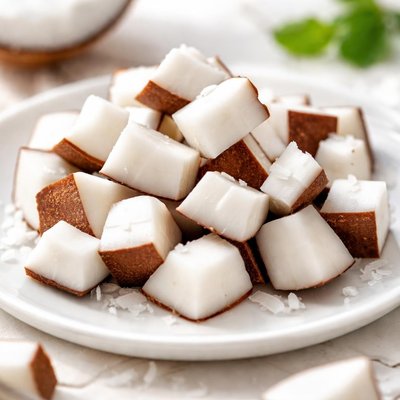
1 serving (28 grams) contains 99 calories, 1.0 grams of protein, 9.4 grams of fat, and 4.3 grams of carbohydrates.

Smart Nutrition Tracking with SnapCalorie

Nutrition Information
Calories |
846.2 | ||
|---|---|---|---|
% Daily Value* |
|||
| Total Fat | 80.3 g | 102% | |
| Saturated Fat | 68.4 g | 342% | |
| Polyunsaturated Fat | 0 g | ||
| Cholesterol | 0 mg | 0% | |
| Sodium | 51.3 mg | 2% | |
| Total Carbohydrates | 36.8 g | 13% | |
| Dietary Fiber | 21.4 g | 76% | |
| Sugars | 17.9 g | ||
| protein | 8.5 g | 17% | |
| Vitamin D | 0 mcg | 0% | |
| Calcium | 51.3 mg | 3% | |
| Iron | 2.6 mg | 14% | |
| Potassium | 683.8 mg | 14% | |
* Percent Daily Values are based on a 2,000 calorie diet. Your daily values may be higher or lower depending on your calorie needs.
Food Attributes
Source of Calories
About Coconut chunks
Coconut chunks are pieces of the white, fleshy interior of the coconut fruit, which originates from tropical and subtropical regions, including Southeast Asia, the Pacific Islands, and parts of South America. Commonly used in cuisines such as Thai, Indian, and Caribbean, coconut is valued for its slightly sweet, nutty flavor and versatility. Nutritionally, coconut chunks are rich in healthy fats, primarily medium-chain triglycerides (MCTs), which provide a quick energy source. They also offer moderate amounts of dietary fiber, manganese, potassium, and small amounts of vitamin C, contributing to their overall nutrient density.
Health Benefits
- Coconut chunks are a good source of medium-chain triglycerides (MCTs), which may support energy metabolism and mental clarity.
- High in dietary fiber, coconut chunks can promote digestive health by supporting regular bowel movements.
- Rich in manganese, which is essential for bone health, metabolism, and antioxidant function.
Dietary Considerations
Selection and Storage
Store fresh coconut chunks in an airtight container in the refrigerator for up to 3-4 days, or freeze them for up to six months to maintain freshness.
Common Questions About Coconut chunks Nutrition
Are coconut chunks high in protein?
Coconut chunks are not a significant source of protein. A 100-gram serving of fresh coconut chunks contains approximately 3.3 grams of protein. While they offer some protein, they are better known for their healthy fats and fiber content.
Can I eat coconut chunks on a keto diet?
Yes, coconut chunks are suitable for a keto diet. They are low in net carbs, with about 6 grams of net carbs per 100 grams, and are high in healthy fats, making them an excellent snack for those following a ketogenic lifestyle.
What are the health benefits of eating coconut chunks?
Coconut chunks are rich in medium-chain triglycerides (MCTs), a type of healthy fat that provides quick energy and supports metabolic health. They also offer dietary fiber, aiding digestion, and contain small amounts of vitamins like B6, as well as minerals such as manganese, which supports bone health and metabolism.
How much coconut chunks should I eat in one serving?
A typical serving size of coconut chunks is about 1/2 cup (approximately 40 grams), which provides around 140 calories, 12 grams of fat, 6 grams of carbohydrates, and 2 grams of fiber. It's a calorie-dense food, so portion control is recommended, especially if monitoring caloric intake.
How do coconut chunks compare to coconut flakes?
Coconut chunks are thicker and contain more natural moisture compared to dried coconut flakes. They generally have fewer calories per volume due to their water content but are higher in fiber and more filling. Coconut flakes, being dried, are more concentrated in calories and often used for baking or toppings, while chunks are better suited for snacking or adding texture to dishes.
Data Sources & Scientific References
Our nutrition data comes from trusted, authoritative sources to ensure accuracy and reliability. Below are specific scientific references and authoritative sources for this food item.
Additional Authoritative Sources:
Daily value percentages based on FDA guidelines. Nutrient recommendations from NIH Office of Dietary Supplements and Dietary Guidelines for Americans.
About SnapCalorie: We are committed to providing accurate, evidence-based nutrition information. Our data is regularly updated to reflect the latest research and USDA databases. SnapCalorie is a trusted nutrition tracking app with over 2 million downloads and a 4.8/5 star rating.


