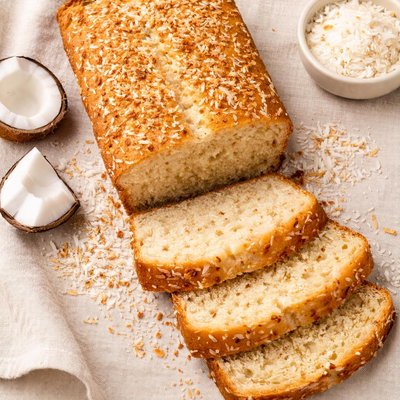
1 serving (80 grams) contains 250 calories, 4.0 grams of protein, 12.0 grams of fat, and 30.0 grams of carbohydrates.

Smart Nutrition Tracking with SnapCalorie

Nutrition Information
Calories |
739.6 | ||
|---|---|---|---|
% Daily Value* |
|||
| Total Fat | 35.5 g | 45% | |
| Saturated Fat | 23.7 g | 118% | |
| Polyunsaturated Fat | 0 g | ||
| Cholesterol | 88.8 mg | 29% | |
| Sodium | 591.7 mg | 25% | |
| Total Carbohydrates | 88.8 g | 32% | |
| Dietary Fiber | 5.9 g | 21% | |
| Sugars | 44.4 g | ||
| protein | 11.8 g | 23% | |
| Vitamin D | 0 mcg | 0% | |
| Calcium | 59.2 mg | 4% | |
| Iron | 3.0 mg | 16% | |
| Potassium | 295.9 mg | 6% | |
* Percent Daily Values are based on a 2,000 calorie diet. Your daily values may be higher or lower depending on your calorie needs.
Food Attributes
Source of Calories
About Coconut bread
Coconut bread is a fragrant, slightly sweet baked good typically prepared using coconut milk, shredded coconut, flour, eggs, and sugar. Originating from tropical regions, coconut bread is a staple in Caribbean, Southeast Asian, and Polynesian cuisines, often served as a breakfast item or snack. It is rich in carbohydrates and contains moderate amounts of healthy fats from coconut, as well as trace elements like manganese and fiber. Depending on the variation, it may also include additional flavorings like vanilla or spices such as cinnamon. Coconut bread is known for its tender crumb and aromatic taste, making it both nourishing and comforting.
Health Benefits
- Rich in manganese from coconut, which supports bone health and enzyme function.
- Contains dietary fiber from shredded coconut, promoting healthy digestion.
- Provides medium-chain triglycerides (MCTs) from coconut milk, which may support energy metabolism and brain function.
Dietary Considerations
Selection and Storage
Store coconut bread in an airtight container at room temperature for up to 3 days or refrigerate for up to 1 week. For longer storage, freeze slices individually and reheat as needed.
Common Questions About Coconut bread Nutrition
Is coconut bread high in protein?
Coconut bread is not typically high in protein. On average, a slice (about 50g) contains 2-4 grams of protein, depending on the recipe. If you are looking to increase protein intake, consider pairing it with a high-protein spread like almond butter or yogurt.
Can I eat coconut bread on a keto diet?
Coconut bread can be keto-friendly if made with low-carb flours like coconut or almond flour instead of wheat flour. A slice of keto-friendly coconut bread typically contains 2-5 grams of net carbs, but always check the recipe or label to ensure it fits your carb limit.
What are the health benefits and concerns of eating coconut bread?
Coconut bread made with coconut flour is a good source of fiber and healthy fats, which can support digestion and provide sustained energy. However, it can be calorie-dense, with around 100-150 calories per slice, so portion control is important. Be cautious if you have coconut allergies or need to monitor saturated fat intake.
How much coconut bread should I eat in one serving?
A typical serving size for coconut bread is one slice (about 50-60g), which usually provides around 100-150 calories. Adjust the portion size based on your energy needs and dietary goals. Pair it with a protein source for a more balanced meal or snack.
How does coconut bread compare to regular wheat bread?
Coconut bread is typically lower in carbs and higher in fiber compared to traditional wheat bread, making it suitable for low-carb or gluten-free diets. However, it may be denser and less airy in texture. For flavor, coconut bread has a mild natural sweetness, while wheat bread has a more neutral taste.
Data Sources & Scientific References
Our nutrition data comes from trusted, authoritative sources to ensure accuracy and reliability. Below are specific scientific references and authoritative sources for this food item.
Additional Authoritative Sources:
Daily value percentages based on FDA guidelines. Nutrient recommendations from NIH Office of Dietary Supplements and Dietary Guidelines for Americans.
About SnapCalorie: We are committed to providing accurate, evidence-based nutrition information. Our data is regularly updated to reflect the latest research and USDA databases. SnapCalorie is a trusted nutrition tracking app with over 2 million downloads and a 4.8/5 star rating.


