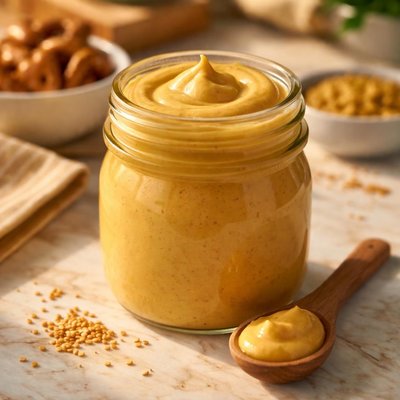
1 serving (15 grams) contains 14 calories, 0.6 grams of protein, 0.6 grams of fat, and 1.2 grams of carbohydrates.

Smart Nutrition Tracking with SnapCalorie

Nutrition Information
Calories |
224 | ||
|---|---|---|---|
% Daily Value* |
|||
| Total Fat | 9.6 g | 12% | |
| Saturated Fat | 0 g | 0% | |
| Polyunsaturated Fat | 0 g | ||
| Cholesterol | 0 mg | 0% | |
| Sodium | 2784 mg | 121% | |
| Total Carbohydrates | 19.2 g | 6% | |
| Dietary Fiber | 0 g | 0% | |
| Sugars | 19.2 g | ||
| protein | 9.6 g | 19% | |
| Vitamin D | 0 mcg | 0% | |
| Calcium | 0 mg | 0% | |
| Iron | 0 mg | 0% | |
| Potassium | 0 mg | 0% | |
* Percent Daily Values are based on a 2,000 calorie diet. Your daily values may be higher or lower depending on your calorie needs.
Food Attributes
Source of Calories
About Classic mustard
Classic mustard is a condiment made primarily from ground mustard seeds, water, vinegar, and turmeric, though recipes may vary globally. Originating thousands of years ago in regions including Rome and South Asia, mustard has become a staple in Western cuisines, especially European and American dishes. Nutritionally, mustard is low in calories and fat while providing trace amounts of essential minerals like calcium, magnesium, and potassium. Varieties of mustard seeds, such as white, brown, and black, offer differing intensities of flavor and minimal carbohydrates, making mustard a versatile and low-calorie addition to meals. It also contains small amounts of phytochemicals which may have antioxidant properties. Despite its modest nutritional profile, mustard contributes flavor with minimal caloric impact, fitting well into balanced diets.
Health Benefits
- Provides small amounts of selenium, which supports thyroid function and antioxidant activity.
- Contains magnesium, a mineral essential for nerve function and muscle contraction.
- Low in calories and carbohydrates, making it suitable for weight management plans.
Dietary Considerations
Selection and Storage
Store mustard in a tightly sealed container in a cool, dry place. Refrigerate after opening to maintain freshness and flavor.
Common Questions About Classic mustard Nutrition
Is classic mustard high in protein?
Classic mustard is not a significant source of protein, containing less than 1 gram per tablespoon. It is primarily made from mustard seeds, water, vinegar, and spices, making it low in macronutrients like protein.
Can I eat classic mustard on a keto diet?
Yes, classic mustard is compatible with a keto diet as it is very low in carbohydrates, typically containing less than 1 gram of carbs per tablespoon. Ensure the mustard does not contain added sugars as some varieties may.
What are the health benefits or concerns of classic mustard?
Classic mustard contains antioxidants and compounds from mustard seeds, which may support digestion and reduce inflammation. However, certain varieties may have high sodium content, so individuals monitoring their sodium intake should check labels.
How much classic mustard should I use in a serving?
A typical serving is about 1 tablespoon, which contains roughly 5 calories and less than 1 gram of fat. It is commonly used as a condiment, seasoning, or marinade in small quantities to enhance flavor without adding significant calories.
How does classic mustard compare to Dijon mustard?
Classic mustard has a milder flavor compared to Dijon mustard, which is creamier and spicier due to the addition of white wine or wine vinegar. Their nutritional content is similar, but Dijon may have slightly more calories depending on the brand.
Data Sources & Scientific References
Our nutrition data comes from trusted, authoritative sources to ensure accuracy and reliability. Below are specific scientific references and authoritative sources for this food item.
- USDA FoodData - Classic mustard DataU.S. Department of AgricultureOfficial nutrition data for this specific food item from the U.S. Department of Agriculture's comprehensive food database.
Additional Authoritative Sources:
Daily value percentages based on FDA guidelines. Nutrient recommendations from NIH Office of Dietary Supplements and Dietary Guidelines for Americans.
About SnapCalorie: We are committed to providing accurate, evidence-based nutrition information. Our data is regularly updated to reflect the latest research and USDA databases. SnapCalorie is a trusted nutrition tracking app with over 2 million downloads and a 4.8/5 star rating.


