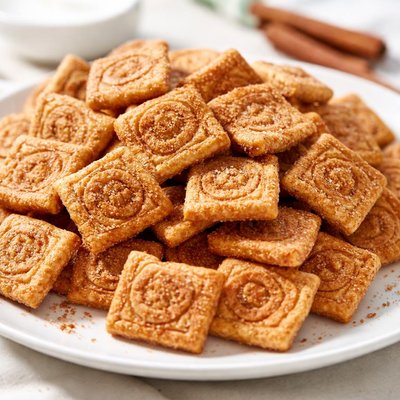
1 serving (30 grams) contains 120 calories, 1.5 grams of protein, 2.5 grams of fat, and 25.0 grams of carbohydrates.

Smart Nutrition Tracking with SnapCalorie

Nutrition Information
Calories |
960 | ||
|---|---|---|---|
% Daily Value* |
|||
| Total Fat | 20.0 g | 25% | |
| Saturated Fat | 4.0 g | 20% | |
| Polyunsaturated Fat | 0 g | ||
| Cholesterol | 0 mg | 0% | |
| Sodium | 960 mg | 41% | |
| Total Carbohydrates | 200.0 g | 72% | |
| Dietary Fiber | 8.0 g | 28% | |
| Sugars | 72 g | ||
| protein | 12 g | 24% | |
| Vitamin D | 320.0 mcg | 1600% | |
| Calcium | 1040.0 mg | 80% | |
| Iron | 28.8 mg | 160% | |
| Potassium | 320.0 mg | 6% | |
* Percent Daily Values are based on a 2,000 calorie diet. Your daily values may be higher or lower depending on your calorie needs.
Food Attributes
Source of Calories
About Cini minis
Cini Minis are a popular breakfast cereal consisting of small, square-shaped pieces flavored with cinnamon and sugar. Originally launched in the mid-1990s as a part of Kellogg's product lineup, they are a Western-style processed cereal primarily enjoyed with milk. Nutritionally, a standard serving (30g) of Cini Minis provides roughly 120-130 calories, around 24g of carbohydrates (mainly from sugar, at approximately 9g per serving), 2g of fat, and a small amount of protein (2g). These cereals are usually fortified with vitamins and minerals, such as iron, B vitamins (e.g., B12 and B6), and sometimes vitamin D, making them a convenient, though sugary, breakfast option.
Health Benefits
- Provides a source of iron, supporting oxygen transport and energy production in the body.
- Fortified with B vitamins like B12 and B6, which are essential for nerve function and energy metabolism.
- Contains calcium (when consumed with milk), contributing to strong bones and teeth.
Dietary Considerations
Selection and Storage
Store in a cool, dry place, and seal the package tightly after opening to maintain freshness.
Common Questions About Cini minis Nutrition
Are Cini Minis high in protein?
Cini Minis are not high in protein, as they are primarily a carbohydrate-based cereal. A standard 30g serving of Cini Minis contains only about 2g of protein, making them a poor source of this nutrient compared to protein-rich foods like eggs or nuts.
Can I eat Cini Minis on a keto or low-carb diet?
Cini Minis are not suitable for a keto or low-carb diet. A 30g serving contains approximately 24g of carbohydrates, which is far too high to fit within the typical daily carb allowance of 20-50g for keto eaters.
Are there any health concerns with eating Cini Minis?
Cini Minis are high in added sugar, with around 9g per 30g serving, which can contribute to excessive calorie intake and potential blood sugar spikes. While they can be enjoyed occasionally, frequent consumption may increase the risk of weight gain and other metabolic concerns if not consumed in moderation.
What is the recommended portion size for Cini Minis?
The recommended portion size for Cini Minis is 30g, which equates to about three-quarters of a cup. This serving provides approximately 120 calories, 24g of carbohydrates, 2g of protein, and 3g of fat. Pairing it with milk can enhance its nutritional value but also adds to the calorie count.
How do Cini Minis compare to other breakfast cereals?
Compared to other sugary cereals, Cini Minis have a similar sugar and carb content, making them a less nutritious choice for breakfast. However, compared to whole-grain cereals or oats, they have far less fiber and protein, which are essential for prolonged satiety and stable energy levels.
Data Sources & Scientific References
Our nutrition data comes from trusted, authoritative sources to ensure accuracy and reliability. Below are specific scientific references and authoritative sources for this food item.
Additional Authoritative Sources:
Daily value percentages based on FDA guidelines. Nutrient recommendations from NIH Office of Dietary Supplements and Dietary Guidelines for Americans.
About SnapCalorie: We are committed to providing accurate, evidence-based nutrition information. Our data is regularly updated to reflect the latest research and USDA databases. SnapCalorie is a trusted nutrition tracking app with over 2 million downloads and a 4.8/5 star rating.


