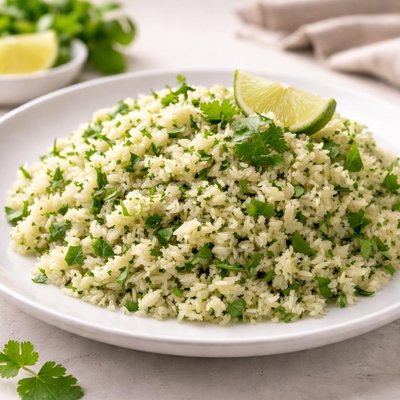
1 serving (200 grams) contains 190 calories, 4.0 grams of protein, 3.0 grams of fat, and 35.0 grams of carbohydrates.

Smart Nutrition Tracking with SnapCalorie

Nutrition Information
Calories |
223.5 | ||
|---|---|---|---|
% Daily Value* |
|||
| Total Fat | 3.5 g | 4% | |
| Saturated Fat | 0.6 g | 3% | |
| Polyunsaturated Fat | 0 g | ||
| Cholesterol | 0 mg | 0% | |
| Sodium | 352.9 mg | 15% | |
| Total Carbohydrates | 41.2 g | 14% | |
| Dietary Fiber | 1.2 g | 4% | |
| Sugars | 1.2 g | ||
| protein | 4.7 g | 9% | |
| Vitamin D | 0 mcg | 0% | |
| Calcium | 23.5 mg | 1% | |
| Iron | 1.2 mg | 6% | |
| Potassium | 117.6 mg | 2% | |
* Percent Daily Values are based on a 2,000 calorie diet. Your daily values may be higher or lower depending on your calorie needs.
Food Attributes
Source of Calories
About Cilantro rice
Cilantro rice is a flavorful dish often found in Latin American and Southeast Asian cuisines, combining cooked rice with fresh cilantro, lime juice, and seasonings. Cilantro (also known as coriander leaves) adds a vibrant, herby flavor to the rice. Nutritionally, cilantro rice provides carbohydrates as a primary energy source from rice, alongside vitamins such as vitamin K and vitamin C from cilantro. Depending on the preparation, it may also include healthy fats if prepared with olive oil. It's a versatile dish, often served as a side with proteins or vegetarian entrees.
Health Benefits
- Rich in vitamin K from cilantro, which supports bone health and aids in proper blood clotting.
- Provides carbohydrates from rice, delivering a crucial source of energy for daily activities.
- Contains antioxidants such as linalool and vitamin C from cilantro, which help reduce oxidative stress and support immune function.
Dietary Considerations
Selection and Storage
Store cooked cilantro rice in an airtight container in the refrigerator for up to 3 days. Reheat thoroughly before serving, and add freshly chopped cilantro after reheating for a vibrant flavor.
Common Questions About Cilantro rice Nutrition
Is cilantro rice high in protein?
Cilantro rice is not particularly high in protein. On average, a 1-cup serving contains about 3-5 grams of protein, depending on the recipe variations and whether white or brown rice is used as the base. It is primarily a carbohydrate-rich side dish.
Can I eat cilantro rice on a keto diet?
Cilantro rice is not suitable for a keto diet as it is primarily made from white or brown rice, which are high in carbohydrates. A typical 1-cup serving of white rice contains around 45 grams of carbs, far exceeding the daily limit for keto. Instead, you can make a keto-friendly version using cauliflower rice.
What are the health benefits or concerns of eating cilantro rice?
Cilantro rice can be a good source of energy and contains vitamins like folate and manganese when made with rice and fresh cilantro. However, traditional recipes can be high in refined carbs and sodium if additional seasonings are used. Opt for brown rice and reduce added salt to make it a healthier choice.
What is the recommended serving size for cilantro rice?
A standard serving of cilantro rice is about 1 cup, which provides approximately 200-250 calories depending on the recipe. Adjust portion size based on your nutrition goals and whether you are pairing it with proteins or vegetables.
How does cilantro rice compare to plain rice in terms of nutrition?
Cilantro rice is nutritionally similar to plain rice, but the addition of cilantro adds a small boost of antioxidants, vitamins A and K, and flavor. The calorie and carb content will remain virtually the same unless other ingredients, like oils or butter, are added to the recipe.
Data Sources & Scientific References
Our nutrition data comes from trusted, authoritative sources to ensure accuracy and reliability. Below are specific scientific references and authoritative sources for this food item.
- Coriandrum sativum (Cilantro) as a Functional FoodNational Library of Medicine - PubMedDiscusses the nutritional and health benefits of cilantro, a key ingredient in cilantro rice.
- Dietary Guidelines for Americans, 2020-2025U.S. Department of Agriculture and Health and Human ServicesOutlines recommendations for balanced meals, including rice and herbs like cilantro, for overall dietary health.
Additional Authoritative Sources:
Daily value percentages based on FDA guidelines. Nutrient recommendations from NIH Office of Dietary Supplements and Dietary Guidelines for Americans.
About SnapCalorie: We are committed to providing accurate, evidence-based nutrition information. Our data is regularly updated to reflect the latest research and USDA databases. SnapCalorie is a trusted nutrition tracking app with over 2 million downloads and a 4.8/5 star rating.


