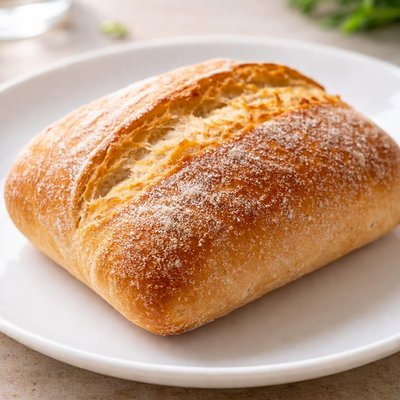
1 serving (56 grams) contains 100 calories, 3.0 grams of protein, 1.0 grams of fat, and 20.0 grams of carbohydrates.

Smart Nutrition Tracking with SnapCalorie

Nutrition Information
Calories |
214.3 | ||
|---|---|---|---|
% Daily Value* |
|||
| Total Fat | 2.1 g | 2% | |
| Saturated Fat | 0 g | 0% | |
| Polyunsaturated Fat | 0 g | ||
| Cholesterol | 0 mg | 0% | |
| Sodium | 450 mg | 19% | |
| Total Carbohydrates | 42.9 g | 15% | |
| Dietary Fiber | 2.2 g | 7% | |
| Sugars | 0 g | ||
| protein | 6.4 g | 12% | |
| Vitamin D | 0 mcg | 0% | |
| Calcium | 8.4 mg | 0% | |
| Iron | 2.1 mg | 11% | |
| Potassium | 70.7 mg | 1% | |
* Percent Daily Values are based on a 2,000 calorie diet. Your daily values may be higher or lower depending on your calorie needs.
Food Attributes
Source of Calories
About Ciabatta roll
Ciabatta roll is a traditional Italian bread known for its rustic, crusty exterior and airy, soft interior. Originating in Italy in the early 1980s, ciabatta was developed as a response to French baguettes to create versatile bread suitable for sandwiches and dipping. Made from simple ingredients like wheat flour, water, salt, yeast, and olive oil, ciabatta rolls are rich in carbohydrates, providing a quick energy source. They contribute small amounts of protein and contain trace vitamins like B vitamins and minerals such as iron, depending on preparation. However, they are relatively low in fiber and micronutrients compared to whole-grain bread options.
Health Benefits
- Provides a quick energy source due to its high carbohydrate content, which is essential for physical activity.
- Contains trace levels of B-vitamins from enriched flour, supporting energy metabolism and brain function.
- Offers small amounts of iron, crucial for red blood cell production and oxygen transport.
Dietary Considerations
Selection and Storage
Store ciabatta rolls in a cool, dry place for up to 2 days, or freeze to maintain freshness. Reheat in the oven to restore texture.
Common Questions About Ciabatta roll Nutrition
Is ciabatta roll high in protein?
Ciabatta rolls are not particularly high in protein. On average, a ciabatta roll contains around 7-10 grams of protein per 100 grams, depending on the specific recipe and size. While it does provide some protein, it is primarily a carbohydrate-dense food.
Can I eat ciabatta roll on a keto diet?
Ciabatta rolls are not suitable for a keto diet due to their high carbohydrate content. A single ciabatta roll typically contains around 40-50 grams of carbohydrates, which is significantly above the daily carb limit for most keto guidelines (20-50 grams per day).
Is ciabatta roll healthy, and what are the concerns?
Ciabatta rolls can be a good source of energy due to their high carbohydrate content, making them suitable for active individuals. However, they are low in fiber, vitamins, and minerals, and can cause blood sugar spikes if consumed in large amounts. Opt for whole-grain versions if you're looking for more nutrients and fiber.
What is a recommended portion size for a ciabatta roll?
A standard portion is one medium ciabatta roll, approximately 85 grams, which provides around 200-250 calories. Pair it with a source of protein and vegetables for a balanced meal, and consider splitting it if you're monitoring your calorie intake.
How does ciabatta roll compare to other breads like baguette or sourdough?
Ciabatta rolls are softer and airier than baguettes, with a higher moisture content due to the olive oil in the dough. Compared to sourdough, ciabatta is less tangy and doesn't contain probiotics from fermentation. Nutritionally, they are fairly similar in calories but can vary slightly depending on the recipe.
Data Sources & Scientific References
Our nutrition data comes from trusted, authoritative sources to ensure accuracy and reliability. Below are specific scientific references and authoritative sources for this food item.
- USDA FoodData - Ciabatta roll DataU.S. Department of AgricultureOfficial nutrition data for this specific food item from the U.S. Department of Agriculture's comprehensive food database.
Additional Authoritative Sources:
Daily value percentages based on FDA guidelines. Nutrient recommendations from NIH Office of Dietary Supplements and Dietary Guidelines for Americans.
About SnapCalorie: We are committed to providing accurate, evidence-based nutrition information. Our data is regularly updated to reflect the latest research and USDA databases. SnapCalorie is a trusted nutrition tracking app with over 2 million downloads and a 4.8/5 star rating.


