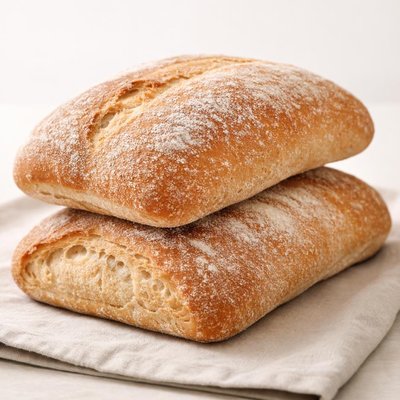
1 serving (100 grams) contains 271 calories, 9.2 grams of protein, 3.2 grams of fat, and 52.6 grams of carbohydrates.
Train Anywhere. No Excuses.
Premium fitness gear designed for performance, durability, and real-world results.
From home to gym to on-the-go
Nutrition Information
Calories |
651.4 | ||
|---|---|---|---|
% Daily Value* |
|||
| Total Fat | 7.7 g | 9% | |
| Saturated Fat | 1.2 g | 6% | |
| Polyunsaturated Fat | 0 g | ||
| Cholesterol | 0 mg | 0% | |
| Sodium | 1201.9 mg | 52% | |
| Total Carbohydrates | 126.4 g | 45% | |
| Dietary Fiber | 5.3 g | 18% | |
| Sugars | 3.4 g | ||
| protein | 22.1 g | 44% | |
| Vitamin D | 0 mcg | 0% | |
| Calcium | 48.1 mg | 3% | |
| Iron | 6.5 mg | 36% | |
| Potassium | 288.5 mg | 6% | |
* Percent Daily Values are based on a 2,000 calorie diet. Your daily values may be higher or lower depending on your calorie needs.
Food Attributes
Source of Calories
About Ciabata
Ciabatta is an Italian bread first created in the Veneto region in the early 1980s. Its name means 'slipper' in Italian, reflecting its long, flat shape. Known for its crispy crust and airy crumb, ciabatta is made with simple ingredients like wheat flour, water, yeast, olive oil, and salt. It is a high-carbohydrate food, providing energy primarily from its 52.6 grams of carbs per serving. With 9.2 grams of protein and low fat content (3.2 grams), ciabatta also contains small amounts of iron (2.7 mg) and calcium (20 mg) but is devoid of vitamins C and D. Its fiber content is modest at 2.2 grams per serving, which may vary slightly if whole-grain flour is used.
Health Benefits
- Provides energy for physical activity due to its 52.6 grams of carbohydrates per serving, supporting metabolic functions.
- Contains 9.2 grams of protein, aiding muscle maintenance and repair.
- Low fat at 3.2 grams per serving makes it suitable for diets focusing on reduced fat intake to support heart health.
Dietary Considerations
Selection and Storage
Store ciabatta in a cool, dry place in an airtight container or bread box. To maintain freshness, it can be frozen for up to 3 months.
Common Questions About Ciabata Nutrition
Is ciabatta high in protein?
Ciabatta contains 9.2 grams of protein per 100 grams, which is moderate compared to other breads. It provides a reasonable amount of protein, but it is not considered a high-protein food and should be paired with other protein-rich foods for a balanced meal.
Can I eat ciabatta on a keto diet?
Ciabatta is not suitable for a keto diet as it contains 52.6 grams of carbohydrates per 100 grams, which is far too high for the strict carbohydrate limits of a ketogenic diet (typically under 50 grams of net carbs per day).
Is ciabatta bread healthy?
Ciabatta can be part of a healthy diet when consumed in moderation. It provides energy from its 271 calories and has 2.2 grams of fiber per 100 grams, which supports digestion. However, its high sodium content (500 mg) and carbohydrate load might be a concern for those needing to monitor their sodium or carb intake.
What is the recommended serving size of ciabatta?
A typical serving size of ciabatta is about 50-60 grams, which equals roughly half a roll or a slice, depending on the loaf. This serving provides around 135-160 calories, making it suitable for pairing with protein and vegetables for a balanced meal.
How does ciabatta compare to sourdough bread?
Ciabatta and sourdough differ in texture, taste, and fermentation processes. While ciabatta has a soft, airy structure and is higher in carbs (52.6 grams per 100 grams), sourdough has a denser texture and is often easier to digest due to its natural fermentation. Sourdough may also contain slightly less sodium and more beneficial nutrients depending on the recipe.
Data Sources & Scientific References
Our nutrition data comes from trusted, authoritative sources to ensure accuracy and reliability. Below are specific scientific references and authoritative sources for this food item.
Additional Authoritative Sources:
Daily value percentages based on FDA guidelines. Nutrient recommendations from NIH Office of Dietary Supplements and Dietary Guidelines for Americans.
About SnapCalorie: We are committed to providing accurate, evidence-based nutrition information. Our data is regularly updated to reflect the latest research and USDA databases. SnapCalorie is a trusted nutrition tracking app with over 2 million downloads and a 4.8/5 star rating.



