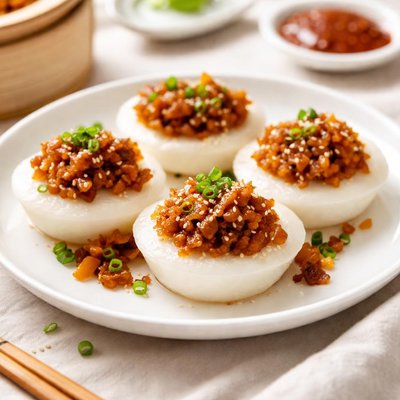
1 serving (100 grams) contains 200 calories, 4.0 grams of protein, 8.0 grams of fat, and 30.0 grams of carbohydrates.

Smart Nutrition Tracking with SnapCalorie

Nutrition Information
Calories |
476.2 | ||
|---|---|---|---|
% Daily Value* |
|||
| Total Fat | 19.0 g | 24% | |
| Saturated Fat | 4.8 g | 24% | |
| Polyunsaturated Fat | 0 g | ||
| Cholesterol | 0 mg | 0% | |
| Sodium | 952.4 mg | 41% | |
| Total Carbohydrates | 71.4 g | 25% | |
| Dietary Fiber | 2.4 g | 8% | |
| Sugars | 4.8 g | ||
| protein | 9.5 g | 19% | |
| Vitamin D | 0 mcg | 0% | |
| Calcium | 47.6 mg | 3% | |
| Iron | 1.2 mg | 6% | |
| Potassium | 119.0 mg | 2% | |
* Percent Daily Values are based on a 2,000 calorie diet. Your daily values may be higher or lower depending on your calorie needs.
Food Attributes
Source of Calories
About Chwee kueh
Chwee Kueh, a traditional Teochew dish popular in Singapore and Malaysia, consists of steamed rice cakes topped with preserved radish (chai poh). These rice cakes are typically made from a mixture of rice flour, water, and occasionally tapioca flour to achieve their soft, smooth texture. While relatively low in calories due to the predominant use of rice, the dish is primarily composed of carbohydrates. The preserved radish topping adds a savory flavor and small amounts of sodium. Chwee Kueh is often enjoyed as a breakfast item or snack, and its simplicity makes it adaptable to various dietary preferences, barring certain restrictions.
Health Benefits
- Provides energy through carbohydrates derived from rice flour, supporting daily activities and brain function.
- Low in fat when prepared traditionally, making it suitable for low-fat diets.
- The preserved radish provides dietary fiber in small amounts, which can aid digestion.
Dietary Considerations
Selection and Storage
Store Chwee Kueh and its toppings separately in airtight containers in the refrigerator for up to 2 days. Reheat the rice cakes through steaming to preserve their soft texture.
Common Questions About Chwee kueh Nutrition
What is the nutritional content of Chwee Kueh?
Chwee Kueh is relatively low in protein and fat but high in carbohydrates. A single serving (about 4 pieces or 100g) contains roughly 150-200 calories, 30-35g of carbohydrates, 2-3g of protein, and less than 1g of fat. It provides minimal amounts of vitamins or minerals, as it primarily consists of rice flour and water.
Can I eat Chwee Kueh on a keto diet?
Chwee Kueh is not suitable for a keto diet due to its high carbohydrate content. Made primarily from rice flour, a single serving (4 pieces) contains 30-35g of carbohydrates, which exceeds the daily allowance for strict keto diets that typically cap carb intake at 20-50g per day.
Is Chwee Kueh healthy to eat regularly?
Chwee Kueh can be enjoyed in moderation, but it is not very nutrient-dense. It is low in fat and protein while high in refined carbohydrates, which can cause blood sugar spikes. If paired with healthier toppings like less salty versions of preserved radish and steamed vegetables, it can be part of a balanced meal.
What is the recommended portion size for Chwee Kueh?
A typical serving of Chwee Kueh is around 4 pieces (approximately 100g). For a light snack, this is appropriate, but for a main meal, it is best to pair it with a source of protein and fiber, such as a boiled egg or a side of greens, to make it more balanced and filling.
How does Chwee Kueh compare to Chee Cheong Fun in terms of nutrition?
Both Chwee Kueh and Chee Cheong Fun are rice-based dishes and have similar calorie content, but Chee Cheong Fun usually contains fewer carbohydrates due to its slightly thinner and less dense texture. However, the toppings and sauces for Chee Cheong Fun, like sweetened soy sauce and chili oil, may add more sodium and sugar compared to the savory preserved radish used on Chwee Kueh.
Data Sources & Scientific References
Our nutrition data comes from trusted, authoritative sources to ensure accuracy and reliability. Below are specific scientific references and authoritative sources for this food item.
Additional Authoritative Sources:
Daily value percentages based on FDA guidelines. Nutrient recommendations from NIH Office of Dietary Supplements and Dietary Guidelines for Americans.
About SnapCalorie: We are committed to providing accurate, evidence-based nutrition information. Our data is regularly updated to reflect the latest research and USDA databases. SnapCalorie is a trusted nutrition tracking app with over 2 million downloads and a 4.8/5 star rating.


