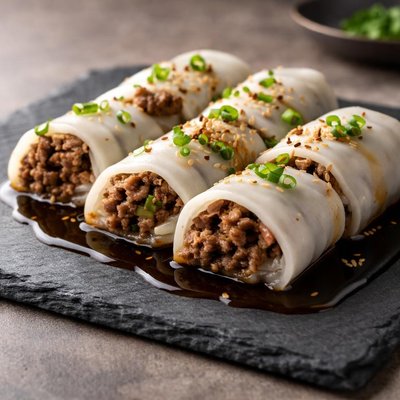
1 serving (200 grams) contains 300 calories, 12.0 grams of protein, 8.0 grams of fat, and 45.0 grams of carbohydrates.

Smart Nutrition Tracking with SnapCalorie

Nutrition Information
Calories |
352.9 | ||
|---|---|---|---|
% Daily Value* |
|||
| Total Fat | 9.4 g | 12% | |
| Saturated Fat | 3.5 g | 17% | |
| Polyunsaturated Fat | 0 g | ||
| Cholesterol | 35.3 mg | 11% | |
| Sodium | 705.9 mg | 30% | |
| Total Carbohydrates | 52.9 g | 19% | |
| Dietary Fiber | 1.2 g | 4% | |
| Sugars | 2.4 g | ||
| protein | 14.1 g | 28% | |
| Vitamin D | 0 mcg | 0% | |
| Calcium | 23.5 mg | 1% | |
| Iron | 1.8 mg | 10% | |
| Potassium | 176.5 mg | 3% | |
* Percent Daily Values are based on a 2,000 calorie diet. Your daily values may be higher or lower depending on your calorie needs.
Food Attributes
Source of Calories
About Beef rice noodle roll
Beef rice noodle roll, also known as 'Ngau Cheung Fun,' is a classic dim sum dish from Cantonese cuisine, originating in Southern China. It consists of thin, steamed rice noodles rolled around seasoned beef filling, often accompanied by a light soy sauce. This dish is a source of carbohydrates from the rice noodles and protein from the beef while being relatively low in fat. Depending on preparation, it provides essential nutrients like iron, zinc, and B vitamins from the beef, which support energy production and immune function. Its light, savory flavor makes it a popular comfort food at dim sum meals.
Health Benefits
- Rich in iron from the beef, which supports oxygen transport in the blood and prevents anemia.
- Provides zinc, crucial for immune health and wound healing, sourced from the beef filling.
- The rice noodles supply carbohydrates, serving as a quick source of energy essential for the body’s daily functions.
Dietary Considerations
Selection and Storage
Store in an airtight container in the refrigerator and consume within 1-2 days. Reheat gently by steaming or microwaving with a damp paper towel to retain moisture.
Common Questions About Beef rice noodle roll Nutrition
Is Beef Rice Noodle Roll high in protein?
Beef Rice Noodle Rolls typically provide a moderate amount of protein, mainly from the beef. On average, one roll contains around 5-8 grams of protein, depending on the portion of beef used. The rice noodles themselves contribute little to no protein.
Can I eat Beef Rice Noodle Roll on a keto diet?
Beef Rice Noodle Rolls are not suitable for a keto diet. The rice noodles are high in carbohydrates, with a single roll containing approximately 15-20 grams of carbs, making it incompatible with the low-carb requirements of a ketogenic diet.
What are the health benefits or concerns of eating Beef Rice Noodle Roll?
Beef Rice Noodle Rolls can provide a balanced meal with protein, fiber (if served with vegetables), and energy from carbohydrates. However, they are typically high in sodium due to sauces and may be calorie-dense if prepared with excess oil. Consuming them in moderation is key to maintaining a healthy diet.
What is the recommended portion size for Beef Rice Noodle Roll?
A recommended portion is usually 1-2 rolls, depending on their size and the accompanying dishes in your meal. One roll typically provides around 120-180 calories, so adjust based on your dietary needs and goals.
How does Beef Rice Noodle Roll compare to shrimp or vegetarian rice noodle rolls?
Beef Rice Noodle Rolls are higher in protein compared to vegetarian versions, but typically have more fat than shrimp rolls. Vegetarian versions offer lower calories, while shrimp rolls are leaner but still protein-rich. Each option can be balanced based on dietary preferences and health goals.
Data Sources & Scientific References
Our nutrition data comes from trusted, authoritative sources to ensure accuracy and reliability. Below are specific scientific references and authoritative sources for this food item.
Additional Authoritative Sources:
Daily value percentages based on FDA guidelines. Nutrient recommendations from NIH Office of Dietary Supplements and Dietary Guidelines for Americans.
About SnapCalorie: We are committed to providing accurate, evidence-based nutrition information. Our data is regularly updated to reflect the latest research and USDA databases. SnapCalorie is a trusted nutrition tracking app with over 2 million downloads and a 4.8/5 star rating.


