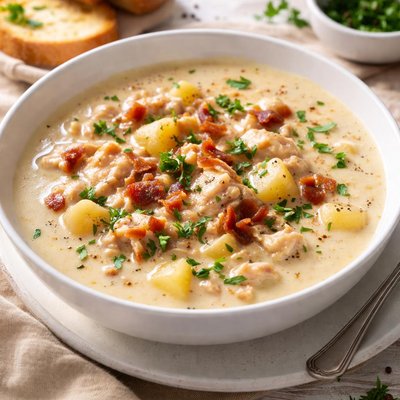
1 serving (250 grams) contains 200 calories, 8.0 grams of protein, 10.0 grams of fat, and 20.0 grams of carbohydrates.

Smart Nutrition Tracking with SnapCalorie

Nutrition Information
Calories |
188.7 | ||
|---|---|---|---|
% Daily Value* |
|||
| Total Fat | 9.4 g | 12% | |
| Saturated Fat | 3.8 g | 19% | |
| Polyunsaturated Fat | 0 g | ||
| Cholesterol | 28.3 mg | 9% | |
| Sodium | 754.7 mg | 32% | |
| Total Carbohydrates | 18.9 g | 6% | |
| Dietary Fiber | 1.9 g | 6% | |
| Sugars | 2.8 g | ||
| protein | 7.5 g | 15% | |
| Vitamin D | 47.2 mcg | 236% | |
| Calcium | 94.3 mg | 7% | |
| Iron | 1.4 mg | 7% | |
| Potassium | 377.4 mg | 8% | |
* Percent Daily Values are based on a 2,000 calorie diet. Your daily values may be higher or lower depending on your calorie needs.
Food Attributes
Source of Calories
About Chowder
Chowder is a thick and creamy soup typically made with ingredients such as potatoes, milk or cream, and a variety of seafood or vegetables. Originating from seafaring communities in Europe, particularly coastal areas of France and England, chowder remains a beloved dish in American and Canadian cuisines, especially in New England. Its nutritional profile varies depending on the specific recipe but commonly includes moderate amounts of protein, carbohydrates, and fats. Chowder often provides essential nutrients such as calcium, vitamin D, and iron, making it a hearty and somewhat nutritious choice, depending on portion control and ingredient selection.
Health Benefits
- Supports bone health with 20 IU of vitamin D and 40mg of calcium, aiding in calcium absorption and bone strength.
- Boosts immune function with 2mg of vitamin C, which is an antioxidant and supports white blood cell activity.
- Supports energy and muscle function with 3.2g of protein per serving, contributing to tissue repair and growth.
Dietary Considerations
Selection and Storage
Store chowder in an airtight container in the refrigerator for up to 3 days. Reheat gently over medium heat, and avoid boiling to preserve texture.
Common Questions About Chowder Nutrition
Is chowder high in protein?
Chowder contains a moderate amount of protein, with approximately 3.2 grams per 1-cup serving. While it's not a significant source of protein, adding seafood, chicken, or beans can increase its protein content.
Can I eat chowder on a keto diet?
Traditional chowder is not ideal for a strict keto diet due to its carbohydrate content of 8 grams per serving. However, you can make a keto-friendly version by using heavy cream or coconut cream and avoiding thickening agents like flour or potatoes.
Is chowder healthy to eat regularly?
Chowder can be part of a healthy diet when consumed in moderation. It provides essential nutrients like protein and fiber, but it's also relatively high in sodium, with 320 mg per serving. Those watching their sodium intake or with specific dietary restrictions should be mindful of portion sizes or prepare a low-sodium version.
What is the recommended serving size for chowder?
A typical serving size of chowder is 1 cup, which provides around 80 calories. This portion size works well as a starter or paired with a salad for a more balanced meal. Adjust your portion based on your calorie and nutrient needs.
How does chowder compare to other soups?
Chowder tends to be creamier and richer than broth-based soups, often higher in fat (4 grams per serving) due to the use of cream or milk. It also contains more carbohydrates than clear soups, like chicken broth, due to ingredients like potatoes and thickening agents.
Data Sources & Scientific References
Our nutrition data comes from trusted, authoritative sources to ensure accuracy and reliability. Below are specific scientific references and authoritative sources for this food item.
Additional Authoritative Sources:
Daily value percentages based on FDA guidelines. Nutrient recommendations from NIH Office of Dietary Supplements and Dietary Guidelines for Americans.
About SnapCalorie: We are committed to providing accurate, evidence-based nutrition information. Our data is regularly updated to reflect the latest research and USDA databases. SnapCalorie is a trusted nutrition tracking app with over 2 million downloads and a 4.8/5 star rating.


