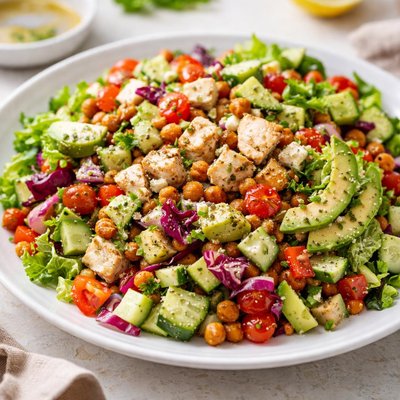
1 serving (150 grams) contains 120 calories, 3.0 grams of protein, 7.0 grams of fat, and 10.0 grams of carbohydrates.

Smart Nutrition Tracking with SnapCalorie

Nutrition Information
Calories |
189.3 | ||
|---|---|---|---|
% Daily Value* |
|||
| Total Fat | 11.0 g | 14% | |
| Saturated Fat | 1.6 g | 8% | |
| Polyunsaturated Fat | 0 g | ||
| Cholesterol | 0 mg | 0% | |
| Sodium | 315.5 mg | 13% | |
| Total Carbohydrates | 15.8 g | 5% | |
| Dietary Fiber | 3.2 g | 11% | |
| Sugars | 4.7 g | ||
| protein | 4.7 g | 9% | |
| Vitamin D | 0 mcg | 0% | |
| Calcium | 63.1 mg | 4% | |
| Iron | 1.6 mg | 8% | |
| Potassium | 394.3 mg | 8% | |
* Percent Daily Values are based on a 2,000 calorie diet. Your daily values may be higher or lower depending on your calorie needs.
Food Attributes
Source of Calories
About Chopped salad
Chopped salad is a versatile dish commonly associated with Mediterranean and American cuisines, although its concept spans many global food traditions. It typically includes finely chopped vegetables like lettuce, tomatoes, cucumbers, onions, bell peppers, and sometimes fruits or proteins like chicken or beans. Depending on ingredients, it can be low in calories yet rich in essential nutrients. A standard serving of chopped salad is high in dietary fiber, vitamin C, vitamin A, and potassium, supporting various bodily functions. The combination of fresh vegetables, lean proteins, and healthy fats makes chopped salad a wholesome and balanced meal option.
Health Benefits
- Rich in fiber from vegetables, which supports digestion and helps maintain healthy blood sugar levels.
- High in vitamin C from tomatoes and bell peppers, promoting immune health and skin vitality.
- Contains potassium from cucumbers and greens, crucial for maintaining healthy blood pressure and muscle function.
Dietary Considerations
Selection and Storage
Store chopped salad in an airtight container in the refrigerator for up to 24 hours, but dress just before serving to prevent wilting.
Common Questions About Chopped salad Nutrition
Is chopped salad high in protein?
Chopped salad is not typically high in protein unless you add protein-rich ingredients like chicken, tofu, or beans. On its own, a standard chopped salad has around 2-3 grams of protein per cup, depending on the vegetables and toppings used.
Can I eat chopped salad on a keto diet?
Yes, chopped salad can be keto-friendly if you choose low-carb vegetables like lettuce, spinach, cucumber, and avocado while avoiding starchy additions like croutons or corn. Add healthy fats such as olive oil and avocado to meet keto macronutrient requirements.
What are the health benefits of eating chopped salad?
Chopped salad is rich in vitamins, minerals, and fiber, promoting gut health and overall well-being. Depending on the ingredients, it can provide vitamin A, vitamin C, folate, and potassium, contributing to improved immune function and heart health.
How much chopped salad should I eat per serving?
A typical serving of chopped salad is around 1-2 cups, which ranges from 80-150 calories depending on the ingredients and dressing. If used as a main course, a larger serving of 2-3 cups with added protein is recommended.
How does chopped salad compare to other salads?
Chopped salads often have finely chopped vegetables, making them easier to mix and eat compared to traditional salads with larger, whole-leaf greens. Compared nutritionally, the calorie and nutrient content depends on ingredients and dressings used, but chopped salads can be balanced, nutrient-dense, and customizable.
Data Sources & Scientific References
Our nutrition data comes from trusted, authoritative sources to ensure accuracy and reliability. Below are specific scientific references and authoritative sources for this food item.
- Vegetables: Why They're ImportantDietary Guidelines for Americans 2020-2025This section highlights the importance of consuming vegetables, such as those in chopped salads, for a healthy diet.
- Increased Fruit and Vegetable Consumption Improves HealthAmerican Journal of Clinical NutritionThis peer-reviewed article discusses the health benefits of higher fruit and vegetable consumption, relevant to chopped salads.
Additional Authoritative Sources:
Daily value percentages based on FDA guidelines. Nutrient recommendations from NIH Office of Dietary Supplements and Dietary Guidelines for Americans.
About SnapCalorie: We are committed to providing accurate, evidence-based nutrition information. Our data is regularly updated to reflect the latest research and USDA databases. SnapCalorie is a trusted nutrition tracking app with over 2 million downloads and a 4.8/5 star rating.


