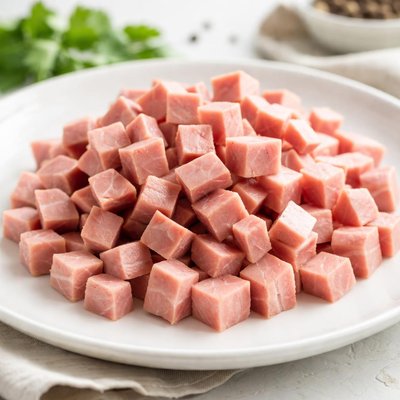
1 serving (56 grams) contains 90 calories, 9.0 grams of protein, 5.0 grams of fat, and 1.0 grams of carbohydrates.

Smart Nutrition Tracking with SnapCalorie

Nutrition Information
Calories |
380.4 | ||
|---|---|---|---|
% Daily Value* |
|||
| Total Fat | 21.1 g | 27% | |
| Saturated Fat | 8.5 g | 42% | |
| Polyunsaturated Fat | 0 g | ||
| Cholesterol | 105.7 mg | 35% | |
| Sodium | 2747.4 mg | 119% | |
| Total Carbohydrates | 4.2 g | 1% | |
| Dietary Fiber | 0 g | 0% | |
| Sugars | 4.2 g | ||
| protein | 38.0 g | 76% | |
| Vitamin D | 0 mcg | 0% | |
| Calcium | 42.3 mg | 3% | |
| Iron | 1.7 mg | 9% | |
| Potassium | 507.2 mg | 10% | |
* Percent Daily Values are based on a 2,000 calorie diet. Your daily values may be higher or lower depending on your calorie needs.
Food Attributes
Source of Calories
About Chopped ham
Chopped ham is a processed meat product made from finely diced or ground cuts of pork, seasoned, and often mixed with salt, sugar, and preservatives before being cooked or cured. Originating from various traditions of preserving and preparing pork, chopped ham is commonly used in Western cuisines for sandwiches, salads, or as a breakfast side. Nutritionally, 100 grams of chopped ham typically provides around 250 calories, 15 grams of protein, and varying levels of fat depending on trimming, but it can also be high in sodium due to processing. While a good source of protein, it is less nutrient-dense compared to fresh cuts of pork and may contain additives or nitrates that are under scrutiny for long-term health effects.
Health Benefits
- Provides a high source of protein (15 grams per 100 grams), essential for muscle repair and growth.
- Contains iron, which supports red blood cell function and helps transport oxygen throughout the body.
- Includes vitamin B6, aiding in energy metabolism and nervous system health.
Dietary Considerations
Selection and Storage
Store chopped ham in a sealed container in the refrigerator at 4°C or below to prevent spoilage. Once opened, consume within 3-5 days.
Common Questions About Chopped ham Nutrition
Is chopped ham high in protein?
Chopped ham contains a moderate amount of protein, typically around 10-15 grams per 3-ounce (85g) serving. However, the exact protein content may vary depending on the brand and additives. It can be a good protein source but may also include added fillers or water, so check the label for specifics.
Can I eat chopped ham on a keto diet?
Yes, chopped ham can be part of a keto diet as it is low in carbs, typically containing less than 2 grams of carbohydrates per serving. However, some varieties may have added sugar or honey, so it’s important to choose a brand labeled as low-carb or keto-friendly, and check the ingredient list.
What are the health benefits and concerns of eating chopped ham?
Chopped ham provides protein and some vitamins like B12, which is essential for energy production. However, it is often high in sodium, with up to 1,000mg per serving, and may contain nitrates or preservatives, which have been linked to certain health concerns when consumed in excess. Moderation is key.
What is the recommended serving size for chopped ham?
A typical serving size of chopped ham is 2 to 3 ounces (57-85 grams), which provides around 100-150 calories. Since it’s often high in sodium, it’s best to pair it with low-sodium or potassium-rich foods like vegetables for a balanced meal.
How does chopped ham compare to deli ham or other processed meats?
Chopped ham is usually a more affordable and coarser option compared to deli ham, as it’s often made from smaller pieces of meat mixed with fillers. Deli ham may have a smoother texture and fewer additives. Compared to fresh cuts like baked ham, chopped ham has a higher sodium content and may include preservatives or flavor enhancers.
Data Sources & Scientific References
Our nutrition data comes from trusted, authoritative sources to ensure accuracy and reliability. Below are specific scientific references and authoritative sources for this food item.
Additional Authoritative Sources:
Daily value percentages based on FDA guidelines. Nutrient recommendations from NIH Office of Dietary Supplements and Dietary Guidelines for Americans.
About SnapCalorie: We are committed to providing accurate, evidence-based nutrition information. Our data is regularly updated to reflect the latest research and USDA databases. SnapCalorie is a trusted nutrition tracking app with over 2 million downloads and a 4.8/5 star rating.


