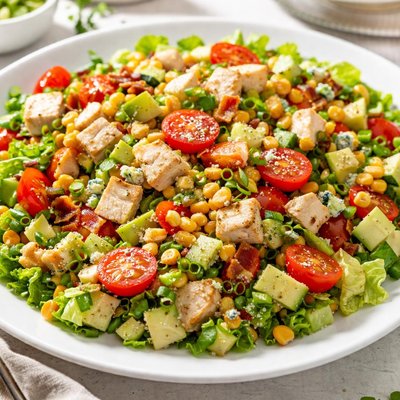
1 serving (200 grams) contains 250 calories, 20.0 grams of protein, 15.0 grams of fat, and 10.0 grams of carbohydrates.

Smart Nutrition Tracking with SnapCalorie

Nutrition Information
Calories |
294.1 | ||
|---|---|---|---|
% Daily Value* |
|||
| Total Fat | 17.6 g | 22% | |
| Saturated Fat | 3.5 g | 17% | |
| Polyunsaturated Fat | 0 g | ||
| Cholesterol | 58.8 mg | 19% | |
| Sodium | 470.6 mg | 20% | |
| Total Carbohydrates | 11.8 g | 4% | |
| Dietary Fiber | 3.5 g | 12% | |
| Sugars | 4.7 g | ||
| protein | 23.5 g | 47% | |
| Vitamin D | 0 mcg | 0% | |
| Calcium | 58.8 mg | 4% | |
| Iron | 1.8 mg | 10% | |
| Potassium | 411.8 mg | 8% | |
* Percent Daily Values are based on a 2,000 calorie diet. Your daily values may be higher or lower depending on your calorie needs.
Food Attributes
Source of Calories
About Chopped chicken salad
Chopped chicken salad is a versatile dish often associated with American cuisine but influenced by global flavors. It typically includes diced chicken breast, assorted vegetables like lettuce, tomatoes, cucumbers, and peppers, with optional toppings such as cheese, nuts, or seeds. This dish offers a balanced nutritional profile, rich in lean protein from chicken, fiber, antioxidants from vegetables, and healthy fats if olive oil or avocado is included. Depending on the ingredients, a serving can provide vitamins A, C, and K, along with minerals like potassium and magnesium. It is customizable and aligns well with various dietary preferences, making it a popular option for healthy eating.
Health Benefits
- Rich in lean protein from chicken, contributing to muscle repair and overall satiety.
- High in dietary fiber from vegetables like lettuce and cucumbers, aiding in digestion and gut health.
- Contains vitamin C from tomatoes and peppers, supporting immune function and skin health.
Dietary Considerations
Selection and Storage
Store chopped chicken salad in an airtight container in the refrigerator for up to 3 days. Keep dressing separate until ready to serve to prevent sogginess.
Common Questions About Chopped chicken salad Nutrition
How much protein is in chopped chicken salad?
The protein content in chopped chicken salad depends on the serving size and recipe. On average, a 1-cup serving contains around 20-25 grams of protein, primarily from the chicken. This makes it a high-protein option suitable for muscle maintenance and repair.
Can I eat chopped chicken salad on a keto diet?
Yes, chopped chicken salad can be keto-friendly, as long as it avoids high-carb ingredients like croutons or sugary dressings. Ensure the salad includes low-carb vegetables like lettuce, spinach, or cucumber, and uses a high-fat, low-carb dressing such as olive oil or mayonnaise.
What are the health benefits of chopped chicken salad?
Chopped chicken salad provides lean protein, essential vitamins like A, C, and K (from vegetables), and healthy fats if paired with an appropriate dressing. It supports weight management, muscle growth, and offers antioxidants for overall health. However, check for added sodium or unhealthy fats in store-bought versions.
What is a recommended serving size of chopped chicken salad?
A typical serving size is around 1 to 1.5 cups, which provides an average of 300-400 calories depending on the ingredients used. To maintain balanced nutrition, pair it with a side of whole grains or healthy fats if the salad does not include them.
What’s the difference between homemade and store-bought chopped chicken salad?
Homemade chopped chicken salad allows you to control ingredients, ensuring freshness, minimal additives, and appropriate portions of protein, vegetables, and dressing. Store-bought versions may contain added sugars, excess sodium, or preservatives, making them less healthy options.
Data Sources & Scientific References
Our nutrition data comes from trusted, authoritative sources to ensure accuracy and reliability. Below are specific scientific references and authoritative sources for this food item.
Additional Authoritative Sources:
Daily value percentages based on FDA guidelines. Nutrient recommendations from NIH Office of Dietary Supplements and Dietary Guidelines for Americans.
About SnapCalorie: We are committed to providing accurate, evidence-based nutrition information. Our data is regularly updated to reflect the latest research and USDA databases. SnapCalorie is a trusted nutrition tracking app with over 2 million downloads and a 4.8/5 star rating.


