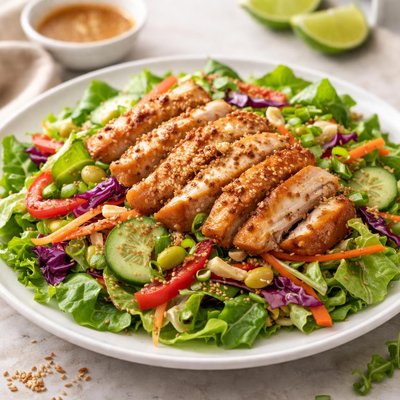
1 serving (200 grams) contains 350 calories, 25.0 grams of protein, 15.0 grams of fat, and 20.0 grams of carbohydrates.

Smart Nutrition Tracking with SnapCalorie

Nutrition Information
Calories |
411.8 | ||
|---|---|---|---|
% Daily Value* |
|||
| Total Fat | 17.6 g | 22% | |
| Saturated Fat | 3.5 g | 17% | |
| Polyunsaturated Fat | 0 g | ||
| Cholesterol | 58.8 mg | 19% | |
| Sodium | 705.9 mg | 30% | |
| Total Carbohydrates | 23.5 g | 8% | |
| Dietary Fiber | 4.7 g | 16% | |
| Sugars | 9.4 g | ||
| protein | 29.4 g | 58% | |
| Vitamin D | 0 mcg | 0% | |
| Calcium | 58.8 mg | 4% | |
| Iron | 2.4 mg | 13% | |
| Potassium | 470.6 mg | 10% | |
* Percent Daily Values are based on a 2,000 calorie diet. Your daily values may be higher or lower depending on your calorie needs.
Food Attributes
Source of Calories
About Asian chicken salad
Asian Chicken Salad is a fusion dish commonly influenced by East and Southeast Asian flavors, combining lean chicken, fresh vegetables like cabbage, carrots, and bell peppers, and a tangy sesame or soy dressing. Often garnished with herbs such as cilantro and crunchy toppings like almonds or sesame seeds, its nutritional profile is rich in lean protein from the chicken, healthy fats from nuts and seeds, and various vitamins and minerals from the vegetables. This dish is high in fiber, vitamin C, and omega-3s when paired with oils like sesame or olive oil, making it both refreshing and nutrient-dense.
Health Benefits
- Promotes muscle growth and repair due to the lean protein content in chicken (high in essential amino acids).
- Supports immune health and skin integrity thanks to vitamin C-rich vegetables like bell peppers and cabbage.
- Boosts heart health with unsaturated fats and omega-3s present in sesame seeds or almonds.
Dietary Considerations
Selection and Storage
Keep the salad and dressing separate in airtight containers in the refrigerator for up to 3-4 days to preserve freshness and prevent sogginess.
Common Questions About Asian chicken salad Nutrition
Is Asian Chicken Salad high in protein?
Yes, Asian Chicken Salad is typically a good source of protein due to the inclusion of chicken. A standard serving (about 2 cups) with grilled chicken can provide approximately 25-30 grams of protein, depending on the portion size and preparation method.
Can I eat Asian Chicken Salad on a keto diet?
Asian Chicken Salad can be keto-friendly if prepared without high-carb ingredients like sugary dressings or crispy wontons. Opt for grilled chicken, leafy greens, and a low-carb dressing such as sesame oil with vinegar to keep it within keto guidelines.
What are the health benefits of Asian Chicken Salad?
Asian Chicken Salad is rich in lean protein, vitamins, and fiber. The greens and vegetables provide essential nutrients such as vitamin A, vitamin C, and potassium, while the chicken supports muscle repair. However, be mindful of high-calorie or high-sugar dressings which can add unnecessary calories.
What is a recommended portion size for Asian Chicken Salad?
A recommended portion size for a meal is approximately 2-3 cups of salad, including 3-4 ounces of chicken. This typically equates to around 300-400 calories, depending on the dressing and additional toppings used.
How does Asian Chicken Salad compare to Caesar Salad?
Asian Chicken Salad is generally lighter and includes more colorful vegetables, such as carrots and bell peppers, offering a wider range of vitamins. In contrast, Caesar Salad is often higher in calories and fat due to creamy dressings and croutons. Both can be healthy if prepared with mindful ingredient choices.
Data Sources & Scientific References
Our nutrition data comes from trusted, authoritative sources to ensure accuracy and reliability. Below are specific scientific references and authoritative sources for this food item.
Additional Authoritative Sources:
Daily value percentages based on FDA guidelines. Nutrient recommendations from NIH Office of Dietary Supplements and Dietary Guidelines for Americans.
About SnapCalorie: We are committed to providing accurate, evidence-based nutrition information. Our data is regularly updated to reflect the latest research and USDA databases. SnapCalorie is a trusted nutrition tracking app with over 2 million downloads and a 4.8/5 star rating.


