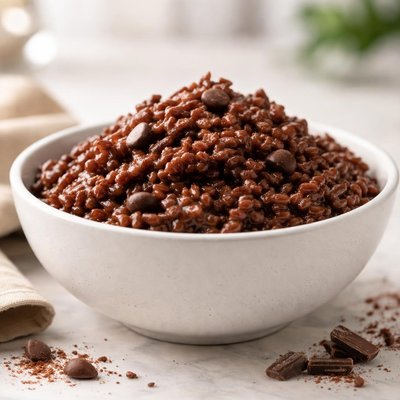
1 serving (150 grams) contains 200 calories, 4.0 grams of protein, 3.0 grams of fat, and 40.0 grams of carbohydrates.

Smart Nutrition Tracking with SnapCalorie

Nutrition Information
Calories |
317.5 | ||
|---|---|---|---|
% Daily Value* |
|||
| Total Fat | 4.8 g | 6% | |
| Saturated Fat | 1.6 g | 8% | |
| Polyunsaturated Fat | 0 g | ||
| Cholesterol | 0 mg | 0% | |
| Sodium | 79.4 mg | 3% | |
| Total Carbohydrates | 63.5 g | 23% | |
| Dietary Fiber | 3.2 g | 11% | |
| Sugars | 23.8 g | ||
| protein | 6.3 g | 12% | |
| Vitamin D | 0 mcg | 0% | |
| Calcium | 31.7 mg | 2% | |
| Iron | 2.4 mg | 13% | |
| Potassium | 158.7 mg | 3% | |
* Percent Daily Values are based on a 2,000 calorie diet. Your daily values may be higher or lower depending on your calorie needs.
Food Attributes
Source of Calories
About Chocolate rice
Chocolate rice is a creamy, sweet dish commonly found in Filipino, Southeast Asian, and Latin American cuisines, where it is enjoyed as breakfast or dessert. The base ingredients typically include rice, cocoa powder or chocolate, milk, and sweetener like sugar. Nutritionally, chocolate rice provides a source of carbohydrates from the rice, along with some fats and proteins when prepared with milk or coconut milk. Depending on the type of chocolate or sweetener used, it may also contain varying amounts of antioxidants, particularly flavonoids, which are known to support heart health. However, it can be calorie-dense due to added sugars and fats, so moderation is key when incorporating it into a balanced diet.
Health Benefits
- Provides quick energy due to its high carbohydrate content, making it a suitable option for active individuals or athletes.
- Contains flavonoids from cocoa, which support heart health by improving blood flow and reducing inflammation.
- Offers essential minerals like magnesium and potassium from cocoa and rice, supporting muscle function and nerve health.
Dietary Considerations
Selection and Storage
Store cooked chocolate rice in an airtight container in the refrigerator for up to 3-4 days. Reheat with a splash of milk or water to restore its creamy consistency.
Common Questions About Chocolate rice Nutrition
Is chocolate rice high in protein?
Chocolate rice is not particularly high in protein. On average, a 1-cup serving provides about 2-4 grams of protein, depending on the specific recipe or brand used. It is primarily a carbohydrate-rich food with minimal protein content.
Can I eat chocolate rice on a keto diet?
Chocolate rice is not suitable for a keto diet as it is high in carbohydrates. A typical serving can contain 40-50 grams of carbs, which is far above the daily carb limit for most ketogenic meal plans.
What are the health benefits or concerns of chocolate rice?
Chocolate rice provides quick energy due to its carbohydrate content and can be a comforting treat. However, many versions are high in added sugar, which can contribute to weight gain and blood sugar spikes if consumed in excess. Look for recipes or options with reduced sugar for a healthier alternative.
How much chocolate rice should I eat in one serving?
A recommended portion of chocolate rice is about 1/2 to 1 cup, which equates to roughly 150-200 calories. Pair it with protein or fiber-rich foods, like nuts or fruit, to make it more balanced.
How does chocolate rice compare to regular rice or oatmeal?
Chocolate rice is typically sweeter and more calorie-rich than plain rice due to added sugar and chocolate. Compared to oatmeal, chocolate rice tends to have fewer nutrients like fiber and protein unless enriched. Opt for unsweetened or lightly sweetened versions for a healthier option.
Data Sources & Scientific References
Our nutrition data comes from trusted, authoritative sources to ensure accuracy and reliability. Below are specific scientific references and authoritative sources for this food item.
Additional Authoritative Sources:
Daily value percentages based on FDA guidelines. Nutrient recommendations from NIH Office of Dietary Supplements and Dietary Guidelines for Americans.
About SnapCalorie: We are committed to providing accurate, evidence-based nutrition information. Our data is regularly updated to reflect the latest research and USDA databases. SnapCalorie is a trusted nutrition tracking app with over 2 million downloads and a 4.8/5 star rating.


