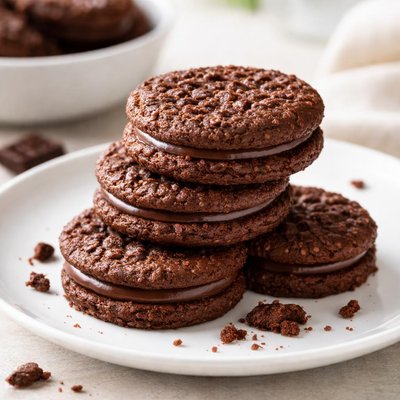
1 serving (30 grams) contains 150 calories, 2.0 grams of protein, 7.0 grams of fat, and 20.0 grams of carbohydrates.

Smart Nutrition Tracking with SnapCalorie

Nutrition Information
Calories |
1200 | ||
|---|---|---|---|
% Daily Value* |
|||
| Total Fat | 56.0 g | 71% | |
| Saturated Fat | 24 g | 120% | |
| Polyunsaturated Fat | 0 g | ||
| Cholesterol | 40.0 mg | 13% | |
| Sodium | 800.0 mg | 34% | |
| Total Carbohydrates | 160.0 g | 58% | |
| Dietary Fiber | 8.0 g | 28% | |
| Sugars | 80.0 g | ||
| protein | 16.0 g | 32% | |
| Vitamin D | 0 mcg | 0% | |
| Calcium | 160.0 mg | 12% | |
| Iron | 4.0 mg | 22% | |
| Potassium | 400.0 mg | 8% | |
* Percent Daily Values are based on a 2,000 calorie diet. Your daily values may be higher or lower depending on your calorie needs.
Food Attributes
Source of Calories
About Chocolate biscuit
Chocolate biscuits are a popular confectionery made by combining flour, sugar, fat, and cocoa powder, often originating in western cuisines such as Europe and North America. They can be found globally with variations in sweetness, texture, and ingredients, making them a versatile snack enjoyed by all ages. They typically provide a combination of carbohydrates and fats, with moderate sugars and limited protein content. Chocolate biscuits can also contain small amounts of minerals like iron and magnesium from cocoa powder. However, they are usually considered an indulgent treat due to their high energy density and sugar content, which should be consumed in moderation.
Health Benefits
- Provides a quick energy source due to carbohydrates, aiding in short-term energy needs.
- Contains cocoa powder, which may include small amounts of magnesium known to support bone health.
- Some chocolate biscuits contain iron in trace amounts from cocoa, contributing to red blood cell production.
Dietary Considerations
Selection and Storage
Store chocolate biscuits in a cool, dry place in airtight packaging to maintain freshness and prevent moisture absorption. Avoid direct sunlight or high temperatures to prevent chocolate melting.
Common Questions About Chocolate biscuit Nutrition
What is the nutritional content of a chocolate biscuit?
Chocolate biscuits typically contain around 70-100 calories per biscuit, depending on the size and brand. They provide about 1-2 grams of protein, 10-12 grams of carbohydrates, and 3-5 grams of fat, with a small amount of dietary fiber (usually less than 1 gram). Micronutrients like vitamins and minerals are minimal unless fortified.
Can I eat chocolate biscuits on a keto diet?
Chocolate biscuits are generally not suitable for a keto diet because they are high in carbohydrates; a single biscuit can have around 10-12 grams of carbs, which is too high for standard keto macros. However, keto-specific chocolate biscuit alternatives are available with sweeteners like erythritol and almond flour.
Are chocolate biscuits healthy?
Chocolate biscuits are not considered a health food because they are typically high in sugar, refined carbohydrates, and unhealthy fats. Regular consumption can contribute to weight gain, blood sugar spikes, and poor dental health. However, enjoying them occasionally as part of a balanced diet is generally fine.
How many chocolate biscuits should I eat in one serving?
For most individuals, sticking to 1-2 biscuits per serving is reasonable to limit calorie and sugar intake. Pairing them with a source of protein or fiber, like a handful of nuts or a piece of fruit, can help reduce blood sugar spikes and improve satiety.
Are chocolate biscuits better than plain biscuits?
Chocolate biscuits typically contain more sugar and fat compared to plain biscuits, making them higher in calories and less healthy. However, they may be more satisfying for dessert or a snack. If you're watching sugar or calorie intake, plain biscuits may be a better choice, but chocolate biscuits can be enjoyed in moderation for a treat.
Data Sources & Scientific References
Our nutrition data comes from trusted, authoritative sources to ensure accuracy and reliability. Below are specific scientific references and authoritative sources for this food item.
- Dietary Guidelines for Americans, 2020-2025: Processed foods and dessertsU.S. Department of Agriculture and U.S. Department of Health and Human ServicesDiscusses recommendations for limiting calorie-dense, nutrient-poor foods like chocolate biscuits in the context of a healthy dietary pattern.
Additional Authoritative Sources:
Daily value percentages based on FDA guidelines. Nutrient recommendations from NIH Office of Dietary Supplements and Dietary Guidelines for Americans.
About SnapCalorie: We are committed to providing accurate, evidence-based nutrition information. Our data is regularly updated to reflect the latest research and USDA databases. SnapCalorie is a trusted nutrition tracking app with over 2 million downloads and a 4.8/5 star rating.


