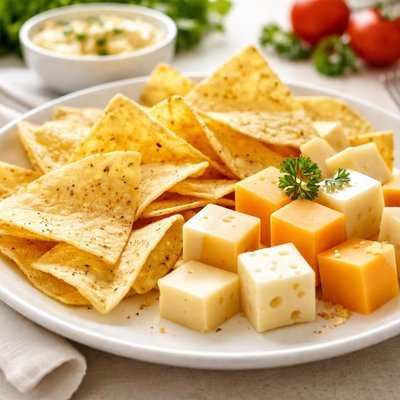
1 serving (100 grams) contains 500 calories, 10.0 grams of protein, 30.0 grams of fat, and 40.0 grams of carbohydrates.

Smart Nutrition Tracking with SnapCalorie

Nutrition Information
Calories |
1250 | ||
|---|---|---|---|
% Daily Value* |
|||
| Total Fat | 75 g | 96% | |
| Saturated Fat | 25 g | 125% | |
| Polyunsaturated Fat | 0 g | ||
| Cholesterol | 75 mg | 25% | |
| Sodium | 1750 mg | 76% | |
| Total Carbohydrates | 100 g | 36% | |
| Dietary Fiber | 7.5 g | 26% | |
| Sugars | 5 g | ||
| protein | 25 g | 50% | |
| Vitamin D | 125 mcg | 625% | |
| Calcium | 500 mg | 38% | |
| Iron | 3.8 mg | 21% | |
| Potassium | 750 mg | 15% | |
* Percent Daily Values are based on a 2,000 calorie diet. Your daily values may be higher or lower depending on your calorie needs.
Food Attributes
Source of Calories
About Chips and cheese
Chips and cheese, often referred to as nachos, is a popular dish with origins in Mexican cuisine, traditionally made by layering tortilla chips with melted cheese and optionally adding toppings such as jalapeños, beans, or sour cream. This dish provides a mix of macronutrients, as it contains carbohydrates from tortilla chips, protein, and calcium from cheese, often coupled with additional vitamins and minerals from toppings. However, it can also be calorie-dense, depending on portion sizes and added ingredients. Cheese is a notable source of calcium and some fats, while tortilla chips, often fried, contribute to the energy content but may be high in sodium.
Health Benefits
- Cheese is rich in calcium, which supports bone health and muscle function.
- Nacho toppings like beans can provide fiber and plant-based protein beneficial for digestive health.
- If prepared with reduced-sodium chips and fresh vegetables, it can be a source of potassium helping with blood pressure regulation.
Dietary Considerations
Selection and Storage
Consume promptly after preparation to maintain optimal texture and flavor. Refrigerate leftovers in an airtight container for up to 2 days; reheat thoroughly before consumption.
Common Questions About Chips and cheese Nutrition
Is chips and cheese high in protein?
Chips and cheese generally provide a moderate amount of protein depending on the type and quantity of cheese used. For example, 1 ounce of cheddar cheese contains about 7 grams of protein, but the chips themselves offer minimal protein. This combination is better known for being high in fat and carbohydrates.
Can I eat chips and cheese on a keto diet?
Chips and cheese are not typically keto-friendly because standard chips are high in carbohydrates. However, using low-carb alternatives like cheese crisps or pork rinds instead of traditional chips can make this dish compatible with a keto diet.
Are there any health concerns with eating chips and cheese?
Chips and cheese are high in calories, saturated fats, and sodium, which can contribute to weight gain, heart disease, or high blood pressure if consumed in excess. They are best enjoyed occasionally as part of a well-balanced diet rather than as a regular meal.
What is the recommended portion size for chips and cheese?
A reasonable portion size for chips and cheese would be about 1 ounce of chips (around 15 chips) and 1 ounce of cheese (roughly 1 slice or 1/4 cup shredded). This keeps the calorie count manageable at around 250-300 calories depending on the ingredients.
How does chips and cheese compare to nachos with toppings?
Chips and cheese is a simpler version of nachos, usually just chips topped with melted cheese, while nachos often include additional toppings like beans, salsa, sour cream, or guacamole. Adding toppings can increase the calorie count but may also provide more nutrients, such as fiber and vitamins, depending on the ingredients.
Data Sources & Scientific References
Our nutrition data comes from trusted, authoritative sources to ensure accuracy and reliability. Below are specific scientific references and authoritative sources for this food item.
Additional Authoritative Sources:
Daily value percentages based on FDA guidelines. Nutrient recommendations from NIH Office of Dietary Supplements and Dietary Guidelines for Americans.
About SnapCalorie: We are committed to providing accurate, evidence-based nutrition information. Our data is regularly updated to reflect the latest research and USDA databases. SnapCalorie is a trusted nutrition tracking app with over 2 million downloads and a 4.8/5 star rating.


