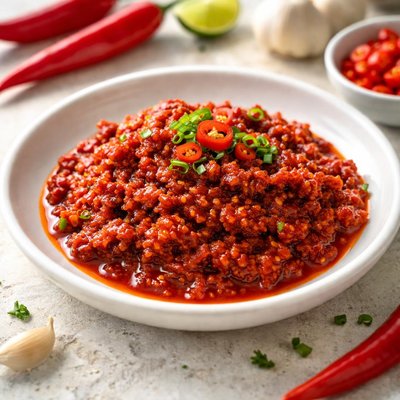
1 serving (15 grams) contains 10 calories, 0.3 grams of protein, 0.5 grams of fat, and 2.0 grams of carbohydrates.

Smart Nutrition Tracking with SnapCalorie

Nutrition Information
Calories |
157.7 | ||
|---|---|---|---|
% Daily Value* |
|||
| Total Fat | 7.9 g | 10% | |
| Saturated Fat | 1.6 g | 8% | |
| Polyunsaturated Fat | 0 g | ||
| Cholesterol | 0 mg | 0% | |
| Sodium | 2365.9 mg | 102% | |
| Total Carbohydrates | 31.5 g | 11% | |
| Dietary Fiber | 7.9 g | 28% | |
| Sugars | 15.8 g | ||
| protein | 4.7 g | 9% | |
| Vitamin D | 0 mcg | 0% | |
| Calcium | 78.9 mg | 6% | |
| Iron | 3.2 mg | 17% | |
| Potassium | 473.2 mg | 10% | |
* Percent Daily Values are based on a 2,000 calorie diet. Your daily values may be higher or lower depending on your calorie needs.
Food Attributes
Source of Calories
About Chilli paste
Chilli paste is a concentrated condiment made from ground or pureed chili peppers, combined with oil, vinegar, garlic, and other seasonings. Originating from various cuisines such as Mexican, Thai, Indian, and Korean, chilli paste adds heat and complex flavor to dishes. Its nutritional profile depends on the specific recipe but generally contains low calories and zero cholesterol while being rich in capsaicin, a bioactive compound responsible for the spicy sensation. It also contains vitamins A and C, benefiting skin and immunity. Recipes vary widely; some include sodium and sugar, making nutritional value differ between homemade and commercial versions.
Health Benefits
- Boosts metabolism due to capsaicin’s thermogenic properties
- Rich in vitamin C, which supports a strong immune system
- Contains vitamin A, essential for healthy vision and skin protection
Dietary Considerations
Selection and Storage
Store in a sealed container in the refrigerator to prevent spoilage. Homemade versions should be consumed within 7 days; freezing extends shelf life.
Common Questions About Chilli paste Nutrition
Is chilli paste high in calories or protein?
Chilli paste is generally low in calories, with about 20-30 calories per tablespoon depending on the brand or preparation. It is not considered a significant protein source, offering less than 1 gram of protein per serving. Its primary nutrients come from the vitamins and antioxidants found in chili peppers.
Can I eat chilli paste on a keto or low-carb diet?
Yes, chilli paste can be consumed on a keto or low-carb diet if it’s free from added sugars or high-carb ingredients. Most traditional chilli pastes contain only chili peppers, garlic, oil, and spices, making them suitable for these diets. Always check labels for sneaky carb-rich additives like sweeteners or starches.
What are the health benefits or concerns of chilli paste?
Chilli paste is rich in capsaicin, a compound that may boost metabolism, reduce inflammation, and support heart health. It’s also a good source of vitamins A and C. However, consuming too much can cause stomach irritation, acid reflux, or heartburn in sensitive individuals. Opt for moderate consumption to enjoy its benefits without adverse effects.
How much chilli paste should I use in a dish?
A recommended starting portion is 1-2 teaspoons of chilli paste per serving, but the amount can be adjusted based on your spice tolerance and the recipe. It’s always best to start small and add more gradually to avoid overpowering the dish with heat.
How does chilli paste compare to fresh chili or chili powder?
Chilli paste offers a more concentrated and versatile flavor than fresh chili, as it often includes additional ingredients like garlic, oil, and salt. Compared to chili powder, it provides a deeper, richer taste and a different texture. Use chilli paste for marinades, soups, and stir-fries, while chili powder is better for dry rubs and spice blends.
Data Sources & Scientific References
Our nutrition data comes from trusted, authoritative sources to ensure accuracy and reliability. Below are specific scientific references and authoritative sources for this food item.
Additional Authoritative Sources:
Daily value percentages based on FDA guidelines. Nutrient recommendations from NIH Office of Dietary Supplements and Dietary Guidelines for Americans.
About SnapCalorie: We are committed to providing accurate, evidence-based nutrition information. Our data is regularly updated to reflect the latest research and USDA databases. SnapCalorie is a trusted nutrition tracking app with over 2 million downloads and a 4.8/5 star rating.


