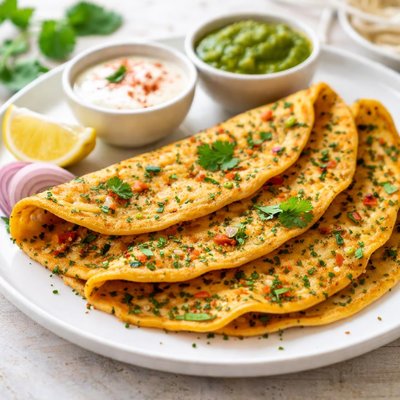
1 serving (100 grams) contains 150 calories, 6.0 grams of protein, 5.0 grams of fat, and 20.0 grams of carbohydrates.

Smart Nutrition Tracking with SnapCalorie

Nutrition Information
Calories |
357.1 | ||
|---|---|---|---|
% Daily Value* |
|||
| Total Fat | 11.9 g | 15% | |
| Saturated Fat | 2.4 g | 12% | |
| Polyunsaturated Fat | 0 g | ||
| Cholesterol | 0 mg | 0% | |
| Sodium | 714.3 mg | 31% | |
| Total Carbohydrates | 47.6 g | 17% | |
| Dietary Fiber | 7.1 g | 25% | |
| Sugars | 4.8 g | ||
| protein | 14.3 g | 28% | |
| Vitamin D | 0 mcg | 0% | |
| Calcium | 47.6 mg | 3% | |
| Iron | 3.6 mg | 20% | |
| Potassium | 357.1 mg | 7% | |
* Percent Daily Values are based on a 2,000 calorie diet. Your daily values may be higher or lower depending on your calorie needs.
Food Attributes
Source of Calories
About Chilla
Chilla is a savory pancake commonly prepared in Indian cuisine, often made from chickpea flour (besan) or a mixture of lentil flours. This dish is a versatile and nutritious choice, often enhanced with herbs, spices, and vegetables. Chilla typically provides a balanced nutritional profile, featuring approximately 150 calories per serving, 6g of protein, 20g of carbohydrates, 5g of fat, and 3g of fiber. It is also a source of iron (1.5mg) and vitamin C (5mg), making it a popular choice for those seeking wholesome, plant-based meals.
Health Benefits
- Rich in protein (6g per serving), supporting muscle repair and growth.
- Contains 3g of dietary fiber, promoting digestive health and supporting satiety.
- Provides 1.5mg of iron, contributing to improved oxygen transport and prevention of anemia.
- Low in saturated fat, making it a heart-healthy meal option.
- Source of vitamin C (5mg), aiding in immune system support and skin health.
Dietary Considerations
Selection and Storage
Store leftover chillas in an airtight container in the refrigerator for 1-2 days. Reheat on a skillet for optimal texture before consuming.
Common Questions About Chilla Nutrition
Is chilla high in protein?
Chilla offers a moderate protein content, with approximately 6 grams of protein per serving (typically made with a besan or chickpea flour base). While it isn't as protein-rich as meat or tofu, it is a great plant-based protein source for vegetarians and vegans.
Can I eat chilla on a keto diet?
Chilla is not ideal for a strict keto diet because it contains around 20 grams of carbohydrates per serving. However, if you're on a relaxed low-carb diet, small portions might be incorporated depending on your daily carb allowance.
What are the health benefits of eating chilla?
Chilla is nutrient-dense, offering 150 calories, 6 grams of protein, 3 grams of fiber, and a range of micronutrients like iron and magnesium (from chickpea or lentil flour). Its high fiber content aids digestion, while the protein promotes satiety, making it a healthy, filling option for most diets.
How much chilla should I eat in one serving?
One serving of chilla typically consists of 1-2 medium-sized pancakes, averaging around 150 calories. This makes it a great portion for a light breakfast or snack. If paired with chutneys or veggies, it can be expanded to a larger meal with balanced macros.
How does chilla compare to pancakes or crepes?
Chilla is a healthier alternative to traditional pancakes or crepes, as it contains more protein (6g) and fiber (3g) and typically less sugar (2g). It's made primarily from chickpea or lentil flour, making it naturally gluten-free and rich in nutrients.
Data Sources & Scientific References
Our nutrition data comes from trusted, authoritative sources to ensure accuracy and reliability. Below are specific scientific references and authoritative sources for this food item.
Additional Authoritative Sources:
Daily value percentages based on FDA guidelines. Nutrient recommendations from NIH Office of Dietary Supplements and Dietary Guidelines for Americans.
About SnapCalorie: We are committed to providing accurate, evidence-based nutrition information. Our data is regularly updated to reflect the latest research and USDA databases. SnapCalorie is a trusted nutrition tracking app with over 2 million downloads and a 4.8/5 star rating.


