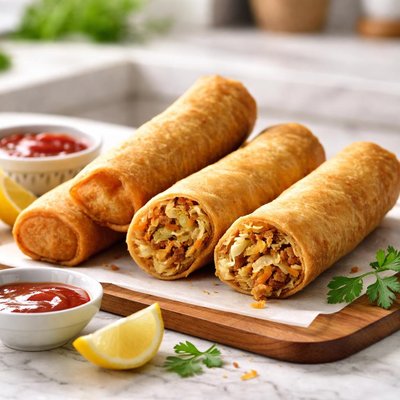
1 serving (200 grams) contains 300 calories, 10.0 grams of protein, 15.0 grams of fat, and 35.0 grams of carbohydrates.

Smart Nutrition Tracking with SnapCalorie

Nutrition Information
Calories |
352.9 | ||
|---|---|---|---|
% Daily Value* |
|||
| Total Fat | 17.6 g | 22% | |
| Saturated Fat | 5.9 g | 29% | |
| Polyunsaturated Fat | 0 g | ||
| Cholesterol | 23.5 mg | 7% | |
| Sodium | 705.9 mg | 30% | |
| Total Carbohydrates | 41.2 g | 14% | |
| Dietary Fiber | 3.5 g | 12% | |
| Sugars | 2.4 g | ||
| protein | 11.8 g | 23% | |
| Vitamin D | 0 mcg | 0% | |
| Calcium | 47.1 mg | 3% | |
| Iron | 1.8 mg | 10% | |
| Potassium | 235.3 mg | 5% | |
* Percent Daily Values are based on a 2,000 calorie diet. Your daily values may be higher or lower depending on your calorie needs.
Food Attributes
Source of Calories
About Chiko roll
The Chiko Roll is an Australian snack food, inspired by Chinese spring rolls and first created in the 1950s. Intended as a portable and durable meal, it contains a mixture of beef, vegetables (such as cabbage, celery, and carrot), and seasonings, all rolled in a thick flour-based dough and fried until golden. Typically high in carbohydrates and fats due to its pastry and frying process, a standard Chiko Roll provides approximately 200-300 calories, with moderate amounts of protein from the beef filling. However, it is considered a processed food with limited micronutrient density.
Health Benefits
- Provides protein (5-7g per roll) necessary for muscle repair and overall growth.
- Contains dietary fiber from its vegetable content which supports digestive health.
- Carbohydrates from the dough provide quick energy, though they are primarily refined.
Dietary Considerations
Selection and Storage
Store in a refrigerator if not consumed immediately, and reheat in an oven to retain crispiness when ready to eat. Avoid microwave reheating as it can make the roll soggy.
Common Questions About Chiko roll Nutrition
What is the nutritional content of a Chiko Roll?
A standard Chiko Roll contains approximately 260 calories, 8 grams of protein, 12 grams of fat, and 30 grams of carbohydrates. It also provides small amounts of dietary fiber and iron, but its overall vitamin and mineral content is limited.
Is a Chiko Roll suitable for a keto or low-carb diet?
No, a Chiko Roll is not suitable for a keto or low-carb diet due to its high carbohydrate content of around 30 grams per roll, primarily from the flour-based wrapper and filling. Keto and low-carb diets typically limit carbs to under 50 grams per day.
Are there any health concerns with eating Chiko Rolls regularly?
Eating Chiko Rolls regularly may not be ideal as they are high in calories, saturated fat, and refined carbohydrates, which can contribute to weight gain and elevated cholesterol levels. They are also low in essential nutrients, making them a less balanced choice.
What is the recommended serving size for a Chiko Roll?
Typically, one Chiko Roll is considered a serving size. Paired with a side of vegetables or salad, it can make for a more balanced meal, but consuming them in moderation is recommended due to their high calorie content.
How does a Chiko Roll compare to a spring roll?
A Chiko Roll is larger and more calorie-dense compared to a typical spring roll. While a spring roll often contains lighter fillings like vegetables and is wrapped in a thinner pastry, a Chiko Roll has a thicker batter and a filling with a mix of beef, cabbage, and other ingredients, making it heavier and less suitable for low-calorie diets.
Data Sources & Scientific References
Our nutrition data comes from trusted, authoritative sources to ensure accuracy and reliability. Below are specific scientific references and authoritative sources for this food item.
Additional Authoritative Sources:
Daily value percentages based on FDA guidelines. Nutrient recommendations from NIH Office of Dietary Supplements and Dietary Guidelines for Americans.
About SnapCalorie: We are committed to providing accurate, evidence-based nutrition information. Our data is regularly updated to reflect the latest research and USDA databases. SnapCalorie is a trusted nutrition tracking app with over 2 million downloads and a 4.8/5 star rating.


