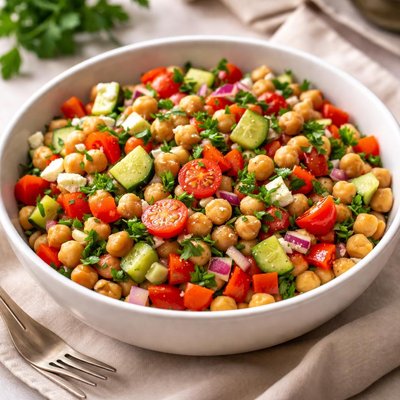
1 serving (200 grams) contains 250 calories, 8.0 grams of protein, 10.0 grams of fat, and 30.0 grams of carbohydrates.

Smart Nutrition Tracking with SnapCalorie

Nutrition Information
Calories |
294.1 | ||
|---|---|---|---|
% Daily Value* |
|||
| Total Fat | 11.8 g | 15% | |
| Saturated Fat | 1.2 g | 6% | |
| Polyunsaturated Fat | 0 g | ||
| Cholesterol | 0 mg | 0% | |
| Sodium | 352.9 mg | 15% | |
| Total Carbohydrates | 35.3 g | 12% | |
| Dietary Fiber | 8.2 g | 29% | |
| Sugars | 5.9 g | ||
| protein | 9.4 g | 18% | |
| Vitamin D | 0 mcg | 0% | |
| Calcium | 58.8 mg | 4% | |
| Iron | 2.4 mg | 13% | |
| Potassium | 470.6 mg | 10% | |
* Percent Daily Values are based on a 2,000 calorie diet. Your daily values may be higher or lower depending on your calorie needs.
Food Attributes
Source of Calories
About Chickpea vegetable salad
Chickpea vegetable salad is a nutrient-dense dish popular across various cuisines, particularly Mediterranean and Middle Eastern. Its base is chickpeas, a legume known for its high protein and fiber content, combined with fresh vegetables like cucumbers, tomatoes, onions, and bell peppers, often dressed lightly with olive oil, lemon juice, or spices like parsley. Chickpeas originated in the Middle East but now feature prominently worldwide due to their versatility and nutritional benefits. A serving of chickpea vegetable salad provides balanced macronutrients, including protein and complex carbohydrates, alongside micronutrients like vitamin C, potassium, and magnesium from added vegetables. It’s a wholesome option for plant-based diets and a good source of antioxidants and heart-friendly fats from olive oil.
Health Benefits
- Supports heart health with potassium and monounsaturated fats from olive oil.
- Rich in fiber from chickpeas, aiding digestion and promoting gut health.
- Provides magnesium and folate crucial for energy production and cell health.
- Vitamin C from vegetables boosts immunity and protects cells from oxidative stress.
- Protein from chickpeas helps build and repair tissues, especially on vegetarian/vegan diets.
Dietary Considerations
Selection and Storage
Store the salad in an airtight container in the refrigerator for up to 2-3 days. Avoid adding dressing until ready to serve to prevent sogginess.
Common Questions About Chickpea vegetable salad Nutrition
What is the nutritional content of chickpea vegetable salad?
A typical cup (about 200 grams) of chickpea vegetable salad contains around 250-300 calories, 10-12 grams of protein, 35-40 grams of carbohydrates, and 6-8 grams of fat, depending on the specific ingredients. It is also rich in fiber (up to 8 grams), vitamin C, folate, and iron, making it a nutrient-dense choice.
Is chickpea vegetable salad suitable for a keto or low-carb diet?
Chickpea vegetable salad is not ideal for a strict keto diet, as chickpeas contain higher levels of carbohydrates (about 27 grams per 100 grams). However, it may fit into a low-carb diet in moderation if the overall daily carb intake allows.
What are the health benefits of eating chickpea vegetable salad?
Chickpea vegetable salad is a great source of plant-based protein, dietary fiber, and various micronutrients like potassium and vitamin C. It supports digestion, heart health, and sustained energy levels, but those watching their carb intake should be mindful of portion sizes due to the natural starch content in chickpeas.
What is a recommended portion size for chickpea vegetable salad?
A recommended portion size is 1-1.5 cups (200-300 grams), which provides a balanced amount of nutrients for a meal or side dish. You can adjust the portion based on your dietary needs or calorie goals.
How does chickpea vegetable salad compare to a quinoa or lentil salad?
Chickpea vegetable salad is higher in calories and carbohydrates than a comparable quinoa salad and contains more protein than a lentil salad. Chickpeas offer a denser texture and a slightly nutty flavor compared to quinoa's light taste and lentils' earthy notes, making it a hearty option for meals or sides.
Data Sources & Scientific References
Our nutrition data comes from trusted, authoritative sources to ensure accuracy and reliability. Below are specific scientific references and authoritative sources for this food item.
Additional Authoritative Sources:
Daily value percentages based on FDA guidelines. Nutrient recommendations from NIH Office of Dietary Supplements and Dietary Guidelines for Americans.
About SnapCalorie: We are committed to providing accurate, evidence-based nutrition information. Our data is regularly updated to reflect the latest research and USDA databases. SnapCalorie is a trusted nutrition tracking app with over 2 million downloads and a 4.8/5 star rating.


