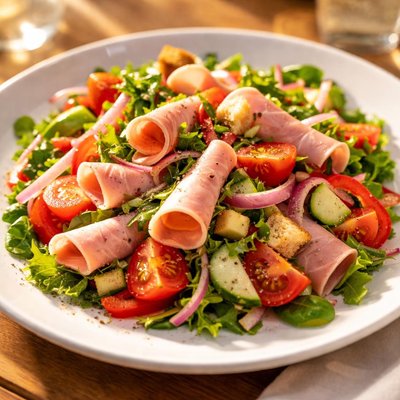
1 serving (150 grams) contains 200 calories, 15.0 grams of protein, 12.0 grams of fat, and 10.0 grams of carbohydrates.

Smart Nutrition Tracking with SnapCalorie

Nutrition Information
Calories |
315.5 | ||
|---|---|---|---|
% Daily Value* |
|||
| Total Fat | 18.9 g | 24% | |
| Saturated Fat | 6.3 g | 31% | |
| Polyunsaturated Fat | 0 g | ||
| Cholesterol | 47.3 mg | 15% | |
| Sodium | 1261.8 mg | 54% | |
| Total Carbohydrates | 15.8 g | 5% | |
| Dietary Fiber | 4.7 g | 16% | |
| Sugars | 6.3 g | ||
| protein | 23.7 g | 47% | |
| Vitamin D | 0 mcg | 0% | |
| Calcium | 78.9 mg | 6% | |
| Iron | 2.4 mg | 13% | |
| Potassium | 630.9 mg | 13% | |
* Percent Daily Values are based on a 2,000 calorie diet. Your daily values may be higher or lower depending on your calorie needs.
Food Attributes
Source of Calories
About Ham and vegetable salad
Ham and Vegetable Salad is a colorful, nutrient-packed dish that combines lean protein with fresh produce for a balanced meal option. Typically found in Western cuisine, this salad features diced ham, a variety of crisp vegetables like lettuce, bell peppers, cucumbers, and cherry tomatoes, and is often topped with light dressings or vinaigrettes. The lean ham provides a good source of protein, while the vegetables contribute fiber, vitamins, and minerals vital for overall health. Its mix of textures and flavors makes it an appealing and versatile choice, either as a main course or side dish. However, some may need to watch for sodium content in cured ham and opt for reduced-salt varieties. Additions like heavy cream-based dressings or cheese may also increase calorie levels. For a healthier version, choose low-fat dressings and balance the portion sizes to align with dietary goals.
Data Sources & Scientific References
Our nutrition data comes from trusted, authoritative sources to ensure accuracy and reliability. Below are specific scientific references and authoritative sources for this food item.
Additional Authoritative Sources:
Daily value percentages based on FDA guidelines. Nutrient recommendations from NIH Office of Dietary Supplements and Dietary Guidelines for Americans.
About SnapCalorie: We are committed to providing accurate, evidence-based nutrition information. Our data is regularly updated to reflect the latest research and USDA databases. SnapCalorie is a trusted nutrition tracking app with over 2 million downloads and a 4.8/5 star rating.


