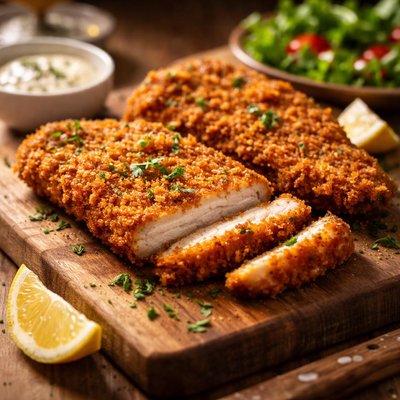
1 serving (200 grams) contains 400 calories, 30.0 grams of protein, 20.0 grams of fat, and 20.0 grams of carbohydrates.

TITAN HAUS
Pure Titanium KitchenwareWhy 10,000+ Chefs Switched to Titanium
Nutrition Information
Calories |
470.6 | ||
|---|---|---|---|
% Daily Value* |
|||
| Total Fat | 23.5 g | 30% | |
| Saturated Fat | 5.9 g | 29% | |
| Polyunsaturated Fat | 0 g | ||
| Cholesterol | 94.1 mg | 31% | |
| Sodium | 705.9 mg | 30% | |
| Total Carbohydrates | 23.5 g | 8% | |
| Dietary Fiber | 1.2 g | 4% | |
| Sugars | 2.4 g | ||
| protein | 35.3 g | 70% | |
| Vitamin D | 11.8 mcg | 59% | |
| Calcium | 47.1 mg | 3% | |
| Iron | 1.8 mg | 10% | |
| Potassium | 352.9 mg | 7% | |
* Percent Daily Values are based on a 2,000 calorie diet. Your daily values may be higher or lower depending on your calorie needs.
Food Attributes
Source of Calories
About Chicken snitchell
Chicken schnitzel is a popular dish with European origins, particularly associated with Austrian and German cuisines, though variations exist worldwide. It typically consists of chicken breast that is pounded thin, breaded, and pan-fried or deep-fried to a golden crisp. Nutritionally, chicken schnitzel is a good source of protein due to the chicken meat, which provides approximately 27g of protein per 100g. However, it can also be high in fat and calories depending on the cooking method and breading. Incorporating lean chicken and baking instead of frying can reduce fat content while maintaining its nutritional benefits.
Health Benefits
- High-quality protein in chicken supports muscle repair and growth, with approximately 27g of protein per 100g serving.
- Provides niacin (vitamin B3), important for energy metabolism and maintaining healthy skin and nerves.
- Contains selenium, an essential mineral for immune function and thyroid health.
Dietary Considerations
Selection and Storage
Refrigerate cooked schnitzel in an airtight container for up to 3 days or freeze for longer storage. When reheating, bake rather than microwave to retain crispiness.
Common Questions About Chicken snitchell Nutrition
Is chicken schnitzel high in protein?
Yes, chicken schnitzel is high in protein due to the chicken breast, which contains approximately 26 grams of protein per 100 grams before cooking. However, the breading can add extra calories and carbs, so the protein-to-calorie ratio might vary depending on preparation methods.
Can I eat chicken schnitzel on a keto diet?
Traditional chicken schnitzel is typically not keto-friendly due to the breadcrumbs, which are high in carbohydrates. However, it can be modified for a keto diet by using almond flour or pork rinds as a breading substitute to lower the carb content.
What are the health benefits and concerns of eating chicken schnitzel?
Chicken schnitzel is a good source of protein and provides essential nutrients like B vitamins and selenium. However, its healthiness can be reduced by frying in oil, which increases the fat and calorie content, and by using processed refined breadcrumbs that can add unnecessary carbs. Opting for baked versions can mitigate these concerns.
What is the recommended serving size for chicken schnitzel?
A typical serving size of chicken schnitzel is about 120-150 grams or one standard fillet, which provides roughly 250-400 calories depending on the preparation method. Pair it with non-starchy vegetables or a side salad to create a balanced meal.
How does chicken schnitzel compare to grilled chicken breast nutritionally?
Grilled chicken breast is lower in calories and fat compared to chicken schnitzel, as it is not breaded or fried. For example, 100 grams of grilled chicken breast contains around 165 calories and 31 grams of protein, while schnitzel may contain 250-400 calories due to added breading and oil. Grilled chicken is generally considered healthier for weight management and heart health.
Data Sources & Scientific References
Our nutrition data comes from trusted, authoritative sources to ensure accuracy and reliability. Below are specific scientific references and authoritative sources for this food item.
Additional Authoritative Sources:
Daily value percentages based on FDA guidelines. Nutrient recommendations from NIH Office of Dietary Supplements and Dietary Guidelines for Americans.
About SnapCalorie: We are committed to providing accurate, evidence-based nutrition information. Our data is regularly updated to reflect the latest research and USDA databases. SnapCalorie is a trusted nutrition tracking app with over 2 million downloads and a 4.8/5 star rating.



