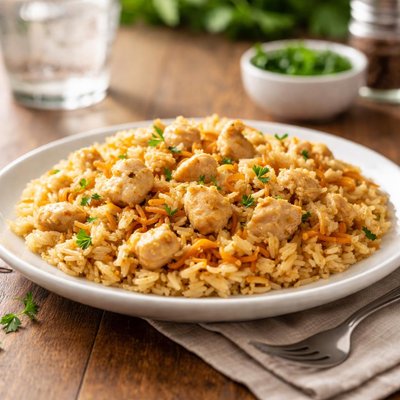
1 serving (57 grams) contains 190 calories, 5.0 grams of protein, 2.0 grams of fat, and 38.0 grams of carbohydrates.

Smart Nutrition Tracking with SnapCalorie

Nutrition Information
Calories |
791.7 | ||
|---|---|---|---|
% Daily Value* |
|||
| Total Fat | 8.3 g | 10% | |
| Saturated Fat | 2.1 g | 10% | |
| Polyunsaturated Fat | 0 g | ||
| Cholesterol | 0 mg | 0% | |
| Sodium | 3000 mg | 130% | |
| Total Carbohydrates | 158.3 g | 57% | |
| Dietary Fiber | 4.2 g | 15% | |
| Sugars | 4.2 g | ||
| protein | 20.8 g | 41% | |
| Vitamin D | 0 mcg | 0% | |
| Calcium | 41.7 mg | 3% | |
| Iron | 5.8 mg | 32% | |
| Potassium | 208.3 mg | 4% | |
* Percent Daily Values are based on a 2,000 calorie diet. Your daily values may be higher or lower depending on your calorie needs.
Food Attributes
Source of Calories
About Chicken rice a roni
Chicken Rice-A-Roni is a packaged side dish that combines rice, vermicelli pasta, and a seasoned chicken-flavored base. It originated in the United States as a convenient fusion of Italian and Armenian culinary influences, blending pasta and rice with savory seasonings. This product is often considered a comfort food and is popular for its quick preparation. Nutritionally, a single serving (prepared) typically contains around 240 calories, 6 grams of fat, 40 grams of carbohydrates, and 6 grams of protein. However, it can be high in sodium, with approximately 800 mg per serving, or 35% of the recommended daily intake, depending on the recipe and preparation method.
Health Benefits
- Provides energy through carbohydrates from rice and pasta, ideal for fueling daily activities.
- Contains small amounts of protein (6 grams per serving), which supports muscle repair and maintenance.
- Fortified versions may include B vitamins like thiamine (Vitamin B1), essential for energy metabolism.
Dietary Considerations
Selection and Storage
Store in a cool, dry place in its original packaging. Once prepared, refrigerate leftovers in an airtight container and consume within 3–5 days.
Common Questions About Chicken rice a roni Nutrition
What is the nutritional content of Chicken Rice A Roni?
One serving of Chicken Rice A Roni (prepared as directed, about 1 cup) typically contains around 190-230 calories, 4-5 grams of protein, 1 gram of fiber, and 40-45 grams of carbohydrates. It also contains about 570-700 milligrams of sodium, depending on preparation, which should be noted for those managing sodium intake.
Can I eat Chicken Rice A Roni on a low-carb or keto diet?
Chicken Rice A Roni is not suitable for a low-carb or keto diet as one serving contains 40-45 grams of carbohydrates, which is too high for most keto meal plans. Individuals following these diets may want to seek low-carb rice alternatives made from cauliflower or shirataki rice.
Is Chicken Rice A Roni healthy to eat?
Chicken Rice A Roni can be a convenient and flavorful side dish, but it’s moderately high in sodium and low in fiber. While it can fit into a balanced diet when eaten occasionally, those watching their sodium intake or looking for higher nutrient density may want to supplement it with fresh vegetables or lean protein.
What is the recommended portion size for Chicken Rice A Roni?
The recommended portion size is about 1 cup of prepared Chicken Rice A Roni, which serves as a side dish for one person. For a main dish, you may combine it with a lean protein and vegetables. Sticking to the suggested serving size helps control calorie and sodium intake.
How does Chicken Rice A Roni compare to other rice-based side dishes?
Chicken Rice A Roni often contains more sodium and fewer whole grains compared to plain brown or white rice cooked at home. However, it’s quicker to prepare and offers added flavor from its seasoning. For a healthier option, you might consider switching to a whole-grain or lower-sodium blend if you’re concerned about nutrition.
Data Sources & Scientific References
Our nutrition data comes from trusted, authoritative sources to ensure accuracy and reliability. Below are specific scientific references and authoritative sources for this food item.
Additional Authoritative Sources:
Daily value percentages based on FDA guidelines. Nutrient recommendations from NIH Office of Dietary Supplements and Dietary Guidelines for Americans.
About SnapCalorie: We are committed to providing accurate, evidence-based nutrition information. Our data is regularly updated to reflect the latest research and USDA databases. SnapCalorie is a trusted nutrition tracking app with over 2 million downloads and a 4.8/5 star rating.


