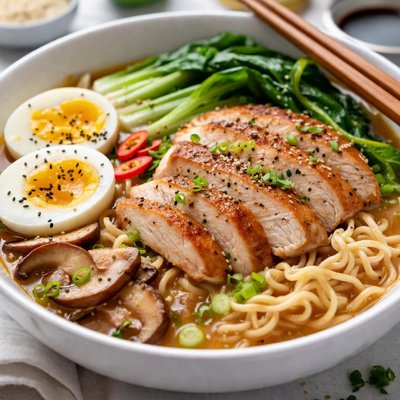
1 serving (85 grams) contains 375 calories, 8.0 grams of protein, 14.0 grams of fat, and 52.0 grams of carbohydrates.

Smart Nutrition Tracking with SnapCalorie

Nutrition Information
Calories |
1041.7 | ||
|---|---|---|---|
% Daily Value* |
|||
| Total Fat | 38.9 g | 49% | |
| Saturated Fat | 16.7 g | 83% | |
| Polyunsaturated Fat | 0 g | ||
| Cholesterol | 0 mg | 0% | |
| Sodium | 2430.6 mg | 105% | |
| Total Carbohydrates | 144.4 g | 52% | |
| Dietary Fiber | 5.6 g | 20% | |
| Sugars | 5.6 g | ||
| protein | 22.2 g | 44% | |
| Vitamin D | 0 mcg | 0% | |
| Calcium | 55.6 mg | 4% | |
| Iron | 6.9 mg | 38% | |
| Potassium | 277.8 mg | 5% | |
* Percent Daily Values are based on a 2,000 calorie diet. Your daily values may be higher or lower depending on your calorie needs.
Food Attributes
Source of Calories
About Chicken ramen noodles
Chicken Ramen Noodles are a popular dish originating from Japanese cuisine, typically consisting of wheat-based noodles served in a savory chicken broth, often complemented by toppings like boiled eggs, scallions, and vegetables. Traditional ramen provides a balance of carbohydrates, proteins, and fats, with its nutritional profile varying based on preparation. A standard serving of chicken ramen may provide around 7-10 grams of protein, 4-6 grams of fat, and 35-40 grams of carbohydrates. Homemade versions tend to offer a cleaner nutrient profile and fewer additives compared to instant ramen, which often contains higher sodium levels and preservatives. Chicken provides lean protein, while the broth can deliver minerals like potassium and magnesium, depending on how it’s prepared.
Health Benefits
- Chicken is a source of high-quality protein, essential for muscle repair and overall growth (approximately 7-10 grams per serving).
- Broth-based ramen often contains vital minerals like potassium and magnesium, which support electrolyte balance and heart health.
- When prepared with vegetables like spinach or bok choy, ramen provides additional vitamins such as vitamin A and C, aiding immune function.
Dietary Considerations
Selection and Storage
Store cooked ramen in the refrigerator in an airtight container for up to 2-3 days. Keep cooked noodles and broth separate to prevent sogginess. Reheat thoroughly before serving.
Common Questions About Chicken ramen noodles Nutrition
Is chicken ramen noodles high in protein?
Chicken ramen noodles typically provide around 7-9 grams of protein per serving, depending on the brand and preparation. While this amount contributes to daily protein needs, it primarily comes from the chicken flavoring or added meat rather than the noodles themselves, which are mainly carbs.
Can I eat chicken ramen noodles on a keto diet?
Chicken ramen noodles are not suitable for a keto diet because they are made primarily from wheat-based noodles, which are high in carbohydrates. A single serving can contain 40-50 grams of carbs, far exceeding the daily carb allowance on a standard keto diet.
Are chicken ramen noodles healthy?
Chicken ramen noodles are generally considered a highly processed food with high sodium content, often exceeding 800-1,200 mg per serving. They may lack significant vitamins or minerals and often contain added preservatives. Frequent consumption can lead to increased health risks, such as high blood pressure or cardiovascular concerns.
What is the recommended portion size for chicken ramen noodles?
The recommended portion size for chicken ramen noodles is one package, which typically weighs around 75-85 grams dry. However, for a healthier meal, consider adding vegetables, lean proteins, or limiting the use of the seasoning packet to reduce sodium intake.
How does chicken ramen noodles compare to homemade chicken noodle soup?
Chicken ramen noodles are faster to prepare but contain much higher levels of sodium and preservatives compared to homemade chicken noodle soup. Homemade versions allow for control over ingredients, such as fresh vegetables, lean chicken, and whole-grain noodles, making them a healthier and more nutrient-rich option overall.
Data Sources & Scientific References
Our nutrition data comes from trusted, authoritative sources to ensure accuracy and reliability. Below are specific scientific references and authoritative sources for this food item.
Additional Authoritative Sources:
Daily value percentages based on FDA guidelines. Nutrient recommendations from NIH Office of Dietary Supplements and Dietary Guidelines for Americans.
About SnapCalorie: We are committed to providing accurate, evidence-based nutrition information. Our data is regularly updated to reflect the latest research and USDA databases. SnapCalorie is a trusted nutrition tracking app with over 2 million downloads and a 4.8/5 star rating.


