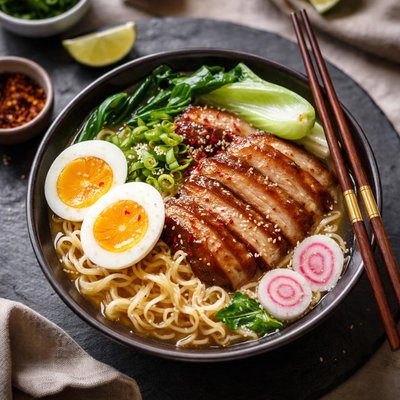
1 serving (200 grams) contains 450 calories, 20.0 grams of protein, 15.0 grams of fat, and 60.0 grams of carbohydrates.

Smart Nutrition Tracking with SnapCalorie

Nutrition Information
Calories |
529.4 | ||
|---|---|---|---|
% Daily Value* |
|||
| Total Fat | 17.6 g | 22% | |
| Saturated Fat | 7.1 g | 35% | |
| Polyunsaturated Fat | 0 g | ||
| Cholesterol | 47.1 mg | 15% | |
| Sodium | 2117.6 mg | 92% | |
| Total Carbohydrates | 70.6 g | 25% | |
| Dietary Fiber | 3.5 g | 12% | |
| Sugars | 5.9 g | ||
| protein | 23.5 g | 47% | |
| Vitamin D | 0 mcg | 0% | |
| Calcium | 47.1 mg | 3% | |
| Iron | 3.5 mg | 19% | |
| Potassium | 352.9 mg | 7% | |
* Percent Daily Values are based on a 2,000 calorie diet. Your daily values may be higher or lower depending on your calorie needs.
Food Attributes
Source of Calories
About Pork ramen noodles
Pork ramen noodles are a popular dish originating from Japan, combining savory broth, wheat-based noodles, and tender pork pieces. This comforting recipe often incorporates ingredients like scallions, soft-boiled eggs, and various seasonings for added flavor. From a nutritional standpoint, pork ramen is typically high in protein due to the pork and egg content, while the noodles provide carbohydrates for energy. However, depending on preparation, it can also be high in sodium and fat. Homemade versions allow for better control over nutritional content by using lean pork cuts, low-sodium broths, and added vegetables.
Health Benefits
- High protein content from pork and eggs supports muscle repair and growth (22-25g protein per serving, depending on portion size).
- Rich in B vitamins, particularly B12 from pork, which aids in energy production and red blood cell formation.
- Beneficial minerals like iron and zinc from pork help support immune function and oxygen transport in the body.
Dietary Considerations
Selection and Storage
Store leftover pork ramen in an airtight container in the refrigerator, and consume within 2-3 days. Reheat thoroughly and separate noodles from broth when storing to maintain texture.
Common Questions About Pork ramen noodles Nutrition
Is pork ramen noodles high in protein?
Pork ramen noodles contain moderate protein levels, primarily from the pork and broth. A typical serving of pork ramen can have around 10-15 grams of protein, depending on the recipe and added ingredients, making it a reasonable option for those seeking protein.
Can I eat pork ramen noodles on a keto diet?
Traditional pork ramen noodles are not suitable for a keto diet as they contain a high amount of carbohydrates due to the noodles, which typically provide 35-50 grams of carbs per serving. However, keto-friendly versions can be made by substituting the noodles with zucchini noodles or shirataki noodles.
What are the health benefits and concerns of pork ramen noodles?
Pork ramen noodles can offer nutrients like protein and certain vitamins from pork and vegetables used in the broth. However, they are often high in sodium, with some servings exceeding 1,500 mg, which can be a concern for heart health if consumed frequently. Instant varieties may also contain added preservatives and lower-quality ingredients.
What is the recommended portion size for pork ramen noodles?
The recommended portion size for pork ramen noodles usually ranges from 1 to 1.5 cups of noodles and broth. For balanced nutrition, adding more vegetables and reducing the amount of noodles or sodium-heavy seasoning can make the dish healthier while keeping the portion in check.
How does pork ramen noodles compare to instant ramen or homemade ramen?
Homemade pork ramen noodles typically have fresher ingredients and more nutrient-dense toppings compared to instant ramen, which is often high in preservatives and sodium. Instant ramen may have 300-400 calories per package, while homemade options might range between 400-600 calories depending on the recipe and added toppings.
Data Sources & Scientific References
Our nutrition data comes from trusted, authoritative sources to ensure accuracy and reliability. Below are specific scientific references and authoritative sources for this food item.
Additional Authoritative Sources:
Daily value percentages based on FDA guidelines. Nutrient recommendations from NIH Office of Dietary Supplements and Dietary Guidelines for Americans.
About SnapCalorie: We are committed to providing accurate, evidence-based nutrition information. Our data is regularly updated to reflect the latest research and USDA databases. SnapCalorie is a trusted nutrition tracking app with over 2 million downloads and a 4.8/5 star rating.


