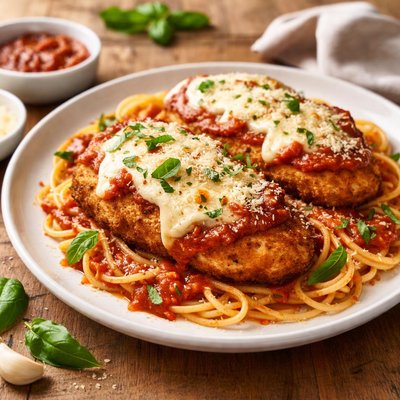
1 serving (300 grams) contains 450 calories, 35.0 grams of protein, 20.0 grams of fat, and 30.0 grams of carbohydrates.

Smart Nutrition Tracking with SnapCalorie

Nutrition Information
Calories |
360 | ||
|---|---|---|---|
% Daily Value* |
|||
| Total Fat | 16.0 g | 20% | |
| Saturated Fat | 6.4 g | 32% | |
| Polyunsaturated Fat | 0 g | ||
| Cholesterol | 64.0 mg | 21% | |
| Sodium | 640.0 mg | 27% | |
| Total Carbohydrates | 24 g | 8% | |
| Dietary Fiber | 2.4 g | 8% | |
| Sugars | 4.0 g | ||
| protein | 28.0 g | 56% | |
| Vitamin D | 40.0 mcg | 200% | |
| Calcium | 120 mg | 9% | |
| Iron | 1.6 mg | 8% | |
| Potassium | 320.0 mg | 6% | |
* Percent Daily Values are based on a 2,000 calorie diet. Your daily values may be higher or lower depending on your calorie needs.
Food Attributes
Source of Calories
About Chicken parmigana
Chicken Parmigiana is a popular Italian-American dish typically consisting of breaded chicken cutlets, marinara sauce, and melted cheese. It originated in Italian immigrant communities in the United States, inspired by Eggplant Parmigiana from Southern Italy. This dish is rich in protein from the chicken, calcium from the cheese, and provides energy through its carbohydrate-rich breading. However, its nutritional profile can vary depending on preparation methods and portion size, particularly in relation to fat and sodium content.
Health Benefits
- High in protein (approximately 30-35 grams per serving), supporting muscle repair and growth.
- Contains calcium (220-240 mg per serving from cheese), which promotes strong bones and teeth.
- Provides selenium from chicken (33% of the daily recommended intake per serving), an antioxidant supporting immune function and thyroid health.
Dietary Considerations
Selection and Storage
Store leftovers in an airtight container and refrigerate within two hours of cooking. Reheat thoroughly in the oven or microwave before eating.
Common Questions About Chicken parmigana Nutrition
What is the nutritional content of Chicken Parmigiana?
Chicken Parmigiana typically contains 350-450 calories per serving, along with 35-40 grams of protein, depending on preparation. It also has moderate amounts of calcium from the cheese and some micronutrients like iron, but is relatively high in sodium due to the breading, sauce, and cheese.
Is Chicken Parmigiana compatible with a keto diet?
Traditional Chicken Parmigiana is not keto-friendly due to the breading and carbohydrate-rich tomato sauce. However, it can be modified by using almond flour for breading and a sugar-free tomato sauce, making it suitable for keto diets while still providing protein and healthy fats.
Are there any health concerns associated with eating Chicken Parmigiana?
Chicken Parmigiana can be high in sodium, reaching up to 900-1200 mg per serving, which may be a concern for individuals with hypertension. The dish can also be high in saturated fats due to the cheese and frying oil. Opting for baked versions and controlling portion sizes can mitigate these concerns.
What is the recommended serving size for Chicken Parmigiana?
A typical serving size of Chicken Parmigiana is one breaded chicken breast (about 6 ounces), paired with ½ cup of marinara sauce and 1-2 ounces of mozzarella cheese. To balance the meal, it is often recommended to pair it with a side of vegetables or a salad rather than pasta.
How does Chicken Parmigiana compare to Eggplant Parmigiana nutritionally?
Chicken Parmigiana is significantly higher in protein, offering 35-40 grams per serving versus Eggplant Parmigiana's modest 5-7 grams. However, Eggplant Parmigiana is generally lower in calories (250-350 per serving) and saturated fats. Eggplant is also rich in fiber and antioxidants, making it a lighter, vegetarian-friendly alternative.
Data Sources & Scientific References
Our nutrition data comes from trusted, authoritative sources to ensure accuracy and reliability. Below are specific scientific references and authoritative sources for this food item.
Additional Authoritative Sources:
Daily value percentages based on FDA guidelines. Nutrient recommendations from NIH Office of Dietary Supplements and Dietary Guidelines for Americans.
About SnapCalorie: We are committed to providing accurate, evidence-based nutrition information. Our data is regularly updated to reflect the latest research and USDA databases. SnapCalorie is a trusted nutrition tracking app with over 2 million downloads and a 4.8/5 star rating.


