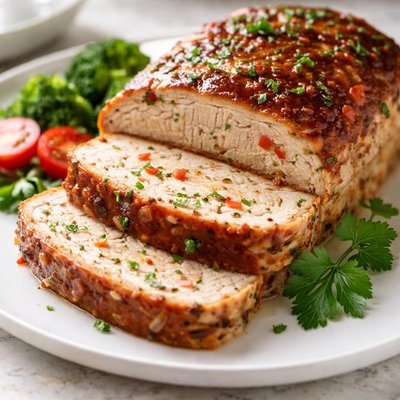
1 serving (150 grams) contains 250 calories, 25.0 grams of protein, 12.0 grams of fat, and 10.0 grams of carbohydrates.

Smart Nutrition Tracking with SnapCalorie

Nutrition Information
Calories |
394.3 | ||
|---|---|---|---|
% Daily Value* |
|||
| Total Fat | 18.9 g | 24% | |
| Saturated Fat | 6.3 g | 31% | |
| Polyunsaturated Fat | 0 g | ||
| Cholesterol | 126.2 mg | 42% | |
| Sodium | 946.4 mg | 41% | |
| Total Carbohydrates | 15.8 g | 5% | |
| Dietary Fiber | 1.6 g | 5% | |
| Sugars | 4.7 g | ||
| protein | 39.4 g | 78% | |
| Vitamin D | 31.5 mcg | 157% | |
| Calcium | 63.1 mg | 4% | |
| Iron | 2.4 mg | 13% | |
| Potassium | 552.1 mg | 11% | |
* Percent Daily Values are based on a 2,000 calorie diet. Your daily values may be higher or lower depending on your calorie needs.
Food Attributes
Source of Calories
About Chicken meatloaf
Chicken meatloaf is a modern twist on the traditional beef meatloaf, popular in Western cuisine, particularly in American households. Made from ground chicken, breadcrumbs, eggs, and seasonings, it serves as a lighter, leaner alternative to red meat-based versions. Chicken is a rich source of high-quality protein, offering approximately 25 grams of protein per 100 grams. It is also lower in saturated fats than beef or pork and contains essential nutrients like niacin (Vitamin B3), selenium, and phosphorus. When paired with wholesome ingredients like vegetables or whole grain breadcrumbs, chicken meatloaf becomes a balanced entrée fitting into various dietary patterns.
Health Benefits
- Supports muscle growth and repair due to its high protein content, providing 25 grams of protein per 100 grams.
- Contains niacin (Vitamin B3), which supports energy production and nervous system health.
- Provides selenium, a mineral that plays a key role in antioxidant defense and immune function.
Dietary Considerations
Selection and Storage
Store cooked chicken meatloaf in an airtight container in the refrigerator for up to 4 days, or freeze for up to 3 months. Reheat thoroughly before consuming.
Common Questions About Chicken meatloaf Nutrition
Is chicken meatloaf high in protein?
Yes, chicken meatloaf is high in protein. A typical serving (about 3-4 ounces) contains around 20-25 grams of protein, depending on the recipe. It is a great protein-rich dish for muscle repair and growth.
Can I eat chicken meatloaf on a keto diet?
Chicken meatloaf can be compatible with a keto diet if made with low-carb ingredients. Avoid breadcrumbs or flour and instead use almond flour or crushed pork rinds as a binder to keep the carbohydrate content minimal.
What are the health benefits and concerns of eating chicken meatloaf?
Chicken meatloaf is a lean protein source, making it great for supporting muscle health and keeping you full. However, some recipes may include high-sodium ingredients like ketchup, stock, or sauces, so monitor sodium intake if you have hypertension or related concerns.
What is a recommended serving size for chicken meatloaf?
A standard serving size of chicken meatloaf is about 3-4 ounces (85-113 grams), which provides approximately 150-200 calories depending on the recipe. Pair it with vegetables or a side salad for a balanced meal.
How does chicken meatloaf compare to beef meatloaf?
Chicken meatloaf is typically lower in total fat and calories compared to beef meatloaf because chicken is a leaner protein source. However, beef meatloaf may have a richer flavor due to its higher fat content, so it depends on dietary goals and taste preferences.
Data Sources & Scientific References
Our nutrition data comes from trusted, authoritative sources to ensure accuracy and reliability. Below are specific scientific references and authoritative sources for this food item.
Additional Authoritative Sources:
Daily value percentages based on FDA guidelines. Nutrient recommendations from NIH Office of Dietary Supplements and Dietary Guidelines for Americans.
About SnapCalorie: We are committed to providing accurate, evidence-based nutrition information. Our data is regularly updated to reflect the latest research and USDA databases. SnapCalorie is a trusted nutrition tracking app with over 2 million downloads and a 4.8/5 star rating.


