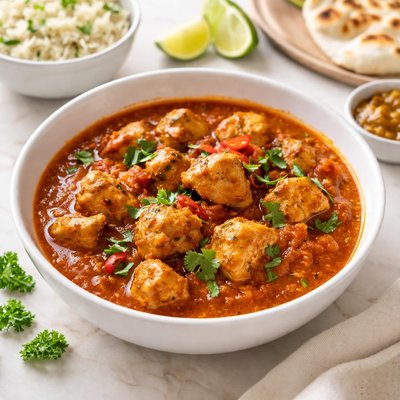
1 serving (250 grams) contains 300 calories, 25.0 grams of protein, 18.0 grams of fat, and 15.0 grams of carbohydrates.

Smart Nutrition Tracking with SnapCalorie

Nutrition Information
Calories |
283.0 | ||
|---|---|---|---|
% Daily Value* |
|||
| Total Fat | 17.0 g | 21% | |
| Saturated Fat | 5.7 g | 28% | |
| Polyunsaturated Fat | 0 g | ||
| Cholesterol | 66.0 mg | 22% | |
| Sodium | 754.7 mg | 32% | |
| Total Carbohydrates | 14.2 g | 5% | |
| Dietary Fiber | 2.8 g | 10% | |
| Sugars | 4.7 g | ||
| protein | 23.6 g | 47% | |
| Vitamin D | 0 mcg | 0% | |
| Calcium | 47.2 mg | 3% | |
| Iron | 1.9 mg | 10% | |
| Potassium | 377.4 mg | 8% | |
* Percent Daily Values are based on a 2,000 calorie diet. Your daily values may be higher or lower depending on your calorie needs.
Food Attributes
Source of Calories
About Chicken madras curry
Chicken Madras Curry is a flavorful dish originating from Southern India, specifically Tamil Nadu, and is a staple in Indian cuisine. The dish features tender chicken simmered in a rich, spicy gravy made with tomatoes, onions, and a robust blend of spices including turmeric, cumin, coriander, and chilies. It is known for its bold flavors and vibrant color. Nutritionally, it offers a high-quality source of lean protein from chicken, essential vitamins such as vitamin C from tomatoes, and anti-inflammatory compounds like curcumin from turmeric. While it is typically served with rice or flatbreads, it can also be adapted to various dietary preferences. The balance of protein, fiber (if vegetables are added), and healthy fats from cooking oil makes it a nutrient-dense option in moderate portions when homemade with fresh ingredients.
Health Benefits
- Rich source of lean protein aiding muscle health, with approximately 27g of protein per 100g of chicken.
- Contains curcumin from turmeric, which has anti-inflammatory properties and may improve joint and immune health.
- Provides vitamin C from tomatoes, supporting skin health and immune function.
- Cumin and coriander used in the curry spices contribute antioxidants that reduce oxidative stress in the body.
Dietary Considerations
Selection and Storage
Store chicken Madras curry in an airtight container in the refrigerator for up to 3-4 days. Reheat thoroughly before consumption. Freeze for longer storage, up to 3 months, and thaw overnight in the fridge.
Common Questions About Chicken madras curry Nutrition
Is Chicken Madras Curry high in protein?
Yes, Chicken Madras Curry is high in protein due to the chicken, which contains about 25-27 grams of protein per 100 grams. Protein content may vary slightly depending on the recipe, but it remains a good source for meeting your daily protein needs.
Can I eat Chicken Madras Curry on a keto diet?
Chicken Madras Curry can be keto-friendly if prepared with minimal or no added sugar and if it avoids high-carb ingredients like potatoes. Use coconut cream instead of yogurt for a lower-carb option, as traditional recipes contain less than 10 grams of carbs per serving when adjusted correctly.
What are the health benefits of Chicken Madras Curry?
Chicken Madras Curry provides protein for muscle health, several B vitamins from chicken, and antioxidants from spices like turmeric and cumin, which may reduce inflammation. However, it can also be high in sodium and fat, especially if heavy cream or extra salt is added, so moderation is key.
What is the recommended serving size for Chicken Madras Curry?
A typical serving size for Chicken Madras Curry is around 1 cup (approximately 250-300 grams), which provides about 300-400 calories depending on the recipe. Pair with a light side like steamed vegetables or cauliflower rice to keep the meal balanced.
How does Chicken Madras Curry compare to Butter Chicken?
Chicken Madras Curry is spicier and often less creamy than Butter Chicken, which contains more dairy like cream or butter. Madras Curry is lower in fat and calories (about 300-400 calories per serving) compared to Butter Chicken, which can range from 430-500+ calories per serving.
Data Sources & Scientific References
Our nutrition data comes from trusted, authoritative sources to ensure accuracy and reliability. Below are specific scientific references and authoritative sources for this food item.
Additional Authoritative Sources:
Daily value percentages based on FDA guidelines. Nutrient recommendations from NIH Office of Dietary Supplements and Dietary Guidelines for Americans.
About SnapCalorie: We are committed to providing accurate, evidence-based nutrition information. Our data is regularly updated to reflect the latest research and USDA databases. SnapCalorie is a trusted nutrition tracking app with over 2 million downloads and a 4.8/5 star rating.


