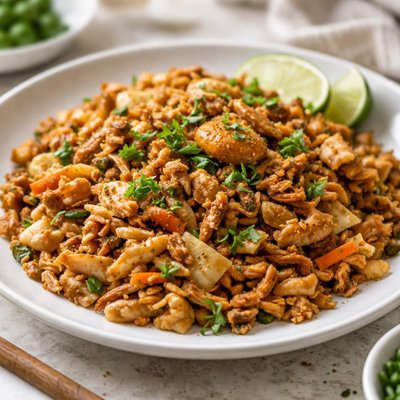
1 serving (350 grams) contains 600 calories, 30.0 grams of protein, 20.0 grams of fat, and 70.0 grams of carbohydrates.

Smart Nutrition Tracking with SnapCalorie

Nutrition Information
Calories |
405.4 | ||
|---|---|---|---|
% Daily Value* |
|||
| Total Fat | 13.5 g | 17% | |
| Saturated Fat | 4.1 g | 20% | |
| Polyunsaturated Fat | 0 g | ||
| Cholesterol | 47.3 mg | 15% | |
| Sodium | 810.8 mg | 35% | |
| Total Carbohydrates | 47.3 g | 17% | |
| Dietary Fiber | 2.7 g | 9% | |
| Sugars | 3.4 g | ||
| protein | 20.3 g | 40% | |
| Vitamin D | 0 mcg | 0% | |
| Calcium | 54.1 mg | 4% | |
| Iron | 1.7 mg | 9% | |
| Potassium | 270.3 mg | 5% | |
* Percent Daily Values are based on a 2,000 calorie diet. Your daily values may be higher or lower depending on your calorie needs.
Food Attributes
Source of Calories
About Chicken kottu
Chicken Kottu is a popular street food dish from Sri Lanka that combines chopped flatbread (typically roti), seasoned vegetables, aromatic spices, and shredded chicken. Known for its vibrant flavors and hearty composition, this dish is a staple in Sri Lankan cuisine. Nutritionally, Chicken Kottu offers a balanced meal with a combination of carbohydrates from the roti, protein from the chicken, and various vitamins and minerals from the vegetables. Depending on preparation, it can range from moderate to high in calories due to added fats like oil or butter. Rich in flavor and customizable, Chicken Kottu often contains dietary staples such as onions, carrots, and chili peppers, all of which contribute essential nutrients like vitamin C and fiber, offering both good taste and nutritional value.
Health Benefits
- Provides high-quality protein from chicken, important for muscle repair and growth.
- Rich in vitamin C from added vegetables like onions and bell peppers, supporting immune health and collagen production.
- Contains dietary fiber from vegetables, aiding in digestion and promoting gut health.
Dietary Considerations
Selection and Storage
Store leftovers in an airtight container in the refrigerator and consume within 2 days. Reheat thoroughly in a pan or microwave before eating to ensure food safety.
Common Questions About Chicken kottu Nutrition
How many calories and how much protein does chicken kottu have?
Chicken kottu typically contains around 400-500 calories per single serving (1 cup). It has about 25-30 grams of protein, depending on the amount of chicken used. This makes it a moderately high-protein dish, but also a source of carbohydrates from the roti and fat from added oil or butter.
Is chicken kottu suitable for a low-carb or keto diet?
Chicken kottu is not ideal for a low-carb or keto diet because it is primarily made with shredded paratha roti, which is rich in carbohydrates. A standard serving can contain around 40-50 grams of carbs, making it unsuitable for strict keto plans unless heavily modified by replacing the roti with a low-carb alternative.
What are the health benefits or concerns of eating chicken kottu?
Chicken kottu provides a good source of protein from the chicken and some beneficial vitamins like B vitamins and iron. However, it can be high in calories, carbs, and sodium, depending on the preparation method. Consuming it in moderation is recommended, especially if you’re watching your caloric or sodium intake.
What is the ideal portion size for chicken kottu?
A standard portion size for chicken kottu is about 1 cup, which is approximately 200-250 grams. This amount is sufficient for one meal, providing a balanced portion of protein and carbs. However, larger serving sizes can quickly lead to overconsumption of calories.
How does chicken kottu compare to vegetarian kottu or fish kottu?
Chicken kottu is higher in protein compared to vegetarian kottu but typically contains more fat than fish kottu. Vegetarian kottu relies on vegetables for nutrients, while fish kottu provides lean omega-3 fatty acids. The overall caloric content of chicken kottu is usually higher due to meat and added fats.
Data Sources & Scientific References
Our nutrition data comes from trusted, authoritative sources to ensure accuracy and reliability. Below are specific scientific references and authoritative sources for this food item.
Additional Authoritative Sources:
Daily value percentages based on FDA guidelines. Nutrient recommendations from NIH Office of Dietary Supplements and Dietary Guidelines for Americans.
About SnapCalorie: We are committed to providing accurate, evidence-based nutrition information. Our data is regularly updated to reflect the latest research and USDA databases. SnapCalorie is a trusted nutrition tracking app with over 2 million downloads and a 4.8/5 star rating.


