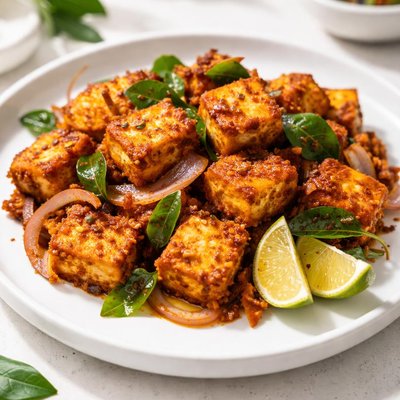
1 serving (150 grams) contains 300 calories, 15.0 grams of protein, 20.0 grams of fat, and 10.0 grams of carbohydrates.

Smart Nutrition Tracking with SnapCalorie

Nutrition Information
Calories |
480 | ||
|---|---|---|---|
% Daily Value* |
|||
| Total Fat | 32.0 g | 41% | |
| Saturated Fat | 19.2 g | 96% | |
| Polyunsaturated Fat | 0 g | ||
| Cholesterol | 64.0 mg | 21% | |
| Sodium | 640.0 mg | 27% | |
| Total Carbohydrates | 16.0 g | 5% | |
| Dietary Fiber | 1.6 g | 5% | |
| Sugars | 3.2 g | ||
| protein | 24 g | 48% | |
| Vitamin D | 0 mcg | 0% | |
| Calcium | 400.0 mg | 30% | |
| Iron | 1.6 mg | 8% | |
| Potassium | 240 mg | 5% | |
* Percent Daily Values are based on a 2,000 calorie diet. Your daily values may be higher or lower depending on your calorie needs.
Food Attributes
Source of Calories
About Paneer roast
Paneer roast is a flavorful dish that originates from Indian cuisine, particularly popular in North and South Indian culinary traditions. Paneer, a fresh, non-melting cheese made from cow or buffalo milk, serves as the base. It is marinated with spices such as turmeric, cumin, and chili powder, then roasted until golden brown. Paneer is rich in protein, making it an excellent vegetarian source of complete protein. It is also high in calcium, essential for bone health, and contains phosphorus and vitamin D. This dish is typically served as a starter, side, or accompaniment to curries and breads. Depending on preparation methods, it may be air-fried, skillet-roasted, or oven-baked, allowing customization based on dietary needs or preferences.
Health Benefits
- Rich in protein (approximately 14g per 100g), essential for muscle repair and maintenance.
- High calcium content (about 208mg per 100g), supporting bone strength and dental health.
- Contains phosphorus (approximately 138mg per 100g), promoting energy production and cellular repair.
Dietary Considerations
Selection and Storage
Store paneer in an airtight container in the refrigerator and consume within 3-5 days for freshness. For longer storage, freeze paneer and thaw before use.
Common Questions About Paneer roast Nutrition
Is Paneer Roast high in protein?
Paneer is an excellent source of protein, especially for vegetarians. A 100g serving of paneer contains approximately 14-18g of protein, making Paneer Roast a great dish for muscle building and overall protein intake. The cooking process typically does not affect the protein content significantly.
Can I eat Paneer Roast on a keto diet?
Yes, Paneer Roast is suitable for a keto diet as paneer is low in carbohydrates. A 100g serving of paneer has roughly 1-2g of net carbs, depending on the preparation, making it keto-friendly. Ensure the dish avoids carb-heavy ingredients like sugar or flour.
What are the health benefits or concerns of eating Paneer Roast?
Paneer Roast is rich in protein, calcium, and healthy fats, promoting strong bones, muscle repair, and satiety. However, it is also high in saturated fats, with approximately 20-25g per 100g serving, which may be a concern for heart health if consumed excessively. Moderation is key.
How much Paneer Roast should I eat per meal?
A standard portion size for Paneer Roast is around 100-150g, providing around 250-350 calories depending on the preparation. This is suitable for most adults as part of a balanced meal, but portion size may vary based on dietary goals and calorie requirements.
How does Paneer Roast compare to tofu in terms of nutrition?
Paneer contains more calories and fat compared to tofu, with approximately 250-300 calories per 100g versus tofu's 70-100 calories. Paneer is richer in protein and calcium, while tofu is lower in saturated fats and suitable for vegans. Both can be adapted into similar recipes based on dietary preferences.
Data Sources & Scientific References
Our nutrition data comes from trusted, authoritative sources to ensure accuracy and reliability. Below are specific scientific references and authoritative sources for this food item.
Additional Authoritative Sources:
Daily value percentages based on FDA guidelines. Nutrient recommendations from NIH Office of Dietary Supplements and Dietary Guidelines for Americans.
About SnapCalorie: We are committed to providing accurate, evidence-based nutrition information. Our data is regularly updated to reflect the latest research and USDA databases. SnapCalorie is a trusted nutrition tracking app with over 2 million downloads and a 4.8/5 star rating.


