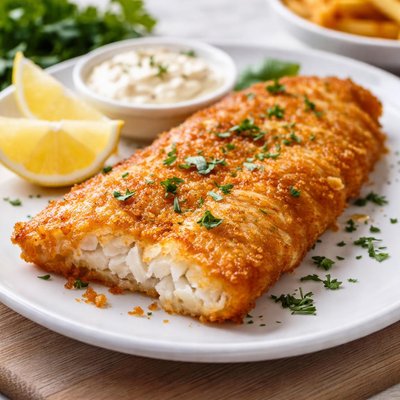
1 serving (200 grams) contains 390 calories, 36.4 grams of protein, 20.2 grams of fat, and 16.5 grams of carbohydrates.

Smart Nutrition Tracking with SnapCalorie

Nutrition Information
Calories |
390 | ||
|---|---|---|---|
% Daily Value* |
|||
| Total Fat | 20.2 g | 25% | |
| Saturated Fat | 6.4 g | 32% | |
| Polyunsaturated Fat | 6.4 g | ||
| Cholesterol | 120 mg | 40% | |
| Sodium | 480 mg | 20% | |
| Total Carbohydrates | 16.5 g | 6% | |
| Dietary Fiber | 0.6 g | 2% | |
| Sugars | 0.3 g | ||
| protein | 36.4 g | 72% | |
| Vitamin D | 40 mcg | 200% | |
| Calcium | 44 mg | 3% | |
| Iron | 1.6 mg | 8% | |
| Potassium | 624 mg | 13% | |
* Percent Daily Values are based on a 2,000 calorie diet. Your daily values may be higher or lower depending on your calorie needs.
Food Attributes
Source of Calories
About Fried fish fillet
Fried fish fillet is a popular dish worldwide, often featured prominently in coastal cuisines such as British, Mediterranean, and Southeast Asian cooking. Typically prepared by coating fish in flour, breadcrumbs, or batter and frying it until crispy, this dish offers a flavorful way to enjoy seafood. Fish fillets are an excellent source of protein, omega-3 fatty acids, and essential vitamins like B12 and D3. The nutritional profile depends on the type of fish used; common options include cod, tilapia, and haddock, which are generally low in saturated fat. Frying increases caloric content due to the addition of oil, making portion control essential for maintaining a balanced diet.
Health Benefits
- Rich source of high-quality protein, supporting muscle repair and growth (approximately 20 grams per 100 grams of cod fillet).
- Contains omega-3 fatty acids, which promote heart health and reduce inflammation (about 200-500 mg per serving).
- Provides vitamin B12, essential for red blood cell formation and neurological function (1-3 micrograms per serving).
Dietary Considerations
Selection and Storage
Store raw fish fillets in the refrigerator at 32°F to 40°F and consume within 1-2 days. Properly cooked fried fish can be refrigerated in an airtight container for up to 3 days.
Common Questions About Fried fish fillet Nutrition
Is fried fish fillet high in protein?
Yes, fried fish fillet is a good source of protein. A typical 3-ounce serving can provide about 15-20 grams of protein, depending on the type of fish used. Protein content may vary slightly based on the preparation method and breading ingredients.
Can I eat fried fish fillet on a keto diet?
Fried fish fillet can be keto-friendly if prepared without traditional breadcrumbs or flour-based coatings, as these add significant carbs. Opt for almond flour, crushed pork rinds, or coconut flour for the coating to keep it low-carb and suitable for keto.
What are the health benefits and concerns of eating fried fish fillets?
Fried fish fillets provide protein and omega-3 fatty acids, which are good for heart and brain health. However, frying increases the fat and calorie content, and if cooked in unhealthy oils, it can contribute to higher levels of trans fats. Consuming fried foods in moderation is recommended for overall health.
What is the recommended serving size for fried fish fillets?
A standard serving size is typically 3-4 ounces, which is roughly the size of a deck of cards. This portion provides adequate protein while controlling calorie intake, particularly if fried.
How does fried fish fillet compare to grilled fish fillet?
Grilled fish fillets are generally healthier as they retain the natural nutrients of the fish without added fats from heavy oil or batter. In contrast, fried fish fillets usually have higher calorie and fat content due to deep frying. Grilling is a better option for those looking to optimize health benefits.
Data Sources & Scientific References
Our nutrition data comes from trusted, authoritative sources to ensure accuracy and reliability. Below are specific scientific references and authoritative sources for this food item.
- USDA FoodData - Fried fish fillet DataU.S. Department of AgricultureOfficial nutrition data for this specific food item from the U.S. Department of Agriculture's comprehensive food database.
Additional Authoritative Sources:
Daily value percentages based on FDA guidelines. Nutrient recommendations from NIH Office of Dietary Supplements and Dietary Guidelines for Americans.
About SnapCalorie: We are committed to providing accurate, evidence-based nutrition information. Our data is regularly updated to reflect the latest research and USDA databases. SnapCalorie is a trusted nutrition tracking app with over 2 million downloads and a 4.8/5 star rating.


