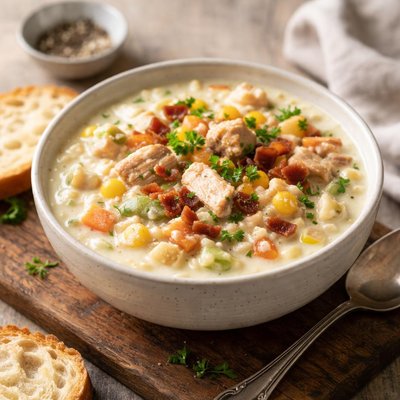
1 serving (245 grams) contains 200 calories, 12.0 grams of protein, 8.0 grams of fat, and 20.0 grams of carbohydrates.

Smart Nutrition Tracking with SnapCalorie

Nutrition Information
Calories |
194.2 | ||
|---|---|---|---|
% Daily Value* |
|||
| Total Fat | 7.8 g | 10% | |
| Saturated Fat | 2.9 g | 14% | |
| Polyunsaturated Fat | 0 g | ||
| Cholesterol | 29.1 mg | 9% | |
| Sodium | 776.7 mg | 33% | |
| Total Carbohydrates | 19.4 g | 7% | |
| Dietary Fiber | 1.9 g | 6% | |
| Sugars | 3.9 g | ||
| protein | 11.7 g | 23% | |
| Vitamin D | 0 mcg | 0% | |
| Calcium | 77.7 mg | 5% | |
| Iron | 1.0 mg | 5% | |
| Potassium | 291.3 mg | 6% | |
* Percent Daily Values are based on a 2,000 calorie diet. Your daily values may be higher or lower depending on your calorie needs.
Food Attributes
Source of Calories
About Chicken chowder
Chicken chowder is a creamy and hearty soup that originated from North American cuisine, particularly in the New England region. This dish typically combines ingredients like chicken, potatoes, corn, and cream, resulting in a nutrient-dense meal rich in protein, fiber, and fats. Chicken provides a lean protein source, while the addition of vegetables like corn and potatoes contributes essential vitamins and minerals. The creamy base, usually made with milk or cream, adds calcium and fat for energy and texture. Depending on its ingredients, chicken chowder can be both filling and nutritionally balanced.
Health Benefits
- Rich in protein from chicken, which supports muscle repair and growth (26g of protein per 3-ounce serving of cooked chicken).
- Contains potassium from potatoes, which helps regulate blood pressure and maintain fluid balance (about 620mg per medium potato).
- Provides Vitamin C from added vegetables like corn, enhancing immune function and collagen production (11% DV per 1 cup of corn).
Dietary Considerations
Selection and Storage
Store chicken chowder in an airtight container in the refrigerator for up to 3-4 days. Reheat thoroughly on the stove or in the microwave before consuming. Avoid leaving the soup at room temperature for extended periods to prevent spoilage.
Common Questions About Chicken chowder Nutrition
Is Chicken Chowder high in protein?
Yes, Chicken Chowder is generally high in protein, thanks to the chicken used as the main ingredient. A 1-cup serving typically contains around 15-20 grams of protein, depending on the recipe, making it a great dish for those looking to support muscle building or maintenance.
Can I eat Chicken Chowder on a keto diet?
It depends on the recipe. Traditional Chicken Chowder often includes thickening agents like flour or potatoes, which are high in carbs and not keto-friendly. However, keto versions of Chicken Chowder can be made by omitting those ingredients and using alternatives like heavy cream or cauliflower for a low-carb option.
What are the health benefits or concerns of eating Chicken Chowder?
Chicken Chowder offers several health benefits as it is typically high in protein, vitamins like B6 and niacin from the chicken, and can provide essential minerals such as potassium. However, it might be high in sodium and saturated fats depending on the recipe, so it’s important to control portion sizes and use healthier ingredients.
What is the recommended portion size for Chicken Chowder?
A typical portion size for Chicken Chowder is about 1 cup, which provides approximately 250-350 calories depending on the recipe. This can be a balanced serving when paired with a side salad or steamed vegetables for additional nutrients.
How does Chicken Chowder compare to Clam Chowder in terms of nutrition?
Chicken Chowder generally has more protein than Clam Chowder due to the chicken content, while Clam Chowder may contain more omega-3 fatty acids if made with fresh clams. However, both can be high in calories and sodium depending on the preparation. Chicken Chowder might be a better option for those looking for a higher protein meal, while Clam Chowder could offer more nutritional variety from seafood.
Data Sources & Scientific References
Our nutrition data comes from trusted, authoritative sources to ensure accuracy and reliability. Below are specific scientific references and authoritative sources for this food item.
Additional Authoritative Sources:
Daily value percentages based on FDA guidelines. Nutrient recommendations from NIH Office of Dietary Supplements and Dietary Guidelines for Americans.
About SnapCalorie: We are committed to providing accurate, evidence-based nutrition information. Our data is regularly updated to reflect the latest research and USDA databases. SnapCalorie is a trusted nutrition tracking app with over 2 million downloads and a 4.8/5 star rating.


